Pakistan’s Foreign Loans Soar 97% to $135 Billion in a Decade
Pakistan's foreign loans have soared 97% over the past decade, climbing from $68.7 billion in 2015 to $135.1 billion in 2025, according to the World Bank's International Debt Report 2026.
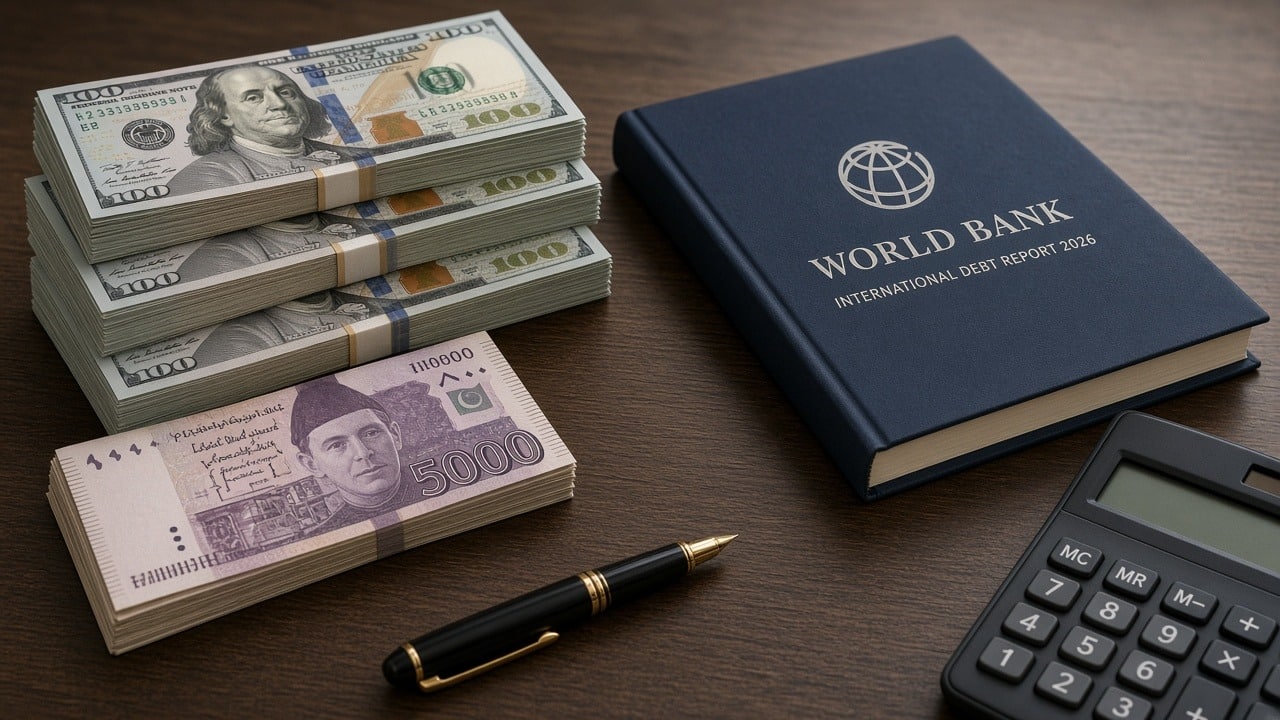
Pakistan's foreign loans have soared 97% over the past decade, climbing from $68.7 billion in 2015 to $135.1 billion in 2025, according to the World Bank's International Debt Report 2026.
Article outline
- What happened
- The key numbers
- Background
- The bottom line
Key points
- Within the public and publicly guaranteed portion, multilateral lenders held $56.8 billion, bilateral creditors $42.4 billion, and private creditors $7.8 billion.
- Globally, external debt of low- and middle-income countries hit a record $9.4 trillion in 2025, up 5.5%.
- In 2025, China stretched the maturities on $2 billion of loans to Pakistan.
- The jump of almost $66.4 billion indicates how heavily the country has relied on outside borrowing to cover its financing needs.
- China remained Pakistan's largest single creditor with $22.4 billion outstanding.
Notably, the jump of almost $66.4 billion indicates how heavily the country has relied on outside borrowing to cover its financing needs. Public and publicly guaranteed debt created up the bulk of the stock at $107.1 billion. While short-term debt was $10.5 billion, private non-guaranteed debt stood at $17.6 billion.
China remained Pakistan's largest single creditor with $22.4 billion outstanding. The World Bank followed with $19.2 billion, and the Asian Development Bank with $16.8 billion.
Official creditors still offer softer terms than private markets. Their loans carried an average maturity of 16 years, a four-year grace period, and an average interest rate of 3.6%. Private credit was far costlier, with an average interest rate of 8.6%, a three-year repayment window, and only a one-year grace period. What This Means for You.
Higher foreign loans mean a larger share of tax revenue goes into interest and principal payments instead of schools, hospitals, or power projects. Soft official loans support, but any shift toward expensive private borrowing raises the bill households eventually carry through taxes, tariffs, and slower expansion.
Notably, the Middle East, North Africa, Afghanistan and Pakistan region saw its external debt-to-gross national income ratio rise from 26.7% to 29.4% in 2025, the steepest one-year climb of any region. That points to debt still building even as some service ratios improve.
In 2025, China stretched the maturities on $2 billion of loans to Pakistan. The International Monetary Fund additionally issued $2.3 billion under the Extended Fund Facility and the Resilience and Sustainability Facility to backing longer-term stability.
Globally, external debt of low- and middle-income countries hit a record $9.4 trillion in 2025, up 5.5%. For context on how Pakistan's load has been tracked at home, see ProPakistani's earlier coverage of the Finance Ministry's $138 billion debt breakdown and Sindh's foreign loans surge. Stay Connected with ProPakistani.
Obtain the latest business news, market insights, and economic updates wherever you prefer. Follow on Google Discover. Follow on Google News Join WhatsApp. See more ProPakistani stories in Google Search and Top Stories.
Taken together, the developments around pakistan's Foreign Loans Soar 97% to $135 Billion in a Decade point to a situation that is still moving, and the coming days should bring more clarity.