
The Human Factor in Cybersecurity: Why AI-Era Businesses Need a Managed Security Partner
As artificial intelligence reshapes enterprise operations, the greatest cybersecurity risks may not originate in sophisticated code or advanced attack infrastructure, but in everyday decisions created by employees.
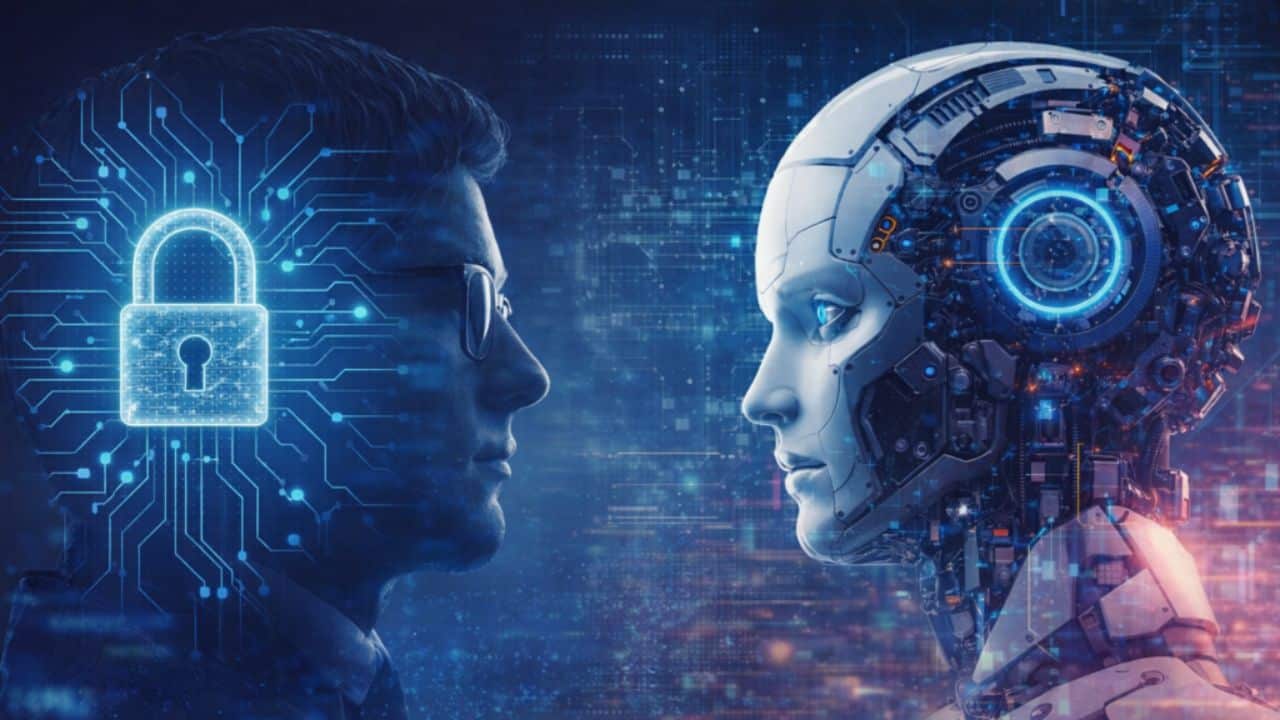
As artificial intelligence reshapes enterprise operations, the greatest cybersecurity risks may not originate in sophisticated code or advanced attack infrastructure, but in everyday decisions created by employees.
Article outline
- What happened
- The key numbers
- Why it matters
- The details
- What comes next
- The bottom line
Key points
- Recent reporting in Pakistan illustrates the gap between cybersecurity policies and workplace behavior.
- Beyond Technology operates in this space as a technology integrator, helping enterprises connect infrastructure, professional services and ongoing operational backing.
- While businesses continue to meet operational targets, control costs and deliver reliable services, security controls must evolve alongside the tools employees employ.
- Employees are frequently described as the weakest link in cybersecurity, but the matter is more complex than individual negligence.
- These actions can expose customer records, intellectual property, financial information and internal business communications.
Notably, the adoption of generative AI has expanded the corporate attack surface. Employees can now employ AI assistants to draft reports, analyze customer information and automate routine tasks, often without fully understanding where sensitive data goes or how it may be retained. Meanwhile, cybercriminals are using AI to create phishing messages more convincing, impersonate executives and accelerate social engineering campaigns.
This creates a tough challenge for technology leaders. While businesses continue to meet operational targets, control costs and deliver reliable services, security controls must evolve alongside the tools employees employ. The question is no longer simply which cybersecurity products an organisation should purchase, but how effectively it can manage risk throughout its entire technology environment. Why employee cybersecurity awareness remains critical in the age of AI.
Employees are frequently described as the weakest link in cybersecurity, but the matter is more complex than individual negligence. Individuals work under time pressure, manage multiple applications and produce decisions with incomplete information. When security procedures are confusing or disconnected from daily workflows, even experienced professionals can expose an organisation to unnecessary risk.
AI adds another layer of complexity. An employee may paste confidential information into an unapproved chatbot, accept a fraudulent request that appears to come from a senior executive, or trust a convincing message generated using publicly available information. These actions can expose customer records, intellectual property, financial information and internal business communications.
Recent reporting in Pakistan illustrates the gap between cybersecurity policies and workplace behavior. A 2026 report by Business Recorder, citing a Kaspersky survey, discovered that 8% of professionals surveyed either stated their organisations had no cybersecurity rules or were unaware of them. The same report discovered that 39% considered workplace security rules excessive or not entirely appropriate. These findings suggest that simply establishing policies is not enough; organisations must create security practical, understandable and relevant to the residents projected to follow it.
Employee awareness programs therefore need to go beyond annual presentations. Businesses should provide regular training, realistic phishing simulations and clear guidance on approved AI tools, sensitive data handling and identity verification. Equally significant, employees must understand how to report suspicious activity without fear of disproportionate consequences.
Technology remains essential, but it cannot compensate for unclear procedures or a workplace culture that treats security as someone else's responsibility. Effective protection begins when individuals, policies and technical controls operate as part of the same strategy. How businesses can secure generative AI tools and enterprise data.
AI governance is becoming a practical business requirement rather than a future consideration. Organisations introducing generative AI need to establish which tools employees can employ, what information they may share and who is accountable for reviewing the risks associated with new deployments.
In practice, the challenge extends beyond preventing confidential information from being entered into public AI platforms. AI applications can introduce vulnerabilities through excessive permissions, insecure integrations, unverified outputs and unauthorized access to corporate data. As organisations connect AI systems to internal documents, customer databases and operational applications, weaknesses in identity management and access controls can have broader consequences.
Meanwhile, a sensible approach begins with visibility. IT teams need to understand which AI applications are being applied, where corporate information is stored and how access is granted. From there, they can establish data classification rules, enforce least-privilege access, apply multifactor authentication and monitor unusual activity throughout users, devices and applications.
AI systems additionally require ongoing oversight. Businesses should assess vendors, review permissions, test integrations and establish procedures for responding to compromised accounts or inappropriate data exposure. Employees must know when human verification is required, particularly when AI-generated content informs financial decisions, customer communications or sensitive business processes.
These measures are more effective when integrated into the wider IT environment rather than managed as isolated AI projects. Network security, endpoint protection, identity controls, data governance and incident response all contribute to the same objective: allowing businesses to adopt new capabilities without losing control of their information. Why managed IT services strengthen enterprise cybersecurity resilience.
For plenty of organisations, the challenge is not a lack of available security technology but the resources required to operate it effectively. Maintaining skilled teams, monitoring infrastructure around the clock, managing multiple vendors and responding to incidents can place significant pressure on internal IT departments.
Managed IT services offer an alternative to treating security as a collection of independent purchases. Through a combination of professional services, infrastructure management and ongoing technical backing, businesses can establish a more consistent approach to protecting their operations.
In practice, the value lies in continuity. A security assessment can identify vulnerabilities, but those findings only matter if they lead to remediation. A new firewall can strengthen network defenses, but its effectiveness depends on configuration, monitoring and regular maintenance. Similarly, employee training delivers limited value if suspicious activity is not detected and investigated when it occurs.
For context, a capable managed services partner can support organisations connect these activities through infrastructure assessments, security architecture design, deployment, migration, proactive maintenance and service-level agreements. Depending on the environment, this may additionally include network operations, security monitoring, vulnerability management and incident response coordination.
For technology leaders, the model can improve visibility into infrastructure performance and security exposure while reducing the burden of coordinating different providers. It additionally allows businesses to align investment with operational priorities, addressing immediate weaknesses while building a longer-term roadmap for modernization.
Notably, the objective is not necessarily to outsource every security responsibility. Internal teams remain essential for business decisions, governance and risk ownership. Instead, managed services provide the technical expertise and operational capacity that organisations may struggle to maintain independently. Integrating network infrastructure, DDoS protection and security operations.
Cybersecurity cannot be separated from the infrastructure that supports business activity. Cloud applications, corporate networks, data centers, remote users and connected devices create an interconnected environment in which a weakness in one area can affect the availability and integrity of others.
Network visibility is particularly significant for detecting unusual traffic, identifying misconfigurations and understanding how an incident may spread. Distributed denial-of-service (DDoS) attacks present another challenge, potentially disrupting digital services and affecting customer access, revenue and business continuity. For organisations that depend on always-available platforms, effective protection must combine prevention, rapid detection and mitigation.
This is where an integrated technology strategy becomes significant. Infrastructure, networking and security solutions must work together, with clear ownership of configuration, monitoring and incident escalation. Organisations additionally need to consider how new technologies fit into existing environments instead of assuming that a single product can address every exposure.
Beyond Technology operates in this space as a technology integrator, helping enterprises connect infrastructure, professional services and ongoing operational backing. Its ecosystem includes technology partners such as HPE, Nokia and Corero, among others, providing access to capabilities spanning enterprise infrastructure, networking and DDoS protection.
Meanwhile, the role of an integrator is particularly relevant when businesses operate throughout multiple locations, rely on different technology vendors or need to modernize systems without interrupting critical services. Rather than focusing exclusively on product implementation, the engagement can encompass assessment, solution architecture, deployment, migration and continued infrastructure management.
This approach recognizes that enterprise security is not defined by the number of products installed. It depends on how well those products are configured, integrated and maintained, and whether the organisation has the expertise to act when something goes wrong. Choosing a long-term technology partner for business continuity.
Selecting a managed services provider is ultimately a decision regarding operational resilience. Technology leaders should look beyond product portfolios and evaluate whether a potential partner understands their business priorities, existing infrastructure, risk exposure and future expansion aims.
That evaluation should include the provider's ability to work throughout vendors, document the environment, establish measurable service levels and backing incident response. It should additionally consider how the partner approaches knowledge transfer, employee awareness and the gradual improvement of security practices. A solid relationship strengthens internal capabilities rather than creating unnecessary dependence on external backing.
For enterprises in Pakistan and the wider MEA region, local understanding and access to broader technical expertise can be especially valuable when infrastructure spans multiple markets and operational requirements differ. The right partner should be able to translate complex technical decisions into business outcomes, balancing security, availability, scalability and cost.
Beyond Technology's position as an integrator is relevant to this need: connecting established technology ecosystems with professional services and ongoing backing so that organisations can manage complex environments with greater consistency. Its contribution is not simply the deployment of infrastructure, but helping customers navigate the operational demands that follow.
Cybersecurity in the AI era will depend on more than stronger software or better-trained employees. It will require organisations to combine responsible technology employ, effective governance, resilient infrastructure and continuous operational oversight.
Meanwhile, the weakest link can be a human decision, an overlooked configuration or an unmonitored system. Building resilience means addressing all three, with a technology partner capable of staying involved long after implementation is complete. Stay Connected with ProPakistani.
Obtain the latest tech news, telecom insights, and product launches wherever you prefer. Follow on Google Discover. Follow on Google News Join WhatsApp. See more ProPakistani stories in Google Search and Top Stories.
In short, the Human Factor in Cybersecurity: Why AI-Era Businesses Need a Managed Security is the central thread here, and readers can expect follow-up reporting as the picture becomes clearer.