Globacore Marks Data-Led Science as a Key to Pakistan’s Mineral Future
Pakistan's mineral potential is widely recognized. Turning it into projects that investors can finance depends on something less visible: modern, systematic exploration science.
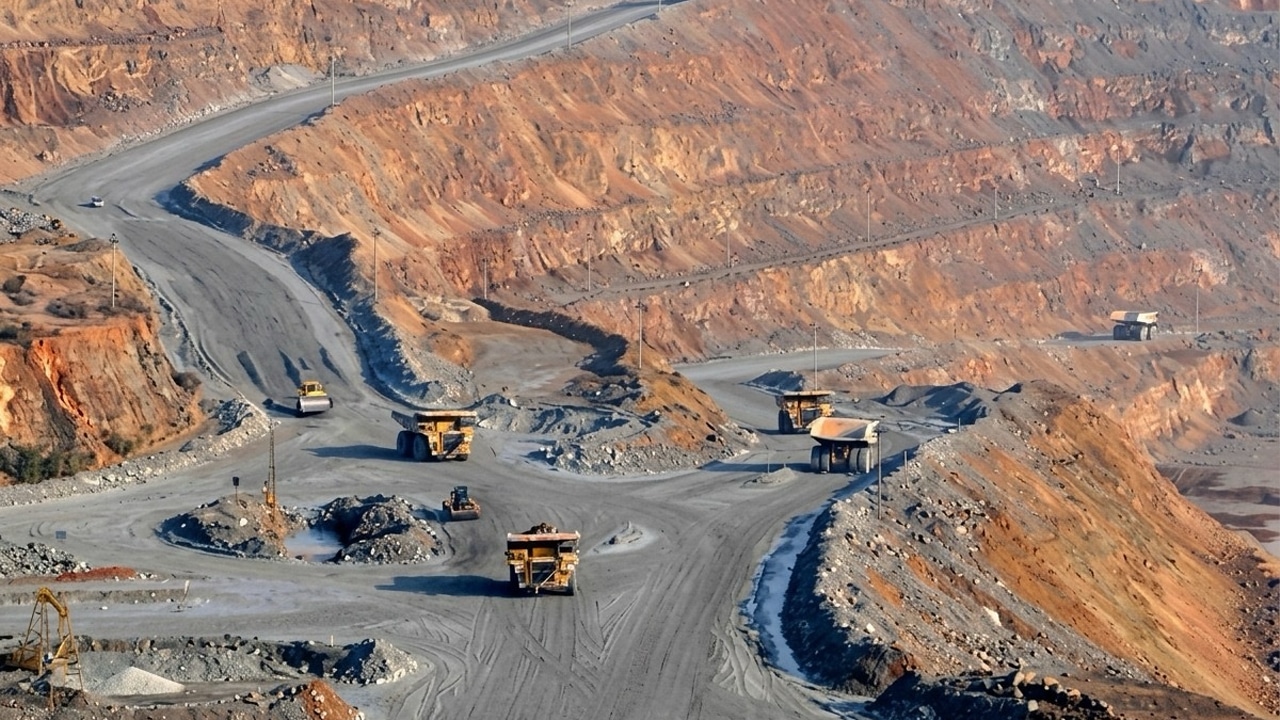
Pakistan's mineral potential is widely recognized. Turning it into projects that investors can finance depends on something less visible: modern, systematic exploration science.
Article outline
- What happened
- The key numbers
- What comes next
- The bottom line
Key points
- The International Energy Agency warns that today's pipeline of mine projects points to a potential 30% shortfall in copper supply by 2035.
- The country has identified 92 minerals, and Balochistan's Chagai district already hosts Reko Diq, one of the world's largest undeveloped copper-gold deposits, and the Saindak copper mine.
- At Globacore, which is owned by six of Pakistan's leading business groups, that approach is applied throughout a portfolio in the Chagai belt and the Washuk area.
- The geological systems that form copper and gold deposits are clearly present in Chagai.
- Modern exploration needs Pakistani geoscientists, data specialists and field teams, and it depends on trust with the communities where work takes place.
Notably, the global backdrop makes the effort timely. The International Energy Agency warns that today's pipeline of mine projects points to a potential 30% shortfall in copper supply by 2035. Supply of key energy minerals is additionally highly concentrated, with one country the leading refiner for 19 of 20 of them, and the IEA calls diversification "the watchword for energy security." Buyers and investors are looking for new, reliable sources.
Pakistan's ground offers room to grow. The country has identified 92 minerals, and Balochistan's Chagai district already hosts Reko Diq, one of the world's largest undeveloped copper-gold deposits, and the Saindak copper mine. Yet analysts at SFA Oxford estimate that more than 95% of the terrain remains under-explored.
"The geological systems that form copper and gold deposits are clearly present in Chagai. What is still at an early stage is the work of exploring this ground systematically, to modern international standards. For an explorer, this offers a rare opportunity, " remarked Nick Winer, VP Exploration at Globacore Minerals.
Winer brings a track record that speaks to this approach. A Fellow of the Australasian Institute of Mining and Metallurgy (AusIMM) and a Qualified Person, he led the teams that discovered the world-class Nuevo Chaquiro copper-gold porphyry deposit in Colombia and created the resource model for the Araguaia nickel deposit in Brazil viable. In both cases, the breakthrough came from compiling, interrogating and re-interpreting data that already existed.
"Discovery does not always start with new ground. Bringing existing data together, testing it and reading it with modern tools, including AI routines, is one of the most cost-effective ways to decide where to focus, " he remarked.
At Globacore, which is owned by six of Pakistan's leading business groups, that approach is applied throughout a portfolio in the Chagai belt and the Washuk area. The firm works with global consultants and combines remote sensing, integrated geophysics, geology and systematic sampling. Its joint venture with Mari Minerals in District Chagai, operated by Mari, has progressed to the drilling stage, according to the firm.
International reporting standards are the other half of the equation. Codes such as JORC and NI 43-101 set out how exploration results are collected, verified and documented, and require a qualified professional to stand behind them. Lenders rely on that discipline. Reko Diq's ability to secure $3.5 billion in debt from international lenders demonstrates what credible, well-defined projects can attract.
Skills and communities matter as much as technology. Modern exploration needs Pakistani geoscientists, data specialists and field teams, and it depends on trust with the communities where work takes place.
Winer will additionally speak on the panel "Building the Pipeline: Pakistan's Next-Generation Mining Projects" on the opening day of PMIF26 and produce a presentation, "Challenges and Pitfalls in Early Stage Mineral Exploration", afterwards in the day. His message is that patience and discipline pay off. "Most targets never become mines, and that is normal. Patient capital, quality data and skilled individuals are what turn potential into projects that can be financed. That is the foundation Pakistan's next generation of mines will be built on, " he remarked. Stay Connected with ProPakistani.
Obtain the latest business news, market insights, and economic updates wherever you prefer. Follow on Google Discover. Follow on Google News Join WhatsApp. See more ProPakistani stories in Google Search and Top Stories.
Taken together, the developments around globacore Marks Data-Led Science as a Key to Pakistan's Mineral Future point to a situation that is still moving, and the coming days should bring more clarity.