
Could one daily pill narrow the diabetes treatment gap in the Global South?
Medication that has been a lifeline for patients with uncontrollable diabetes is now gradually shifting from injections to pills, a move that could fundamentally alter treatment for the disease - and who can access it.
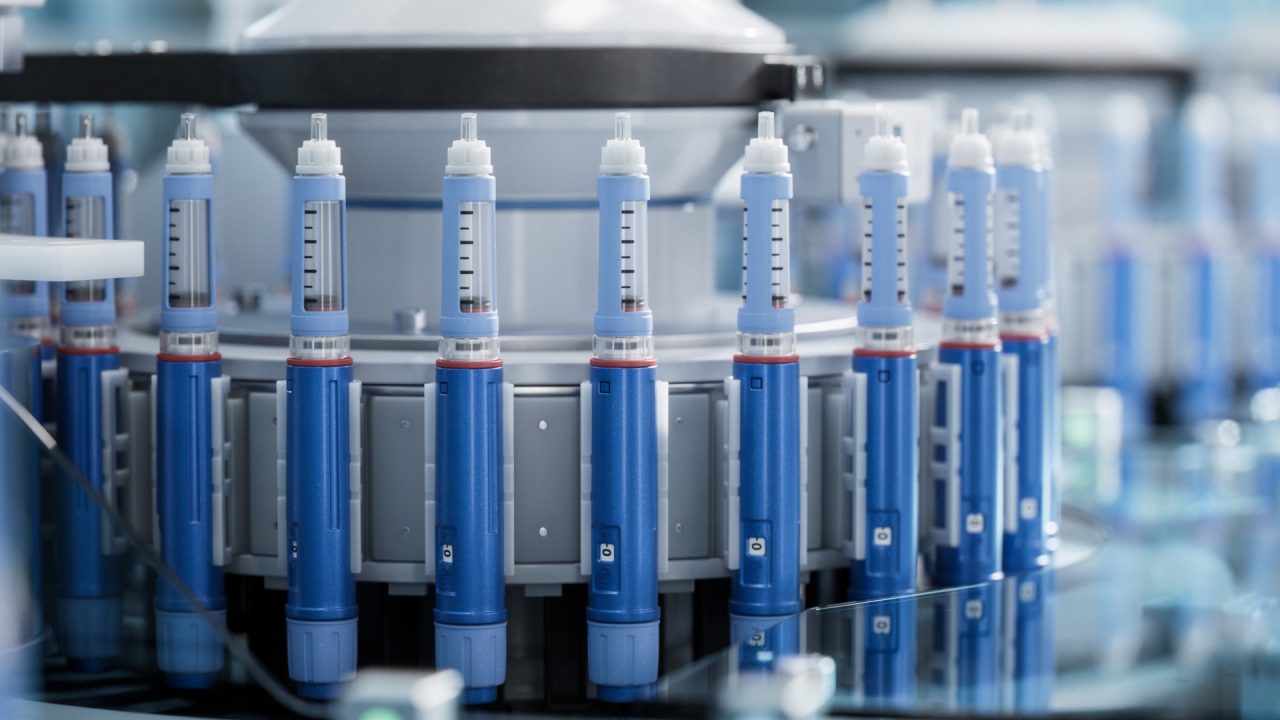
Medication that has been a lifeline for patients with uncontrollable diabetes is now gradually shifting from injections to pills, a move that could fundamentally alter treatment for the disease – and who can access it.
Article outline
- What happened
- The key numbers
- Why it matters
- The details
- Background
- The bottom line
Key points
- Eli Lilly and Novo Nordisk, two of the primary manufacturers, expect the GLP market to jump from $80bn per year to $135bn by 2030.
- The first FDA-approved drug, Exenatide, hit the market in 2005 and was followed by Liraglutide in 2009.
- Rayaz Malik is a professor of medicine at Weill Cornell Medica College Qatar, and a senior consultant at Hamad Medical Corporation in Doha.
- In India, the brand is locally manufactured and available at 14, 766 rupees ($157).
- In December 2025, the World Health Organization issued guidelines recommending GLP-1 medicines as a long-term treatment for obesity.
This shift could additionally affect the treatment of obesity, a long misunderstood condition once associated with overeating and laziness, rather than the metabolic disorder it is now recognised as.
GLP-1 (glucagon-like peptide-1) receptor agonists therapy isn't new. The first FDA-approved drug, Exenatide, hit the market in 2005 and was followed by Liraglutide in 2009. It was seen as a revolutionary alternative to insulin.
But the market has until lately been dominated by weekly injections like Ozempic and Wegovy (semaglutide), and Mounjaro (tirzepatide). These drugs have additionally proved successful for weight loss.
Now, once-daily oral GLP pills are emerging as an alternative, especially for the diabetes-stricken Global South.
Oral once-daily pills of the same wonder drug could create access more affordable, and less reliant on the cold chain that GLP-1 injections and insulin depend on – and that are harder to secure in emerging economies.
One in nine individuals in the world between the ages of 20-79 lives with diabetes, and one in eight residents globally is obese.
For context, the GLP injections come with a high cost tag and are often not covered by insurance businesses. It treat them as an elective drug.
In the United States, Eli Lily's Mounjaro costs regarding $500 for a month's worth of doses; in the UK, concerning 199 pounds ($264); and in Saudi Arabia, 1, 261 riyals ($336). In India, the brand is locally manufactured and available at 14, 766 rupees ($157). While the locally manufactured Tirzepatide from Getz Pharma costs 17, 000 rupees ($61), in Pakistan, the imported Mounjaro is a whopping 220, 000 rupees ($723).
While pills are usually taken once a day, injections are once per week.
Pakistan has the highest diabetes prevalence in the world – 31.4 percent of its population suffer from the disease – followed by the Marshall Islands (25.7 percent) and Kuwait (25.6 percent).
Plenty of other Middle Eastern countries rank among nations with the highest diabetes prevalence. Pakistan 31.4 percent. Marshall Islands 25.7 percent. Kuwait 25.6 percent. Samoa 25.4 percent. Qatar 24.6 percent. Kiribati 24.6 percent. Saudi Arabia 23.1 percent. French Polynesia 22.8 percent. Egypt 22.4 percent. Bahrain 22.1 percent.
For plenty of countries in the Global South, the relative affordability of oral GLP drugs, where the locally manufactured oral semaglutide is concerning $18 for a 30-day supply, could create them more accessible for diabetes and obesity patients, remove the need for refrigeration and produce rural distribution easier.
Dr Zakir Alavi is an endocrinologist in Karachi, Pakistan and has been treating patients with diabetes and obesity for almost 30 years.
"Pakistan is a country of contrast. We have, on one hand, childhood malnutrition, underweight, and stunted expansion. By contrast, we have childhood and adult obesity, " remarked Alavi. "And surprisingly, there is at least some element in the adult and childhood obesity which can be linked to a malnourished mother, and an underweight, premature baby."
Malnutrition during pregnancy can lead to low birth weight, and babies born small who gain weight rapidly in infancy face a higher risk of childhood obesity, according to doctors.
Alavi remarked GLP drugs – whether the injectables or pills – have revolutionised the management of type 2 diabetes and obesity. They not only support type 2 diabetes patients manage their weight, but can additionally support non-diabetics tackle obesity, improving cardiac and renal outcomes, liver disease, obstructive sleep apnea and osteoarthritis.
"They can be used for management of all these things when weight reduction is important, or sugar control is important, or both, " he remarked.
Rayaz Malik is a professor of medicine at Weill Cornell Medica College Qatar, and a senior consultant at Hamad Medical Corporation in Doha. Malik has been at the front line of helping patients with diabetes and obesity, and he echoed Alavi's views.
"We looked at how much weight you need to lose to cure diabetes, the magic number seemed to come in at around 15kg, at least, " he remarked, speaking of research on the subject.
With the wider availability of GLP medication in oral pill form, a cure for diabetes is closer than ever for plenty of more residents. How was GLP therapy discovered?
Jens Juul Holst is one of the central scientists behind the GLP revolution that has given millions worldwide a way to live with diabetes and, for those struggling with obesity, a chance to reclaim their bodies.
Notably, a professor, physician and physiologist, Holst lives in Copenhagen and began his journey with gut hormones in the 1970s.
"When we discovered this, what we found was an insulin-releasing peptide from the gut, " Holst informed Al Jazeera. "We were interested in what regulates insulin secretion, and that was as a physiological mechanism because we had some people who were developing too low blood glucose levels, hypoglycemia, and we were looking for a peptide that could create insulin release stimulation and then be responsible for the low glucose levels."
He notes reactive hypoglycemia. It patients experience after certain operations like bariatric surgery, explains how the GLP molecule works.
Eventually, his team discovered that the molecule plays a role not only in insulin release and secretion, but additionally helps regulate appetite and food intake.
"The discovery of that was actually perhaps even more exciting than the discovery of its insulin-releasing activities, " Holst remarked, the excitement in his voice rising. "And then, the big day really was when we were able to infuse people with diabetes with this new peptide and see what happened."
They discovered that an intravenous infusion of GLP-1 "would normalise blood glucose levels completely in people with long-standing, problematic type 2 diabetes and this happened in the course of four hours, " he stated. "From then on, we knew that we were really onto something big."
Holst and his team's discovery led to what is now known as semaglutide. It paved the way for another drug, tirzepatide, and a third drug called retatrutide that is at present undergoing trials with a potential release in 2027.
Obesity alone was responsible for 3.7 million deaths worldwide in 2024.
In December 2025, the World Health Organization issued guidelines recommending GLP-1 medicines as a long-term treatment for obesity. It affects more than 1 billion individuals globally.
"As we realised that it was a very good anti-diabetic therapy, it was obvious that millions could benefit from this, " Holst remarked.
"Because now you have a population which is 40 percent of the globe who would be interested in regulating body weight and the amount of interest would be huge, " he remarked, referring to the WHO's 2016 estimate that 39 percent of adults worldwide are overweight. In 2024, WHO revised this estimate to 45 percent. How do GLP drugs work?
Injectable GLP medicines, particularly tirzepatide and semaglutide, remain the most effective treatments since they provide the strongest evidence for long-term weight loss and cardiovascular benefits.
For context, the human gut releases a hormone called GLP-1 when we eat. As blood sugar rises, GLP-1 instructs your pancreas to release insulin. GIP is a gut hormone additionally issued when we eat. Like GLP-1, it tells the pancreas to release insulin as blood sugar rises.
GLP-1 additionally slows how swiftly food leaves your stomach, helping you feel full. GLP-1 medicines, therefore, mimic the hormone's effects to lower blood sugar and reduce appetite.
Imagine a six-way traffic light when the lights aren't working, leading to chaos over who can pass the intersection and who can't.
Semaglutide, a GLP-1 drug, works on one receptor. This is like having a single-lane underpass at this intersection, meaning there is a guaranteed flow of traffic, albeit limited.
Tirzepatide is a GLP and a GIP, meaning it works on two receptors. That's like having a signal-free overhead bridge, traffic lights at the intersection and an underpass making traffic much smoother. In effect, the organs and cells are rerouted to work the way they are supposed to. Will oral GLP drugs work as well as the injections?
In short, could one daily pill narrow the diabetes treatment gap in the Global is the central thread here, and readers can expect follow-up reporting as the picture becomes clearer.