Dad who discovered daughter's murder on Facebook feels ignored by South African police
ByNomsa Maseko, Thuthuka Zondi and Eleanor Smallwood, BBC World Service, Reporting fromEkurhuleni.
ByNomsa Maseko, Thuthuka Zondi and Eleanor Smallwood, BBC World Service, Reporting fromEkurhuleni.
Article outline
- What happened
- The key numbers
- Background
- What comes next
- The details
- The bottom line
Key points
- She is among 581 women who were killed in the country between July and September, according to the South African Police Service.
- According to a 2024 report by the South African Medical Research Council, the number of unsolved cases of femicide was growing.
- Overall, there were 5, 590 murders – 204 fewer than in the same period last year.
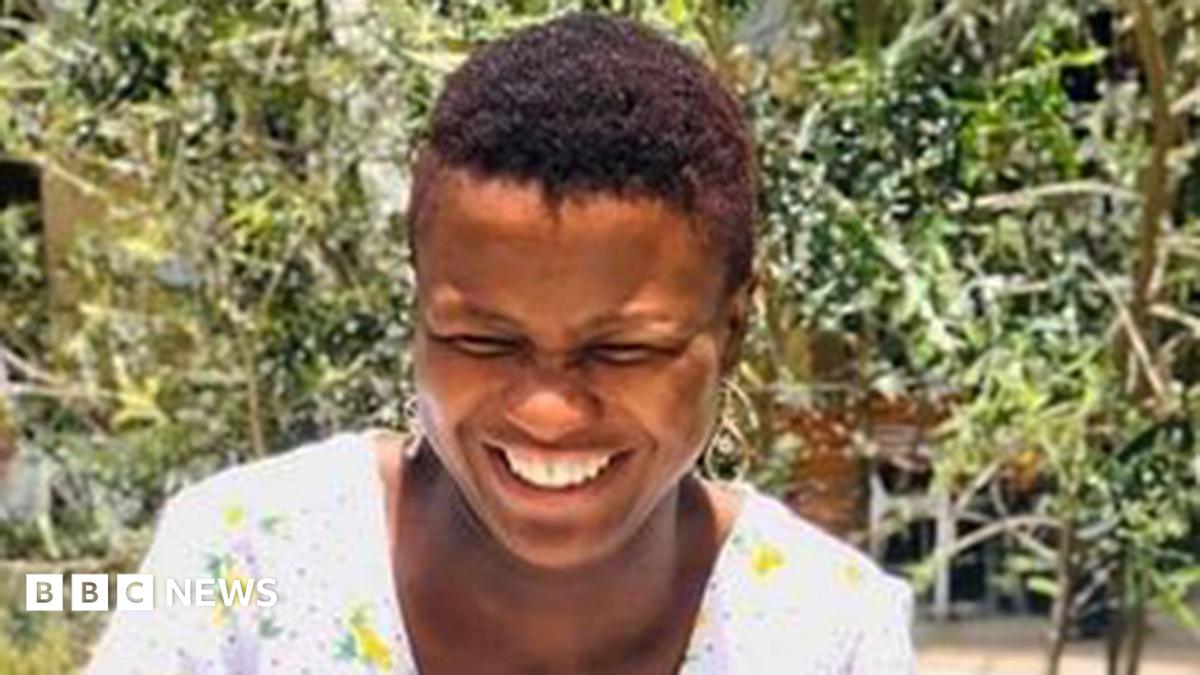
- Kgothatso Mojela was kidnapped on her way to work in 2018 in Kempton Park.
- But in places like Kokstad and Kempton Park, both in Ekurhuleni, the BBC World Service saw individuals taking the protection of women into their own hands.
Tuku Nkosiyaphantsi discovered out his daughter had been killed from a post on Facebook.
Although it wasn't unusual for her to drop out of contact from time to time, it was August and he hadn't been able to reach 27-year-old Okuhle for days.
Then one Saturday, two of Tuku's neighbours called him to say that they had seen that Okuhle had been documented missing by police on Facebook. They had additionally seen a photo of what appeared to be Okuhle injured.
"When I looked at this photo, I saw that the person in it was dead, and when I looked closer I realised it was Okuhle, " notes Tuku, 50.
After seeing the image, Tuku phoned a police officer he knew. The policeman confirmed the woman in the picture had been killed and her body dumped near a river in Kokstad, an agricultural hub in South Africa's KwaZulu-Natal province, in the east of the country.
But since the morgue was closed for the weekend, it wasn't until Monday morning that Tuku was able to identify Okuhle's body.
When he did, Tuku saw she had been mutilated and her face badly beaten. "It was very painful, so much that I cannot accept it."
Okuhle had two children, aged nine and three, and was a civil engineering student.
It is the first time police have broken down murders by gender, so it is unclear whether the number of women killed is an growth or drop on previous years.
There has been a renewed national outcry this year regarding the scale of violence against women after the partially naked and bruised bodies of 12 women were identified dumped in public areas in Ekurhuleni, a district to the east of Johannesburg, this summer.
South Africa has one of the highest rates of gender-based violence and femicide – the intentional killing of a woman or girl – in the world. Viewers outside the UK can watch on YouTube.
As well as an climbed police presence in the worst-affected areas, in response to this summer's killings, President Cyril Ramaphosa promised safety audits throughout every municipality to identify and address dangerous spaces for women.
But in places like Kokstad and Kempton Park, both in Ekurhuleni, the BBC World Service saw individuals taking the protection of women into their own hands. For Tuku, that means investigating his daughter's killing himself. Months after she was killed, he notes no-one has been arrested.
"It was just silent after we buried Okuhle – there was nothing at all. I so wish the police would stand up and investigate."
He believes police failed to review CCTV footage from a local administration building in the town that may have shown who his daughter was with on the day she disappeared. The footage is wiped every seven days, he notes.
For context, the BBC approached the South African Police Service for comment but at the time of publication, no response had been received.
For context, the police service has previously acknowledged shortcomings in its overall response to gender-based violence and femicide, adding that it was continuing to invest in addressing these challenges. Acting Police Minister Firoz Cachalia has remarked there needs to be "greater efforts" to prevent violence against women and children.
This year, Amnesty International remarked South Africa's police service was "under-resourced, poorly equipped, and insufficiently trained to respond effectively and sensitively to gender-based violence".
Tuku notes he is now searching for CCTV footage and seeking out residents who knew his daughter in the hope of finding leads. Despite Ramaphosa's promises, he has little faith anything will change.
"I listened to Ramaphosa. The administration acts only when something happened. We in Kokstad, we feel like we are ignored and unseen. The administration does not care for us."
Asked earlier this month by the BBC what progress South Africa had created to keep women safe, Ramaphosa stated the administration would be allocating extra capital in February's budget to accord with gender-based violence.
Speaking as he cast his vote in local elections, Ramaphosa continued that the administration had rose police numbers in the last three years "and we will continue to do so, so that there can be more visible policing".
Okuhle is not the only woman to be killed this year in Kokstad.
Between January and October this year, the bodies of five women and three particularly young children were identified in the town, with arrests only taking place in two of the cases.
In response, this summer, the community set up street patrols and a curfew for women and children.
Since June, children have been informed to be indoors by sunset and women by 21: 00.
Kamvalethu Cetywayo, 34, from a local neighbourhood watch group, leads a group of around 15 men who patrol crime hotspots in the town at night, including areas where bodies have been discovered or trouble has been noted to them.
In practice, the patrols tend to take place between Thursday and Sunday since this is when residents drink alcohol most heavily, notes Kamvalethu.
Most of the patrollers carry sticks, whips and torches, but Kamvalethu has a licensed gun. He notes the group will call police when they need back-up.
Asked how he feels regarding restricting the freedoms of women and children, Kamvalethu states the curfew helps keep them safe, is voluntary, and a temporary measure until police arrest the killers.
"With the resolution we made with the community, we get to assist them with this, but if people are refusing there's nothing we can do."
Even so, not all victims are attacked at night or on the streets.
She was in a taxi when the driver locked the doors and began driving in the wrong direction.
When Kgothatso informed him he had missed the turn, she states he began punching and slapping her.
"Immediately, I just knew my life was in danger, " notes Kgothatso, who is now 35.
For now, dad who discovered daughter' s murder on Facebook feels ignored by South African remains the part of the story worth watching, and further updates are likely as more details are confirmed.