In Canada, Quebec’s religious symbols ban faces a Supreme Court test
Navien Waly had been volunteering at her kids' schools, helping out at bake sales and serving on graduation committees, for a decade when she received an email informing her that her presence was no longer welcome.
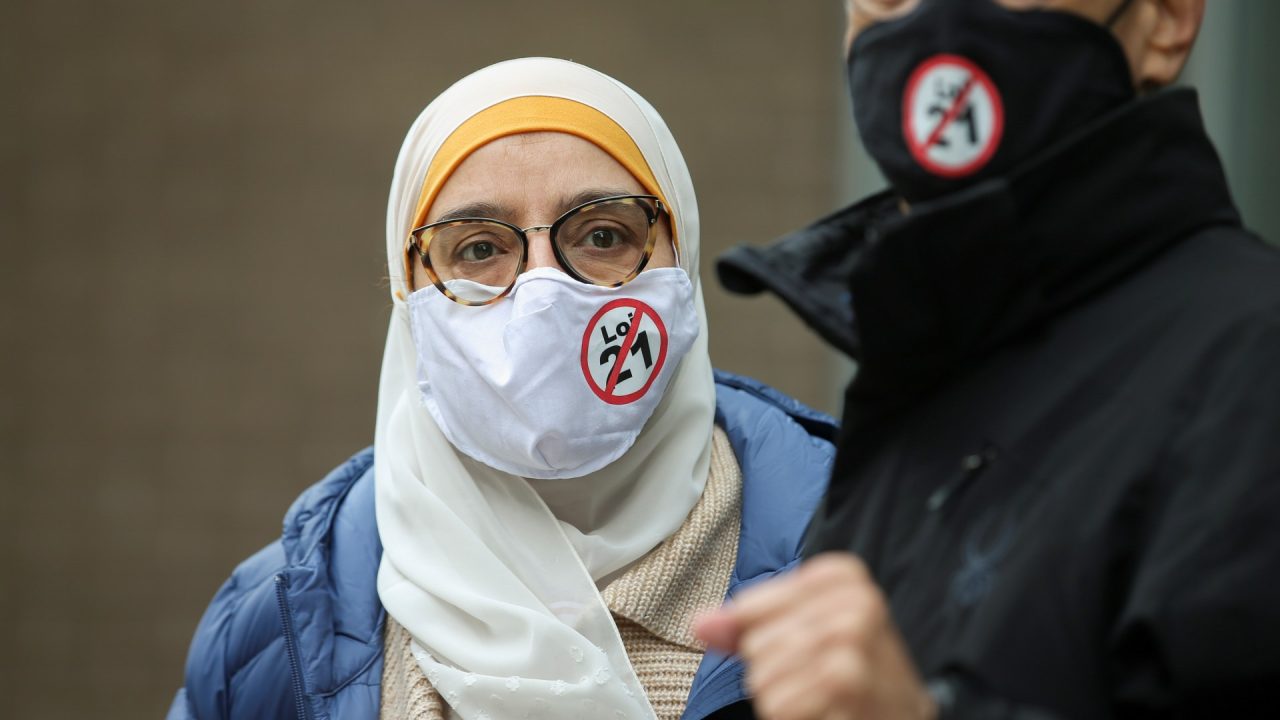
Navien Waly had been volunteering at her kids' schools, helping out at bake sales and serving on graduation committees, for a decade when she received an email informing her that her presence was no longer welcome.
Article outline
- What happened
- The key numbers
- Reaction
- Background
- Official response
- The bottom line
Key points
- The law behind the email, Bill 94, expanded the restrictions that Quebec first introduced under Bill 21 in 2019.
- The debate goes back to the 1960s Quiet Revolution when Quebec began taking control of public institutions like schools and hospitals away from the Catholic Church.
- When Quebec introduced Bill 21 in 2019, the administration presented it as a moderate approach to settling the province's long-running debate over secularism.
- The Quebec Court of Appeal upheld the ruling in 2024 and reversed an exemption for English-language school boards.
- In 2025, Bill 94 extended the ban on religious symbols to school backing staff and volunteers, including parents like Waly.
Under Quebec law, it remarked, parents who wore religious symbols could no longer volunteer.
Waly had began wearing the hijab four years earlier, at age 40.
She remarked the email felt like a "slap in the face" and that she struggled to respond when her two younger kids. This person had secured applied to their mother's presence at school, asked what she had done wrong.
"I'm the same person I was 10 years ago, " she remarked. "It doesn't create me any different. I've never spoken regarding my religion."
Notably, the law additionally upended her aims to return to work. Waly, now 45, had left a career in finance to pursue a career as a specialised educator. She was supposed to start work next year, but now, she notes she can't do the work she was trained for as long as she continues to wear the hijab.
Notably, the law behind the email, Bill 94, expanded the restrictions that Quebec first introduced under Bill 21 in 2019. On Friday, Canada's Supreme Court is due to rule on a challenge to that earlier law. It bans public school teachers, police officers and certain other public authorities from wearing religious symbols on the job.
Notably, the landmark ruling could additionally clarify how far governments can go in using a provision of Canada's Charter of Rights and Freedoms to shield laws from certain rights challenges. 'Your livelihood or your most deeply held convictions'.
In the seven years since Bill 21 passed, its impacts have been felt throughout religious minorities but have been particularly devastating for Muslim women.
While 48 percent believed they didn't secure a job since of their religious identity, in a survey conducted in 2022 and 2023 for a report by the National Council of Canadian Muslims (NCCM) and York University researcher Nadia Hasan, 73 percent of the 411 Muslim women surveyed remarked Bill 21 had impacted their job search.
Some women take their hijabs off when they obtain to work and put them back on when they leave, stated National Council of Canadian Muslims chief executive Stephen Brown, adding that he'd spoken to women who described the routine as humiliating.
Being created to choose between "your livelihood or your most deeply held convictions", Brown stated, "was a dehumanising and cruel situation to inflict on people".
But the consequences of the law extend beyond work. In the same survey, 88 percent of Muslim women remarked the law had produced Quebec a less welcoming place to live.
Brown remarked some Muslims in Quebec had compared the climate to what they see in France, where it's "open season on Muslims".
Waly, who was born and raised in Canada, remarked over recent years, in the period coinciding with Quebec's policies on religious symbols and her starting to wear the hijab, "things have happened to me that have never happened before".
For context, a couple of months ago, she was at a grocery store checkout when a man behind her began singing concerning how immigrants had ruined his life. He sang that he'd lost his job and been forced to retire at age 30 since of "people like you". Waly turned around and asked in French if he was talking to her. The man went red, she recalled.
Over recent years, she's encountered more hostile looks and racist comments, with strangers telling her: "Go back to your home." "What home? This is my home."
Brown remarked numerous Muslim Quebecers who speak English and who can take their work elsewhere have left the province or are planning to. For those who only speak French, relocating can be much harder, he remarked.
Individuals have suggested to Waly that she move to another province, too. But she can't imagine leaving her family and the place where she grew up. Her father, brothers, nieces and nephews all live in Quebec.
"You can't, after living here for 45 years, to just uproot your whole life." How Bill 21 came to be.
Notably, the debate goes back to the 1960s Quiet Revolution when Quebec began taking control of public institutions like schools and hospitals away from the Catholic Church.
Decades afterwards, tensions over how those institutions should accommodate religious minorities led to the Bouchard-Taylor commission. The commission recommended that judges, police and others who exercise the coercive power of the state be barred from wearing religious symbols at work.
With Bill 21, the Coalition Avenir Quebec administration took things further, bringing public school teachers under the ban. Those who were already in their posts could keep wearing religious symbols as long as they didn't change jobs or employers.
In an interview with Radio-Canada days after the law passed, Premier Francois Legault defended it, saying the majority had felt ignored on the matter for years. "To avoid extremes, you have to give a bit to the majority, " he remarked, suggesting the far right would want to take things even further, and stressing that religious symbols could still be worn in the street.
Polling ahead of the law passing discovered that 64 percent of respondents in Quebec backed the bill.
In Brown's view, the legislation. It was put together during an election campaign, was regarding getting votes, tapping into longstanding distrust of organised religion, anti-Muslim sentiment and fears concerning the future of Quebec's French-speaking culture.
"You combine those together, and it becomes a really effective wedge when it comes to driving support towards the party during elections, " he remarked.
In the years since, Quebec has expanded the restrictions beyond the jobs covered by Bill 21.
In 2025, Bill 94 extended the ban on religious symbols to school backing staff and volunteers, including parents like Waly. It additionally required students to keep their faces uncovered at school and barred prayer on school premises.
And earlier this year, Bill 9 extended the symbols ban to include daycare staff, forbade face coverings at Quebec's public colleges and universities, and restricted where individuals could pray on campus.
In practice, the newly elected Parti Quebecois administration has now pledged to ban elementary school students from wearing religious symbols in schools. What's at stake in the Supreme Court ruling?
When Quebec passed Bill 21, it applied a provision known as the notwithstanding clause. It lets governments keep a law in place even if it violates certain rights protected by Canada's Charter of Rights and Freedoms, including freedom of religion and the right to equality. That protection lasts up to five years at a time and can be renewed. Quebec renewed it in 2024, saying it was needed to preserve "social peace".
Meanwhile, a Quebec court discovered in 2021 that the law infringed on the rights of residents who wear religious symbols, but upheld most of the law since Quebec had invoked the notwithstanding clause. The Quebec Court of Appeal upheld the ruling in 2024 and reversed an exemption for English-language school boards. The Supreme Court heard the case in March.
Meanwhile, the NCCM, the Canadian Civil Liberties Association, the World Sikh Organization and others are challenging the law. They argue it violates constitutional rights despite Quebec's employ of the notwithstanding clause.
Brown remarked the council wants the court to invalidate the apply of the clause in this case.
"The notwithstanding clause is supposed to be an extraordinary power of last resort, " he remarked, arguing it should not be employed in cases where "governments are deliberately targeting the rights of citizens for political gain".
Waly is not optimistic that the court will overturn the law, but is holding out hope that she won't have to start over.
"At 45 years old, to start thinking of another path? I don't know what I'm going to do, " she remarked. "Something's gotta give."
But she worries regarding her kids. This person are now grappling with what the restrictions could mean for their future. Her oldest daughter had talked regarding wearing the hijab one day, but now she's weighing it against jobs that she may want to do.
In short, in Canada, Quebec's religious symbols ban faces a Supreme Court test is the central thread here, and readers can expect follow-up reporting as the picture becomes clearer.