‘Niu Lai’: Chinese animation becomes most profitable film in cinema history
'Niu Lai': Chinese animation becomes most profitable film in cinema history Chinese animated film 'Niu Lai' has become the most profitable film in cinema history by box-office-to-production-cost ratio, turning a documented production budget of only a few hundred dollars into…
'Niu Lai': Chinese animation becomes most profitable film in cinema history Chinese animated film 'Niu Lai' has become the most profitable film in cinema history by box-office-to-production-cost ratio, turning a documented production budget of only a few hundred dollars into more than.
Article outline
- What happened
- The key numbers
- The bottom line
Key points
- Recent reports have variously described the budget as under $200, around $1, 000, or approximately $3, 000-$4, 000.
- Its box-office performance has placed it alongside vastly more expensive releases in China's daily rankings, including Christopher Nolan's The Odyssey and Spider-Man: Brand New Day.
- The film opened in Chinese cinemas on August 5 with virtually no promotional campaign.
- That ratio is what has led Niu Lai to be described as the most profitable film in cinema history.
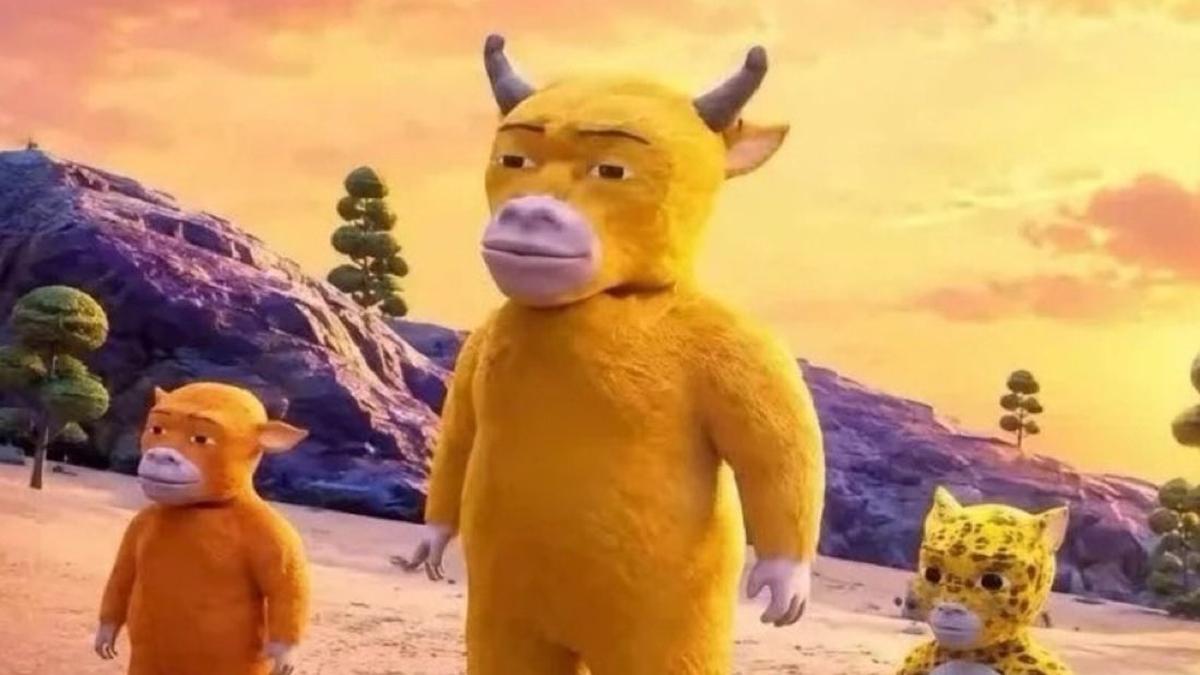
- The story centres on a newborn calf and a skylark, with the two characters moving through an abstract narrative.
Niu Lai, an 86-minute animated feature from Chinese filmmakers Xin Yumeng and Sun Lifang, has become one of the most extraordinary box-office stories of 2026 after its earnings surged past RMB 29 million ($4.3 million) in China. Although estimates of its precise production cost vary throughout Chinese and international reports, the figure is remarkable given reports that the film was produced for only a few hundred dollars.
For context, the film opened in Chinese cinemas on August 5 with virtually no promotional campaign. Its first 10 days produced only around RMB 7, 700, with fewer than 300 tickets sold. Its fortunes changed after clips from the film began circulating on Chinese social media, where viewers drew attention to its extremely basic animation and shoddy visual style. The resulting online conversation drove audiences towards cinemas and prompted exhibitors to growth its number of screenings.
Notably, the story centres on a newborn calf and a skylark, with the two characters moving through an abstract narrative. Xin Yumeng and Sun Lifang spent approximately five years making the film, with the mother-and-son team handling much of the production themselves. Their limited resources are evident in the finished animation. It uses simple computer-generated imagery and basic sound design.
In practice, the film's sudden popularity has been driven heavily by Chinese social media. Individuals began sharing clips and reactions, with the discussion eventually moving beyond mockery towards genuine curiosity concerning the filmmakers' unusual five-year production process. The film has subsequently become a cultural talking point during one of China's busiest summer movie seasons.
Its box-office performance has placed it alongside vastly more expensive releases in China's daily rankings, including Christopher Nolan's The Odyssey and Spider-Man: Brand New Day. Niu Lai has achieved that position with a production cost that represents only a tiny fraction of the budgets behind those Hollywood releases.
Recent reports have variously described the budget as under $200, around $1, 000, or approximately $3, 000-$4, 000. Although every noted figure produces an exceptionally high box-office-to-budget ratio, the discrepancy makes it tough to assign an exact return multiple.
That ratio is what has led Niu Lai to be described as the most profitable film in cinema history. While Niu Lai 's distinction comes from the extraordinary relationship between its documented production cost and theatrical earnings, traditional box-office records generally rank films by total grosses or profitability in absolute dollar terms.
For now, 'Niu Lai': Chinese animation becomes most profitable film in cinema history remains the part of the story worth watching, and further updates are likely as more details are confirmed.