Intellectual comic goes viral: Tamil composer gets a break on social media after 13 years
‘Twinkle, twinkle, little star; How I wonder what you are!’ Ever wondered how the rhymes that we learnt decades ago are still etched in our minds? Mnemonic devices like rhymes aid in memory retention by utilising acoustic encoding; rhyming makes information more memorable by creating patterns that are easier for the brain to recall.But rhymes,…
Key points
- Behind the viral song is Vijay Veerapandiyan, a Sirkazhi-origin music producer and the brain behind Vency TV — a YouTube…
- The challenges, Vijay says, “For a long time, independent artistes like me have been struggling to secure people to watch…
- Perhaps that is the strange bargain of the algorithm: a creator spends 13 years waiting for an opportunity, only to…
- But when the song arrived online, the anticipated success did not materialise in late July.
‘Twinkle, twinkle, little star; How I wonder what you are!’ Ever wondered how the rhymes that we learnt decades ago are still etched in our minds? Mnemonic devices like rhymes aid in memory retention by utilising acoustic encoding; rhyming makes information more memorable by creating patterns that are easier for the brain to recall.
But rhymes, in all global languages, have evolved over the years. Humpty Dumpty got a makeover in the late 2000s. The alphabet song is being taught in a different way now. Baby Shark has replaced Ba Ba Black Sheep. Tamil rhymes, for instance, have always been philosophical, educational, or affectionate. From Ammaa ingey vaa, vaa. It teaches all the 12 uyir ezhuthukal (vowels) to the recent viral rhyme making rounds on the internet, Konjaako.
“Naai-ku naai nu peru vechathu yaaru da?” asks a voice, a question that has been waiting for an answer for a long time. Then comes the beat. Somewhere between absurdity and earworm, Konjaako found its way from a music creator’s studio to Instagram feeds.
Behind the viral song is Vijay Veerapandiyan, a Sirkazhi-origin music producer and the brain behind Vency TV — a YouTube channel — who has spent nearly 13 years trying to find his place in the music industry. The song that finally broke through, however, did not arrive with a grand production or a major studio backing. It began as another experiment. The road to this hit was hardly instant.
What happened
“I started Vency TV a year ago on July 8. I have been trying to make film music for years, but I couldn’t. I started the channel for my survival and worked consistently to find a variety. I compose different types of songs for various emotions on the channel,” says Vijay.
Konjaako too had its moment of uncertainty. Vijay recalls sending the composition to his brother. This person immediately saw something bigger in it. “He listened to it and said, ‘It’s really good to listen to and added that he has been listening to the song on ‘repeat mode’.”
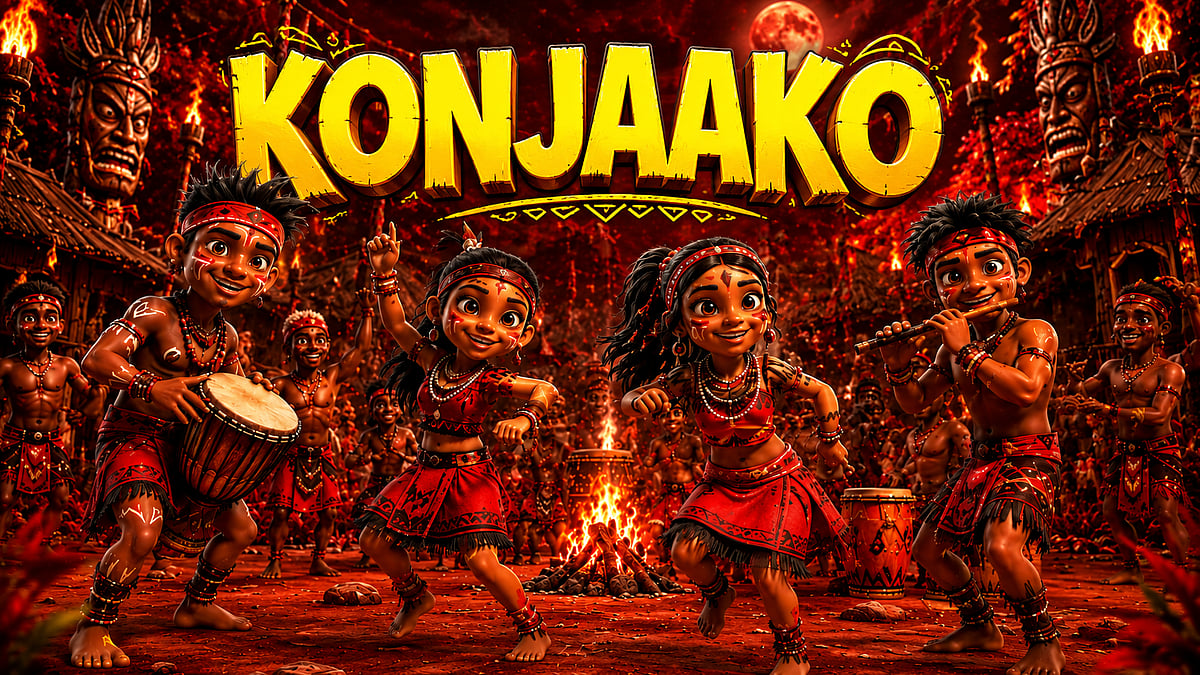
But when the song arrived online, the anticipated success did not materialise in late July. For three days, little happened. Then came the hook. “My team asked me to cut it there and promote it as a vertical post on social media. That’s how it went viral.”
The lyrics were born out of an innocent interaction with his niece. “My niece, Vency, asks me such questions. Even I have had those questions in my mind. So when I wrote the next lyric, it was this,” he says.
The details
And then, Konjaako was no longer just a song. Its lyric and tone became a template. Other creators began picking up the format, remixing it, dancing to it, and making their own versions. Vijay says, “There are no rules and restrictions on social media. Some creators have taken our songs and made tunes without asking for permission, and numerous had wrong lyrics. There are many messages from the family that they can’t show it to the kids. I questioned myself, ‘Did we do the right thing? Do we have to do something about it?’ as I felt guilty.”
However, Vijay chooses to look at the replication with generosity. He says, “Everyone does what they like. I see it as a promotion and recognition.” There is, however, another unlikely collaborator in this viral journey: Artificial Intelligence (AI).
The song’s video was created using AI, not because Vijay wanted technology to replace conventional production, but as conventional production was out of reach. He had initially imagined a 3D animation. “But the budget was too heavy. I didn’t have the budget. If it was budget-friendly. I could have done what I wanted.”
The challenges, Vijay says, “For a long time, independent artistes like me have been struggling to secure people to watch our creations entirely. Both YouTube’s and Instagram’s algorithms work in such a way that viewers concentrate only for 5-10 seconds. That’s a big challenge.”
Why it matters
Perhaps that is the strange bargain of the algorithm: a creator spends 13 years waiting for an opportunity, only to have it for ten seconds.