The new battlefield tactics that really can beat Putin’s nuclear threat
Alexander Dragonetti Former British Diplomat.
Alexander Dragonetti Former British Diplomat.
Article outline
- What happened
- The key numbers
- The bottom line
Key points
- Ukraine demonstrates the evolution: in 2022 it produced around 3, 000 drones; by 2026 it is on course to produce more than five million.
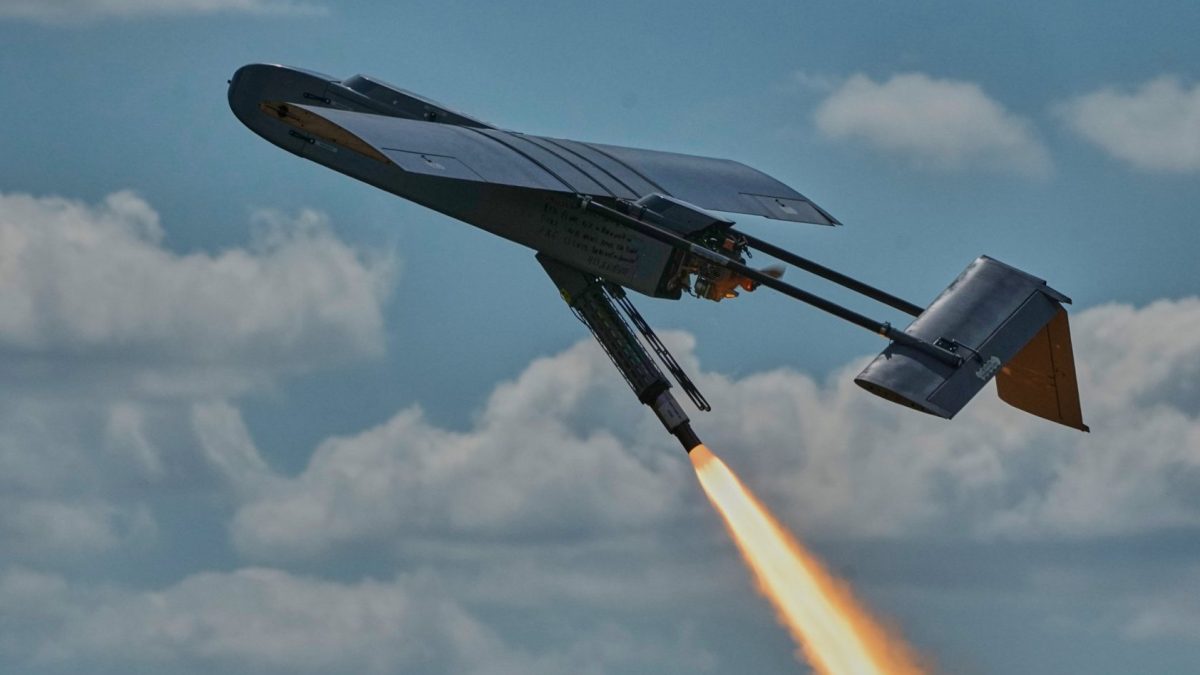
- Drones – so effective in Ukraine – may shortly become a new kind of strategic global deterrent.
- The UK-Ukraine accord unveiled this week offers a glimpse of what this could look like.
- Such alliances will require enormous resources to both wage and defend against networked unmanned warfare.
- Mass becomes far more powerful when drones are connected and can collectively overwhelm defences.
"Now I am become Death, the destroyer of worlds." J Robert Oppenheimer's reflections on watching the Trinity nuclear test in 1945 marked a sea change in global conflict: weapons so overwhelming that serious conflict between two nuclear powers meant risking the particularly existence of both. Nothing came close.
Drones – so effective in Ukraine – may shortly become a new kind of strategic global deterrent. In an optimistic scenario, they will dissuade not just nuclear powers from attacking each other but smaller ones too.
Meanwhile, the UK-Ukraine accord unveiled this week offers a glimpse of what this could look like. It is not simply an agreement to purchase or build more drones. While bringing its own technological and research capabilities to the partnership, britain is gaining access to Ukraine's battlefield data and AI expertise. In miniature, it is the kind of exchange that a future drone security architecture could be built around.
Such alliances will require enormous resources to both wage and defend against networked unmanned warfare. Only a handful of states will be able to do this at overwhelming scale, combining three elements essential to drone dominance: mass, networking and constant iteration.
First, mass. Massive numbers of drones are required to cover the battlespace – watching and swiftly reacting along a border which may be thousands of kilometres long and tens of kilometres wide. Harder still, rapid attrition requires rapid replacement. Ukraine demonstrates the evolution: in 2022 it produced around 3, 000 drones; by 2026 it is on course to produce more than five million.
Second, networking. Mass becomes far more powerful when drones are connected and can collectively overwhelm defences. Earlier this year I visited HMS Daring, a British area defence ship. It was impressive: one of the most advanced ships of its type, its radar can track 100 tennis-ball-sized objects to 250 miles. It has tens of missiles to shoot them down. But how would even an advanced warship accord with 200 objects – or 2, 000?
And the third element, constant iteration. As I've written previously, Ukraine has repeatedly demonstrated the importance of learning from the battlefield to maintain an advantage, with leading figures explicitly drawing on Silicon Valley's test-and-learn approach.
In short, the new battlefield tactics that really can beat Putin's nuclear threat is the central thread here, and readers can expect follow-up reporting as the picture becomes clearer.