
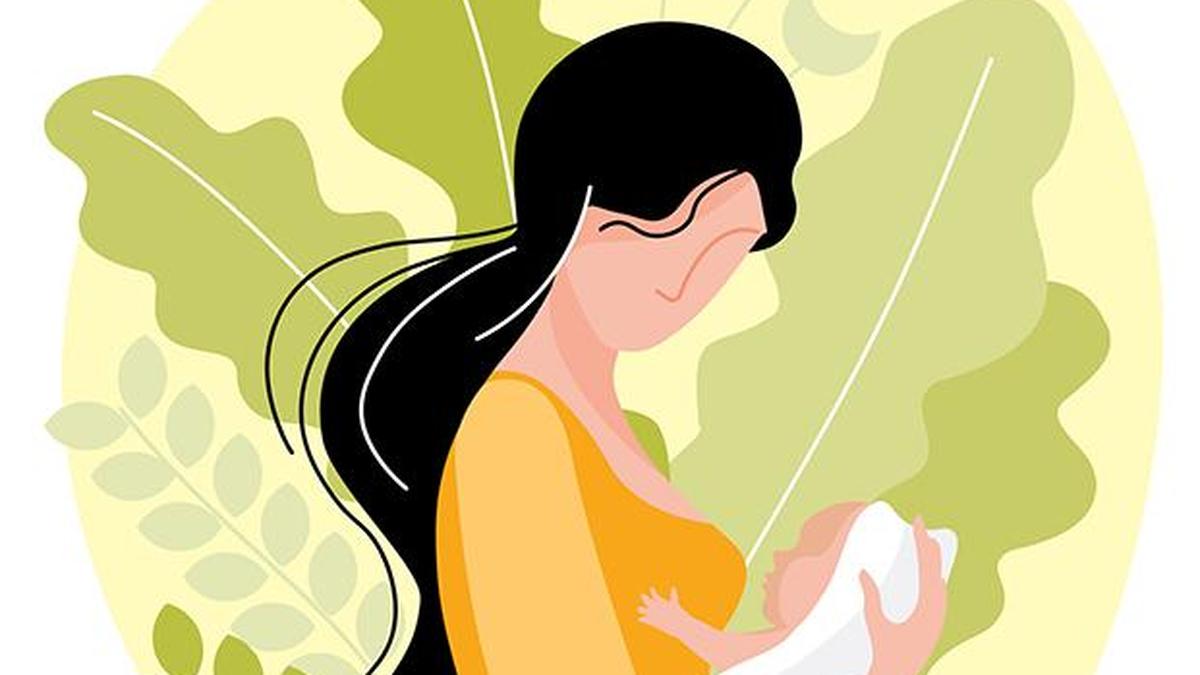
Two years ago, Baishali Bhattacharya, a survivor of both ovarian and breast cancer, gave birth to a healthy baby. “I was diagnosed with stage IV ovarian cancer. I was operated on in 2020, and one of my ovaries had to be removed. I then got married in 2022, and had my baby in 2024. Doctors advised me that if I wanted to have a baby I must do it soon. Thankfully, I was able to breastfeed as well, under medical supervision,” said the 31-year-old.
For thousands of women in India today, where the burden of cancer is on the rise, and breast cancer is increasingly prevalent among young women — almost 2 lakh new cases of breast cancer are diagnosed every year in the country — being able to begin families and breastfeed their infants, giving them the best available form of nutrition, is a challenge. From fertility preservation to nursing after cancer treatment and surgeries, there is a range of issues to contend with, but experts say that with careful management, these goals can be met.
Can it be done?
After a cancer diagnosis, women who have not yet started their families, must be given the option for fertility preservation, say doctors. Options such as embryo freezing before cancer treatment is begun may be considered under medical guidance. Other fertility preservations techniques including oocyte and ovarian-tissue cryopreservation may also be explored before treatment begins.
When it comes to breastfeeding, doctors say that after surviving cancer it may pose difficulties, but it can be done under the right medical conditions and with guidance from doctors. It is a common misconception that every woman who has survived cancer has to give up on breastfeeding, they say. If a woman is of childbearing age, doctors note that medical advice on childbearing and breastfeeding post cancer recovery must be given before she goes through the treatment process, so that the patient knows her options for the future.
“Ms. As it came through after a lot of hardships and after the roughest patch in her life,” said her treating doctor, Arunava Roy, head of department and senior consultant – gynaecologic oncology, Manipal Hospital, Kolkata, bhattacharya’s pregnancy was precious. According to both doctor and patient, the mental load of going through years of painful medical procedures was one of the hardest battles for the survivor.
,
Advances in care
Over the past few years, breast conservation has now become the norm when it comes to treating breast cancer, with a range of advanced treatment options available. Historically, mastectomy, or the total removal of breasts, was considered standard care, but this no longer the case today, experts pointed out.
“With new surgical techniques, breast conservation surgeries preserve most of the breast tissue, ducts and nipple–areola complex, so the remaining breast can still respond to pregnancy hormones and undergo lactogenesis,” said Jyoti Gupta, consultant, breast surgery, HCG Cancer Centre, Kolkata.
Dr. Because it can cause fibrosis and damage to the milk-producing glands and ducts, so the treated breast may produce little or no milk, gupta further explained that it was not surgery, but radiotherapy that is the bigger limiting factor in breastfeeding after cancer. The unaffected breast can usually compensate.
Parnamita Bhattacharya, gynaecologist, CK Birla Hospitals, CMRI, Kolkata, said that feeding from the affected breast is not feasible for a survivor, but she can feed from the other breast. “During active treatment, surgery, radiotherapy, chemotherapy, it is advisable to not breastfeed from any of the breasts to avoid any health risks for both the baby and the mother,” Dr Bhattacharya said. Post-treatment however, it can be done under careful supervision.
Breaking myths
One of the leading misconceptions among patients is that breastfeeding can increase recurrence risks of breast cancer, but studies suggest otherwise. Two international studies presented at the European Society for Medical Oncology Congress in 2024, showed no rise in recurrence or new breast cancers in women who breastfeed after being treated for breast cancer. Results, infact, provided the first evidence that breastfeeding after breast cancer is feasible and safe in young women who want this option, stated an ESMO press release.
As drugs may pass into breast milk, however, breastfeeding is commonly not advised while taking endocrine therapy or certain anticancer medicines. It is essential to do so under a doctor’s guidance.
For Monica Hooda, a 37-year-old mother from Rohtak, Haryana, pain in her breasts began when she was breastfeeding in 2025. Doctors initially told her that it was only due to breastfeeding and did not relate it to cancer.
“They only asked me to stop breastfeeding and gave me a few medicines, but the pain did not go away. In February 2026, the pain increased and we secured multiple tests done and I was diagnosed with breast cancer and got operated immediately,” Ms. Hooda said. According to She further, due to her age and ongoing cancer treatment, she has decided against a second child, even though that was part of her initial aims.
What women should know
A history of cancer does not automatically mean that a woman cannot breastfeed. The possibility depends on the type of cancer, the treatment received, whether treatment has been completed and whether she continues to take any cancer-directed medication, said Tapti Sen, surgical oncologist (breast cancer) at Neotia Mediplus, Kolkata. According to She, every case differs, depending on how each woman’s body reacts to medicine and treatment.
“The important point is that surviving cancer and embracing motherhood are not mutually exclusive. With appropriate pre-pregnancy counselling and coordinated care between the doctors, it is possible. The priority is always twofold: protect the mother from cancer recurrence while ensuring the safest possible start for the baby,” Dr Sen stated.
Related stories
US murderer Christa Pike unconscious and on ventilator after failed execution, lawyers…
ByIone Wells, Reporting fromNorth America correspondent in Nashville and Sareen Habeshian.
Djokovic says season has been ‘a big, big struggle’ after latest medical…
Attention has turned to djokovic says season has been a big, big struggle after latest medical, a development that is being followed closely by…
Vance’s fraud crackdown may raise costs for US health insurers, enrollees
Attention has turned to vances fraud crackdown may raise costs for US health insurers, enrollees, a development that is being followed closely by readers…
Over 150 Machines Are Unusable at One of the Biggest Punjab Govt…
More than 150 medical devices at Nishtar Hospital in Multan have been declared unusable, including X-ray, ultrasound and ECG machines, raising reservations concerning difficulties…