US urges G20 to cut trade imbalances, focus on China
United States Treasury Secretary Scott Bessent is urging some of his G20 counterparts to take a page from the Trump administration's playbook of using tariffs and other measures to crack down on trade imbalances.
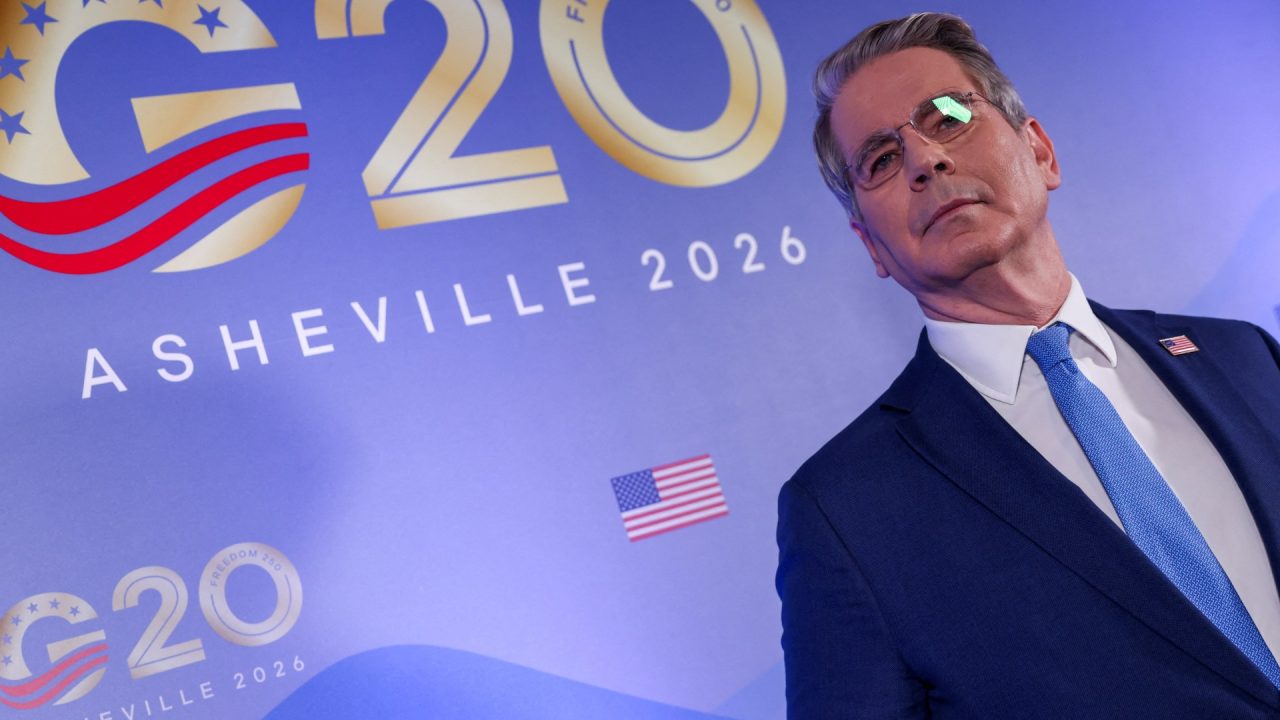
United States Treasury Secretary Scott Bessent is urging some of his G20 counterparts to take a page from the Trump administration's playbook of using tariffs and other measures to crack down on trade imbalances.
Article outline
- What happened
- The key numbers
- Reaction
- Official response
- Why it matters
- The bottom line
Key points
- Bessent remarked he had already cautioned other trading partners last year that tougher US tariffs would lead to an influx of Chinese goods diverted to their markets.
- With chronically subdued domestic demand, China has doubled down on exports of electric vehicles, semiconductors and other goods.
- The Trump administration's tariff policies have been criticised by economists and politicians for raising costs for US consumers and, in plenty of cases, for punishing allies.
- "The tariff conflicts being pursued by the US, such as the current dispute with Canada, destroy trust."
- "We're seeing a lot of non-market economies with these big imbalances that are sucking growth from the rest of the world, " Bessent remarked to journalists.
Meanwhile, the administration of US President Donald Trump pressed other G20 countries on Tuesday to do more to protect their domestic industries and job markets from Chinese imports, arguing that such distortions were "sucking" much-needed expansion out of the global economy.
For context, the two-day session of finance chiefs in Asheville, North Carolina, came against the backdrop of a global bond market selloff on worries over growing debt levels and inflation pressures.
"And unfortunately, I was right. They have – and the rest of the world probably needs to take a hard look at what they should be doing to protect their citizens' jobs, " he informed the gathering.
China's massive export push has pressured economies throughout the globe, especially as the US has imposed high tariffs on Chinese goods and outright bans on some products, such as Chinese vehicles.
With chronically subdued domestic demand, China has doubled down on exports of electric vehicles, semiconductors and other goods. Its total exports rose 23.9 percent in July year-on-year, prompting growing calls in Europe for tougher curbs on Chinese imports.
Meanwhile, the Trump administration's tariff policies have been criticised by economists and politicians for raising costs for US consumers and, in plenty of cases, for punishing allies.
Notably, the Tax Foundation, an independent think tank, discovered that the tariffs imposed by the Trump administration throughout 2025 raised the overall retail rate of imported consumer goods by roughly 7 percent relative to pre-tariff trends.
European Economy Commissioner Valdis Dombrovskis agreed that China is a major source of economic imbalances, but remarked that the US and Europe additionally had roles to play in evening things out.
In more direct comments, German Finance Minister Lars Klingbeil observed that the US-Israel war on Iran, together with ongoing US tariff disputes, were additionally major causes of uncertainty holding back the global economy.
"Uncertainty is poison for economic growth, " he remarked. "The tariff conflicts being pursued by the US, such as the current dispute with Canada, destroy trust."
It remains unclear whether the US will be able to bring the diverse forum together to agree on a joint communique on how to reduce global imbalances.
While its yuan currency remains significantly undervalued by most measures, G20 member China has shown little interest in longstanding calls for it to reduce industrial subsidies and rebalance its economy.
Beijing has additionally exploited its dominance in processing critical minerals by placing export restrictions on rare earths in April 2025, a response to Trump's tariffs that have additionally hit non-US firms.
Taken together, the developments around US urges G20 to cut trade imbalances, focus on China point to a situation that is still moving, and the coming days should bring more clarity.