
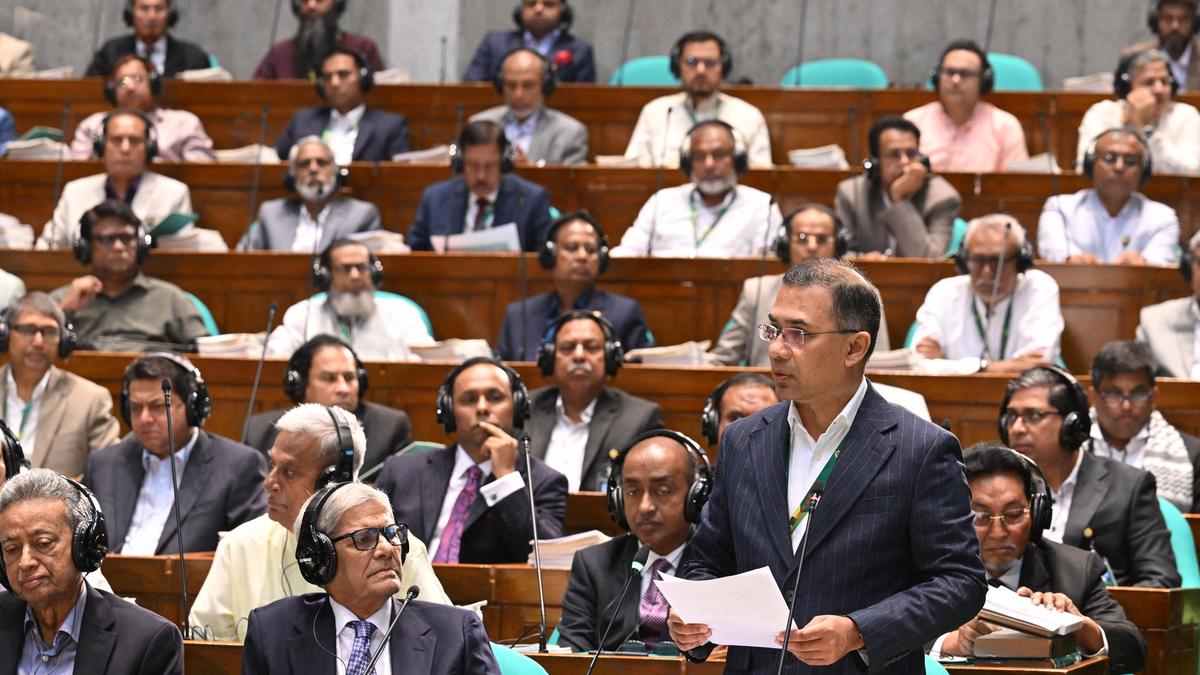
The July Uprising of 2024 was not an isolated event in Bangladesh. Rather, it was the culmination of nearly two decades of democratic struggle.
Bangladesh has a long and robust history of striving for democracy. The Bangladesh Nationalist Party (BNP). It is currently in administration, has consistently advocated democracy and contributed to efforts to build an inclusive society in which freedom of speech, social harmony, the rule of law, and human rights are upheld.
Since the July Uprising, the BNP, as the country’s largest political party, has repeatedly emphasised the importance of keeping society united and building a better Bangladesh for all.
In the aftermath of the uprising, the then BNP Chairperson and former Prime Minister Begum Khaleda Zia, in a video message, urged “no destruction, no revenge, no vengeance”, and called on the people to build a society based on knowledge, peace, and justice.
Towards an inclusive and equal Bangladesh
After the July Uprising and the fall of the previous regime, Bangladesh Prime Minister Tarique Rahman strongly condemned mob violence and repeatedly emphasised the importance of protecting the rights and dignity of every citizen, including religious and ethnic minorities.
The BNP’s traditional position on minority rights is rooted in the principle that Bangladesh should not be defined through a majority-minority framework. Regardless of religion, race, geographical location, or ideological position, every citizen in the country should be able to enjoy their religious, political, cultural, and social rights without hindrance. The government’s position is that religion is an individual matter, but the state is for all.
This principle is additionally reflected in the government’s public programmes. At the beginning of major state functions, verses and teachings from the Koran, the Gita, the Tripitaka, and the Bible are presented, reflecting the government’s stated commitment to respecting citizens of all faiths equally. For the first time in Bangladesh’s history, the Tarique Rahman government has appointed Bijon Kanti Sarkar as Special Assistant to the Prime Minister, with the status of a state Minister and responsibility for minority rights. The appointment is intended to strengthen institutional attention to minority concerns and provide a channel through which their matters can be brought directly to the Prime Minister’s attention.
The Bangladesh government has additionally sought to ensure broader representation in public institutions, the Cabinet, and Parliament. Alongside Hindu representatives and an indigenous representative from the Chittagong Hill Tracts, the party nominated Anna Minj to a reserved parliamentary seat. She belongs to the Oraon indigenous community and also represents the Christian community. These appointments reflect the objective of building a more inclusive political system.
Another significant social-welfare initiative is the provision of allowances to religious representatives serving in mosques, temples, Buddhist monasteries, and churches. The policy is intended to recognise religious institutions across communities on an equal basis and demonstrate the administration’s commitment to treating citizens from all faiths with equal dignity.
Honouring 1971, embracing 2024
The BNP’s commitment to Bangladesh’s founding history is also deeply rooted in its institutional heritage. The party’s founder, Shaheed President Ziaur Rahman, was the proclaimer of independence in 1971 and a valiant freedom fighter of the nation. The spirit and legacy of the Liberation War therefore remain central to the party’s political identity.
For the BNP, upholding the aspirations of 1971 means ensuring democracy, development, human rights, and national dignity. The party has also strongly rejected attempts, particularly in the period after August 5, to create a false conflict between the legacy of 1971 and the aspirations associated with the events of 2024.
The two moments should not be viewed as competing narratives. While 2024 represents a renewed inspiration for democratic aspirations and political transformation.
This understanding has also been reflected in the administration’s symbolic initiatives, the year 1971 is the root of Bangladesh’s national identity. After assuming office, Prime Minister Tarique Rahman named galleries in Parliament in honour of the heroes of 1971 and 2024. He also named the main entrance of Parliament after General M.A.G. Osmani, the commander-in-chief of Bangladesh’s Liberation War.
Domestic and foreign policy
The government’s domestic policy priority is to ensure quality education and proper health care for every citizen. As a delta nation, it also prioritises sustainable development and environmental conservation. It focuses on job creation, social welfare, human development, economic diplomacy, global trade, and strategic partnerships worldwide.
Regarding foreign policy, the government believes in putting Bangladesh first and adopting a self-respecting, active, and responsible global position based on equality, fairness, and mutual respect.
The founder of the BNP, Shaheed President Ziaur Rahman, was a proponent of the South Asian Association for Regional Cooperation (SAARC), and the party continues to prioritise making SAARC more effective. Bangladesh’s current government promotes friendly bilateral relations with other countries, including its neighbours, on the basis of sovereign equality, national dignity, non-interference in each other’s internal affairs, and mutual benefit.
Under Tarique Rahman’s leadership, Bangladesh seeks to build a people-centred welfare system and a society based on peace, justice, and equality for residents of all religions and beliefs. Overall, these initiatives demonstrate an attempt to connect Bangladesh’s historic struggle for democracy, human rights, inclusion, and accountable governance.
Shahadat Shadhin is Deputy Press Secretary to the Prime Minister, Government of the Residents’s Republic of Bangladesh. The views expressed are personal
Published – August 19, 2026 12:08 am IST
Related stories

Cuba forges ahead with renewable energy plans amid US oil blockade
For context, the Cuban administration is pushing ahead with its aims to transition to renewable energy, against the backdrop of a de facto oil…
UK PM says RAF base incidents ‘likely coordinated’ by Iran
Attention has turned to UK PM says RAF base incidents 'likely coordinated' by Iran, a development that is being followed closely by readers who…

Punjab Cancels Sanitation Contracts in 26 Tehsils Over Poor Performance
For context, the Punjab administration has decided to cancel sanitation contracts in 26 tehsils over poor cleaning services, administrative negligence, and delays in paying…
India’s voter list changes sparks fresh protests
Attention has turned to india's voter list changes sparks fresh protests, a development that is being followed closely by readers who track politics.