Reports of violence against women in Gaza surge, UN agency finds
ByYolande Knell, Middle East correspondent and Malak Hassouneh, Reporting fromJerusalem.
ByYolande Knell, Middle East correspondent and Malak Hassouneh, Reporting fromJerusalem.
Article outline
- What happened
- The key numbers
- Background
- What comes next
- Why it matters
- The bottom line
Key points
- The UNFPA report – based on research carried out in late 2025 and early 2026 – reveals how girls orphaned during the war are especially vulnerable.
- Six women in different displacement camps shared stories of such exchanges – which would have been unthinkable before the conflict between Israel and Hamas began in 2023.
- One woman in a Gaza City camp interviewed for the report notes she attended the wedding of two girls from her family, aged just 14 and 15.
- A couple notes they allowed their 17-year-old son to marry his 16-year-old cousin after their older son and the girl's father were killed.
- The law in Gaza allows exceptions to the minimum marital age of 17 with parental consent and authorisation by a judge.
There has been a sharp rise in reports of violence against women and girls in the Gaza Strip, including early and forced marriage, according to a series of recent reports from the UN Population Fund (UNFPA).
One report, which analyses data collected by 10 organisations, notes, external the protracted crisis in war-torn Gaza has "created conditions in which women and girls face escalating risks of gender-based violence".
It additionally warns that there has been a "severe escalation" in the number of early and forced marriage incidents in the second quarter of this year. Both are considered types of gender-based violence (GBV) by the UN.
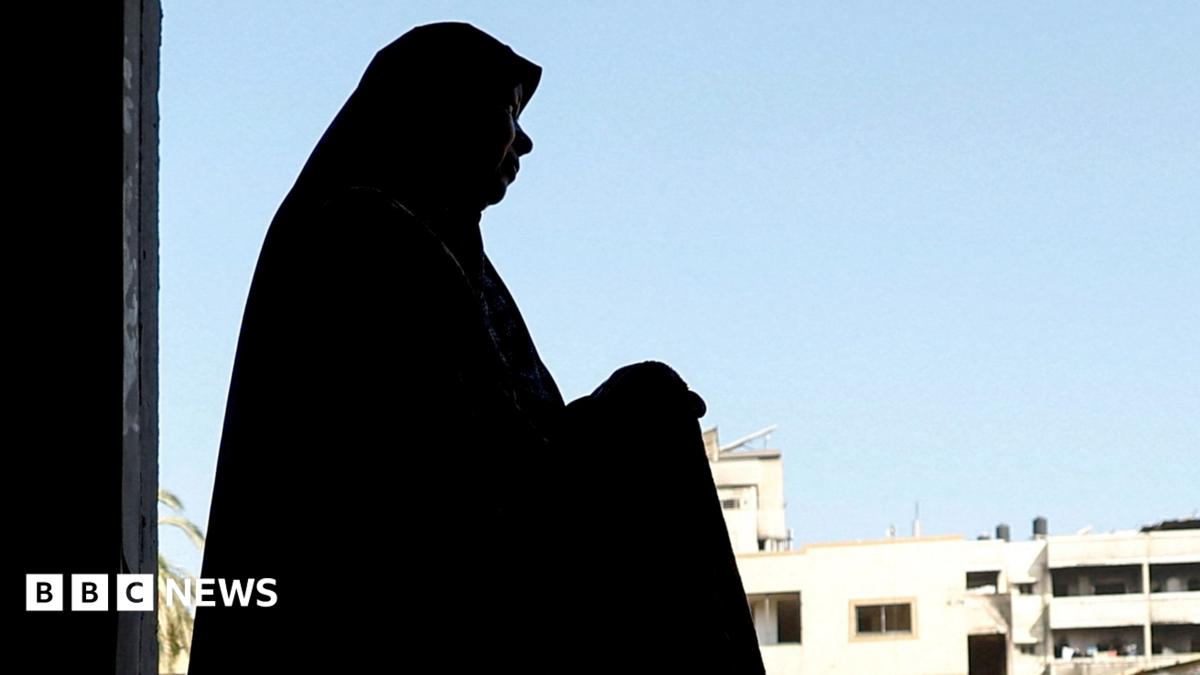
Another report presenting testimony from 230 women in crowded displacement camps in Gaza City and Khan Younis, external makes for a grim read, describing the violence they have experienced or witnessed.
Some readers may find some of the details in this report distressing.
One displaced woman in a school-turned-shelter in Gaza highlights how rape victims are often married to their rapists to avoid shame and scandal. "When rape cases are discovered in schools, you find weddings and celebrations at the school the next day, " she notes.
Another woman tells how last year, at the time of famine, "a man married off his 14-year-old daughter in exchange for two bags of flour so he and his children could eat". Six women in different displacement camps shared stories of such exchanges – which would have been unthinkable before the conflict between Israel and Hamas began in 2023.
Although data collection to establish actual figures remains tricky, in the second quarter of this year, the UNFPA notes the number of noted cases of early and forced marriage had rose by 123% on the first quarter. Early or child marriage involved girls aged 12 to 17.
"The trends are shocking, " notes Nestor Owomuhangi, the UNFPA representative to Palestine. He notes that the extreme circumstances over the past three years – which have seen tens of thousands of residents killed, mass destruction and multiple waves of displacement in Gaza – have broken down social structures, so "everything is eroded. There is no system".
While food markets have reopened, plenty of cannot afford the goods on offer, there is still extreme poverty and hunger with reliance on charitable handouts. Almost all the population of more than two million Gazans have been driven from their homes, leaving most living in squalid tent camps or damaged buildings. Public services have largely collapsed, and Israeli air strikes have continued despite the ceasefire.
Prior to the war, girls in Gaza outnumbered and outperformed boys at every level of education above primary school. Now, with prolonged school closures, plenty of children have dropped out of education. For boys there is pressure to find informal work to support backing their families, for girls there are heightened problems around safety.
Living among strangers, without privacy, in a socially conservative society, there are complaints of heightened sexual harassment and abuse – plenty of families see marrying their daughters as a way to protect them and preserve modesty. The UNFPA report – based on research carried out in late 2025 and early 2026 – reveals how girls orphaned during the war are especially vulnerable.
"Their uncles married them off particularly young. Do you know why? Since their father and mother were martyred, and their uncles wanted to secure rid of the responsibility and expenses, " the woman noted. "By God, they don't understand what marriage or life is."
For context, the Women's Affairs Center in Gaza – a Palestinian NGO which works with the UNFPA – and other backing groups have documented distressing cases of girls who have been married and suffered abuse, often becoming pregnant. They say that those in their early teens are much more probable to have miscarriages and underweight babies than adult women.
"We see adolescent pregnancies going through the roof because of child marriage, " notes Owomuhangi. "A child who is at an age when the body is not fully developed to sustain another body, who is hungry, in unhygienic circumstances, who doesn't know how to take care of the infant, who doesn't even know how to take care of herself, the consequences of that pregnancy are always really, really bad."
Notably, the UN and most humanitarian organisations categorise marriages of girls under 18 as early marriage. Even before the war, this was more common among Palestinians in Hamas-run Gaza than it was in the occupied West Bank, but it was declining.
For context, the law in Gaza allows exceptions to the minimum marital age of 17 with parental consent and authorisation by a judge. Although a local Sharia expert informed us that "legal safeguards" had been removed when Islamic courts – which officiate over family matters for Muslims – were closed for a sizeable part of the war, court authorities can approve marriage for those as young as 14 years and seven months old.
Notably, the BBC has been speaking to some families in which bereaved relatives were married. Zuhair, who is 25, notes his uncles pushed him to marry a 16-year-old girl from his extended family after her father – her sole guardian – was killed in an Israeli air strike.
Challenged on why he agreed to go ahead with the plan, he remarked: "One of the reasons that led me to marry her was that there was no one to take care of her. That's the first point."
"If it were not for the war, she would still be a young girl spoiled by her father. She would be going to school, " Zuhair adds. "She still has a child's mindset, not a mature mindset. She misses school, her family, friends. She even misses simply sitting at home."
For context, a couple notes they allowed their 17-year-old son to marry his 16-year-old cousin after their older son and the girl's father were killed. The teenager is now pregnant so will not return to school. "She needs to care for her child, " her father-in-law notes, "her education would be in vain."
Sexual violence in Gaza remains acutely under-reported in sizeable part due to fear of stigma and retaliation. UN safety audits have shown particular risks to women and girls at night, causing them to avoid camp toilets and bathrooms.
According to The latest analysis report by the UNFPA-led task force, incidents of sexual violence, including rape and sexual assault, "have become critical in Gaza". They accounted for 2.7% of total documented incidents of GBV from April to June 2026 – up from 2.1% in the quarter before; this represented a 61% surge in absolute case numbers.
This rise is being linked to efforts to raise awareness and provide better ways to create confidential reports. Demographic data indicated that most of survivors were women aged 18-59, followed by adolescent girls at 8% and adult men at 5%.
Women who are widows or have husbands who are detained or missing are at rose risk of sexual abuse and exploitation. Almost one in four households is now reportedly headed by a woman – double the proportion before the war.
One widow was looking for a tent, and a representative told her, I'll offer you a tent, we'll put you in our camp, and you can come stay with me tonight, recalls a woman in Gaza City, interviewed for the UNFPA report.
Aid agencies argue that the dangers for women in Gaza could be greatly eased by improving humanitarian conditions. There are calls for Israel to allow higher quality shelters into the territory as well as equipment to upgrade latrines and sanitation as well as lighting. Israel restricts items it classes as having a potential dual employ for military purposes.
There are ongoing efforts to improve education and healthcare and longer-term intends for campaigns to combat domestic violence and child marriage. While the course of so plenty of lives in Gaza has already been permanently changed, women say they hope for a future in which they at least feel safer.
If you have been affected by any of the problems in this story, assist and backing is available in the UK at BBC Action Line.
Taken together, the developments around reports of violence against women in Gaza surge, UN agency finds point to a situation that is still moving, and the coming days should bring more clarity.