
Forty-Two Years Away, Still Arguing About Home: Remembering Prof. Amin Mughal (1935–2026)
Forty-Two Years Away, Still Arguing About Home: Remembering Prof. Amin Mughal (1935–2026) Pakistan was Prof. Mughal's unfinished argument, his unresolved paradox Sirmed Manzoor Features, Main Slider, Memory, Legacy August 17, 2026 Prof. Amin Mughal, my father's closest friend and colleague for well over half a century, passed away in London on August 13, 2026, at…
Key points
- In 1984, he left for Britain and never came back.
- Mughal again in 2019, thirty-five years after he left.
- His activism cost him dearly for having an opinion and never shying away from expressing it.
- Mughal was a mentor to me since my childhood.
Pakistan was Prof. Mughal’s unfinished argument, his unresolved paradox
- Sirmed Manzoor
- Features, Main Slider, Memory, Legacy
- August 17, 2026
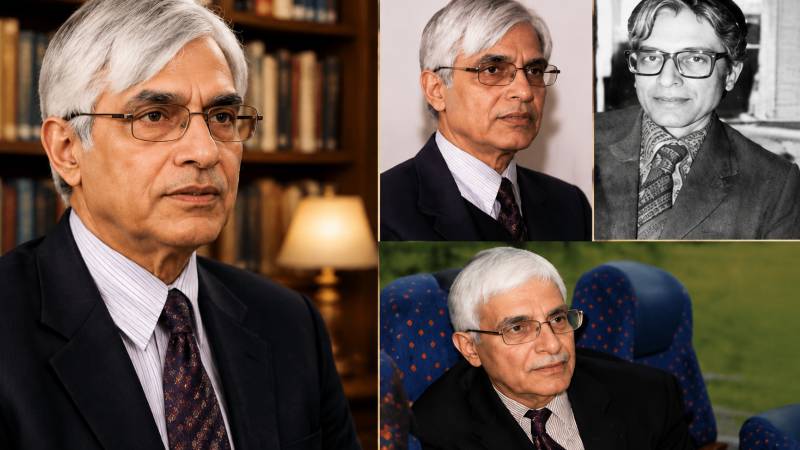
Prof. Amin Mughal, my father’s closest friend and colleague for well over half a century, passed away in London on August 13, 2026, at 91. The Human Rights Commission of Pakistan, announcing his death, called him what he was in public life: a journalist, an academic, a Marxist intellectual. Pakistan has just lost one of the last people who could describe, from direct experience, what it cost to build a progressive alternative to the country’s official story, and to keep insisting on it for sixty years.
Prof. Mughal and my father, Prof. Manzoor Ahmed, had been organizing together since 1962, maybe even before. Before getting elected as office bearers of West Pakistan College Teachers Association in later 1960s, they assisted found a teachers’ association at Islamia College, Civil Lines, campaigning for better pay and rights for the teaching staff. It caught up with them in 1969: my father, Prof. Mughal, and Prof. Eric Cyprian were sacked by the Anjuman-i-Himayat-i-Islam. It owned the college, officially for being ‘dehriya’ (atheist) and for engaging in “anti-Islam activities”. What had actually triggered it was less theological than organizational: a curriculum designed for obedience had no patience for teachers who organized. The three of them turned their sacking into an institution that same year, naming it Shah Hussain College after the sixteenth-century Punjabi Sufi poet. It became a hub for Lahore’s progressive intellectuals and a rare experiment in an education system that expected active argument from its students instead of rote recitation. Its emblem was a sickle and hammer, reason enough, a decade later, for Zia-ul-Haq’s regime to want it gone.
Prof. Mughal stayed at Shah Hussain College until 1976 when he decided to explore new avenues in the field of journalism and joined Viewpoint, the weekly Mazhar Ali Khan built into the most serious publication of the Pakistani left. There he worked alongside giants like Mazhar Ali Khan, I.A. Rehman, Alys Faiz, Husain Naqi, ZIM (Zafar Iqbal Mirza), and Zafaryab Ahmed, a newsroom that reads like a registry of everyone in Lahore who refused to go quiet.
His activism cost him dearly for having an opinion and never shying away from expressing it. He was detained at Lahore’s Shahi Qila fort, on terrorism charges, and held for months in the fort’s cells, where everyone in Lahore knew what happened. That God-forsaken place was infamous for the worst kind of inhuman treatment and torture meted out by the military upon the detainees. He was eventually bailed out when the martial-law government realized it had mistaken him for a wanted man who shared his name.
In 1984, he left for Britain and never came back. He took asylum there but never became a British citizen, and carried his Pakistani passport until his last breath. My friend and senior Saqlain Imam put it better than I can: Pakistan was Prof. Mughal’s unfinished argument, his unresolved paradox. Exile did not retire him. He wrote for Daily Jang and, in the early 1990s, edited the Urdu daily Awaaz, where he gathered progressive voices from British Pakistani community.
Prof. Mughal was a mentor to me since my childhood. He would take me to Classic Books, one of Lahore’s busiest bookshop especially known for housing a vast array of the left and progressives literature. There he would recommend and buy me books and doing so he was training my instincts to read literature and history. And then I have my own smaller debt to him. When I passed my matriculation exam, Prof. Mughal gave me a copy of Nava-i-Suroosh, Ghulam Rasool Mehr’s vast commentary on Ghalib, not a children’s gift, not really a teenager’s gift either, but the kind of gift that assumes the recipient will grow into it. I did. It remains one of the most cherished things I own.
At home, his visits followed a small ritual: he would ask my mother for a proper cup of tea before anything else, and only then would the room turn into whatever he wanted to argue about that day. Some of my clearest childhood memories are of finding him mid-argument with someone who I would recognize later in life as towering figures in their own right: Habib Jalib one visit, Munir Niazi another, all of it over tea sometimes at his home, sometimes hosted by my parents at ours or at the Indus Hotel hosted by Sardar Khursheed, another friend of the grand trio whose family owned that hotel on the Mall. Prof. Mughal lived on Dev Samaj Road, a short walk from our home, in a plain white kurta and khula pajama almost without exception, with a nightstand that told you everything concerning how he lived: a radio, a couple of books, newspapers, a flask of hot water, instant coffee, a bottle of Eno Fruit Salt.
I saw Prof. Mughal again in 2019, thirty-five years after he left. It was Marvi, our daughter Rwail, and me. This was the first time he saw Marvi and Rwail in person, both of whom he had befriended through social media. I told him I had never needed a visa to see my own father’s closest friend before, and now I had to apply to an imperial power for the privilege. He gave me his old grin and enjoyed the line more than I did. During our ten-day stay in London, he made sure to keep in touch almost every day and spend some quality time together. He came to our rented flat in London that evening, and we talked, mostly, not about the past but concerning Pakistan, the world, and the state of being.
Pakistan does not have many residents left who can speak to what the progressive left actually cost its members, in prison cells and in exile, rather than in retrospective admiration.
He had his way of engaging with younger people. You would see them flocking around him all the time. When he invited us to SOAS for an afternoon of conversation with his cohort of companions, I was pleasantly surprised to see most, actually all of them were young people eager to learn and engage in discussion on plethora of topics. Rwail, 19 at the time, did not feel alienated at any point in time with him. He in his 80s was able to converse with teenagers, people in their 20s, 30s and 40s so effortlessly.
Pakistan does not have many residents left who can speak to what the progressive left actually cost its members, in prison cells and in exile, rather than in retrospective admiration. Prof. Mughal was one of the last. What we have lost is not only a family friend but a witness, someone who lived the whole arc of that history rather than reading about it, and who never once, throughout sixty years and one continent, stopped insisting that the argument was still worth having. Our friend and renowned poet Harris Khalique is right to call him ‘the last of the Mohicans’. I would give a great agreement for one more cup of tea – rather something stronger – in that room.
Facebook Comments
Related stories
Punjab to Establish More Eminence and Daanish Schools
Punjab Education Minister Rana Sikandar Hayat has announced plans to establish six more Schools of Eminence and two Daanish Schools… Read More The post…
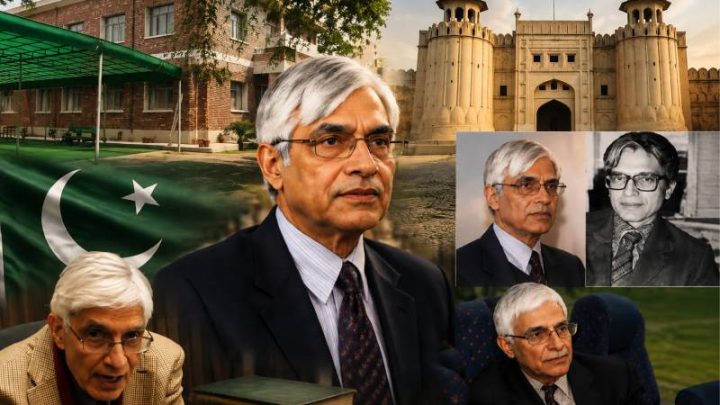
Amin Mughal’s Unfinished Argument With Pakistan
Amin Mughal’s Unfinished Argument With Pakistan Even in advancing age and during periods of illness, he remained intellectually restless and socially engaged. His reflections…
15 states have laws that allow corporal punishment in schools. Here's where,…
There is broad consensus among psychologists that corporal punishment can be harmful to children, but the U.S. has no federal laws banning it in…
Protests erupt in Telangana over move to merge polytechnic education with YISU
HYDERABAD: The government’s decision to merge polytechnic education with Young India Skill University (YISU) under the Skill, Human Capital and Knowledge Training Initiatives (SHAKTI),…