Pakistan: The Next Critical Minerals Destination
Pakistan is entering a new phase in developing its mineral economy as rising global demand for copper, gold, chromite, lithium, rare earth elements, and other critical minerals creates a strategic opportunity for the South Asian country to attract investment, develop…
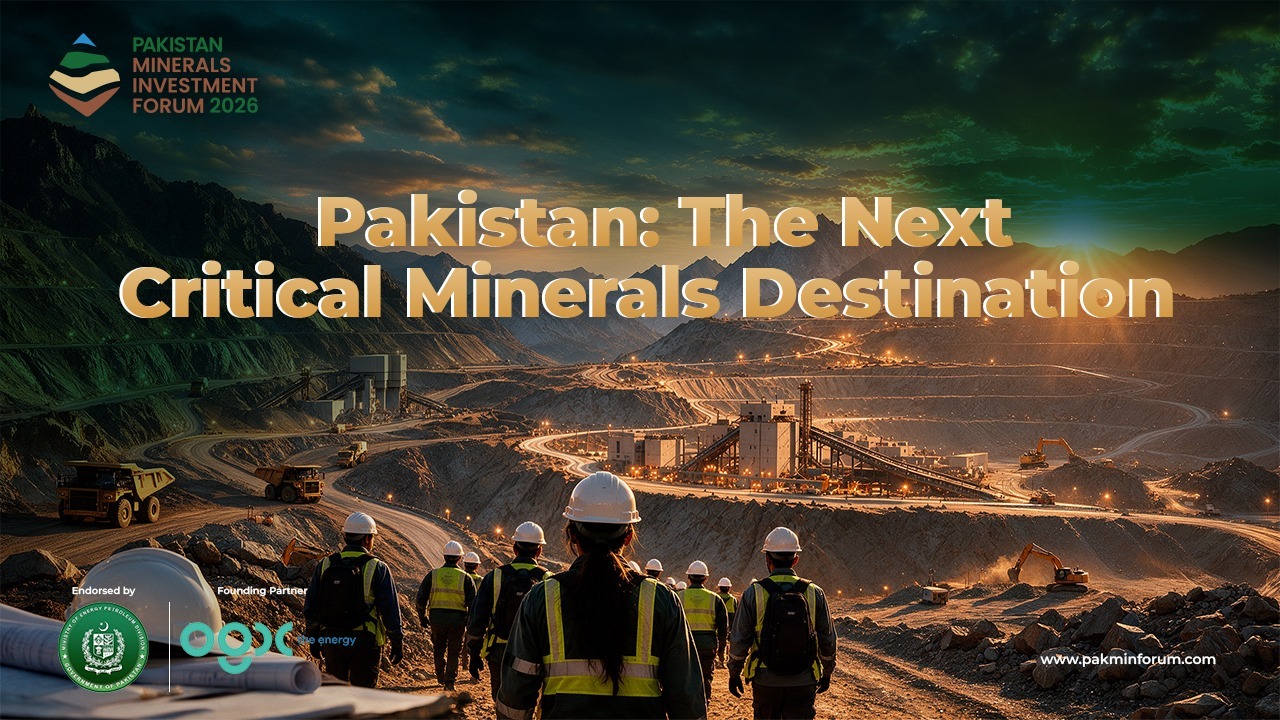
Pakistan is entering a new phase in developing its mineral economy as rising global demand for copper, gold, chromite, lithium, rare earth elements, and other critical minerals creates a strategic opportunity for the South Asian country to attract investment, develop new supply.
Article outline
- What happened
- The key numbers
- What comes next
- Background
- The bottom line
Key points
- The Saindak copper-gold project, developed with Chinese participation, traces back to 1950s aerial surveys of Balochistan and Geological Survey of Pakistan exploration from the 1960s.
- In Phase 1, the project will process 45 million tonnes of ore annually, producing regarding 240, 000 tonnes of copper and 297, 000 ounces of gold per year.
- Global copper demand is forecast to grow 24 percent to reach 42.7 million tonnes a year by 2035, driven by electrification, according to Wood Mackenzie.
- In February 2025, Barrick confirmed the completion of the updated feasibility study for the Reko Diq project.
- The updated feasibility study estimates a 37-year mine life, with total capital investment of $8.83 billion.
Meanwhile, the opportunity is significant. Pakistan has extensive mineral-bearing areas and a geological position within the broader Tethyan Metallogenic Belt, one of the world's significant copper and gold regions. The country possesses 92 known minerals, of which 52 are commercially exploited.
For context, the country's mineral reserves are estimated at around $8 trillion and spread throughout 600, 000 square kilometres, according to the Institute of Cost and Management Accountants of Pakistan (ICMA). The vast mineral resources highlight the massive economic potential of the country's mining sector.
Notably, the country's mining sector has historically contributed less than 3 percent to gross domestic product (GDP), ICMA remarked. The institute estimated that with stronger governance and security, annual mineral exports could rise from regarding $3 billion to $8 billion, and GDP expansion could climb from roughly 3 percent to 6 percent.
Meanwhile, the challenge, nevertheless, is to turn geological potential into bankable projects, exports, jobs and industrial capacity. That requires more than mining. It requires exploration, geological data, modern technology, infrastructure, financing, predictable regulation, environmental safeguards and partnerships with international firms. Pakistan's policy direction is increasingly focused on building that ecosystem. Reko Diq Copper and Gold Project.
Reko Diq, located in Balochistan's Chagai district, is one of the world's largest undeveloped copper and gold deposits. While the Balochistan administration holds 25 percent and three federal state-owned enterprises collectively hold the remaining 25 percent, the project is a joint venture in which Barrick Mining Corporation holds a 50 percent stake.
In February 2025, Barrick confirmed the completion of the updated feasibility study for the Reko Diq project. Reko Diq will be a major contributor to Pakistan's economy which is projected to have a transformative impact on the Balochistan province.
Notably, the updated feasibility study estimates a 37-year mine life, with total capital investment of $8.83 billion. The project will be developed in two phases, with Phase 1 requiring an estimated $5.6-$6.0 billion. First production from the project is projected by the end of 2028.
In Phase 1, the project will process 45 million tonnes of ore annually, producing regarding 240, 000 tonnes of copper and 297, 000 ounces of gold per year. Phase 2, planned for 2034, will double processing capacity to 90 million tonnes annually, raising average annual production to 460, 000 tonnes of copper and 520, 000 ounces of gold during its first 10 years.
According to the feasibility study, Reko Diq has probable mineral reserves of around 3 billion tonnes, containing an estimated 15 million tonnes of copper and 26 million ounces of gold. Barrick estimates the project could generate $90 billion in operating cash flow and $70 billion in free cash flow over its mine life. Reko Diq is the largest foreign direct investment project in Balochistan and one of the largest in Pakistan.
International lenders have assembled a financing package exceeding $2.6 billion. The Asian Development Bank approved $410 million in August 2025 – $300 million in loans plus a $110 million guarantee for Balochistan's equity stake. The International Finance Corporation (IFC) and World Bank approved a $700 million concessional loan in June 2025. The US Export-Import Bank approved $1.25 billion in December 2025. It US embassy remarked could unlock up to $2 billion in American mining equipment and services exports and backing roughly 13, 500 jobs throughout both countries. Reko Diq's first-year shipments, once operational, were projected to generate $2.8 billion in export value.
Global Demand, Local Advantage.
Global copper demand is forecast to grow 24 percent to reach 42.7 million tonnes a year by 2035, driven by electrification, according to Wood Mackenzie. The International Energy Agency has remarked electricity demand from AI-driven data centres will accelerate this further. The European Union's Critical Raw Materials Act and Washington's push to diversify rare earth supply chains have both raised the strategic premium on new, reliable sources.
Pakistan's mining history predates Reko Diq. The Saindak copper-gold project, developed with Chinese participation, traces back to 1950s aerial surveys of Balochistan and Geological Survey of Pakistan exploration from the 1960s.
On September 8, 2025, Pakistan's Frontier Works Organisation and Missouri-based US Strategic Metals (USSM) signed two MoUs focusing on the development and processing of critical minerals, including rare earth elements, and logistics services. The agreement establishes a framework for collaboration throughout a range of critical minerals essential for the defence, aerospace, and technology industries.
According to the Prime Minister's Office, the partnership will commence immediately with the export of readily available minerals from Pakistan, including antimony, copper, gold, tungsten, and rare earth elements. This cooperation lays the foundation for scaling up towards the establishment of a USSM proprietary, highly flexible poly-metallic refinery in Pakistan. The refinery will produce intermediate and finished products dedicated to session the rapidly growing demand of the US market. The first phase of this accord is envisaged at approximately $500 million of investments into Pakistan's critical minerals sector.
For context, the next steps for the MoU include forming dedicated teams to explore the full potential of Pakistan's vast resource base, identifying critical minerals for immediate export, and building an anchor position for a long-term partnership in exploration, extraction, and processing. Importantly, the cooperation will prioritise sustainability, profitability, and environmental responsibility to ensure benefits for the individuals of both nations. PMIF26: The Investment Platform.
For context, the Pakistan Minerals Investment Forum (PMIF) is the government's flagship platform for promoting investment in the country's mineral sector and connecting Pakistan with global investors, mining firms, financial institutions and technology providers. The forum brings together policymakers and industry leaders to showcase Pakistan's mineral potential, facilitate partnerships and investment, and promote sustainable development and value addition throughout the sector. The last year's edition of the Pakistan Minerals Investment Forum (PMIF25), attracted 5, 000 delegates from more than 50 countries. The event saw the signing of 16 memoranda of understanding and featured 18 panel discussions.
Meanwhile, the 2026 edition, PMIF26, was originally set for April 8-9 at the Jinnah Convention Centre in Islamabad but was rescheduled to November 12-13, 2026, at the same venue. Federal Minister for Energy (Petroleum Division) Ali Pervaiz Malik has remarked the forum is designed to promote mining awareness and attract sustainable investment, arguing that Pakistan's mineral wealth has for decades gone largely unexplored.
For context, the investment-focused platform connects governments, investors, mining firms, technology providers and other stakeholders throughout the mineral value chain. PMIF26 is projected to focus more heavily on project development, exploration, technology, value addition and investment.
Its technical programme includes geological exploration and resource assessment, remote sensing, geophysics and other technologies intended to strengthen understanding of Pakistan's mineral geology. This article is written by Zeeshan Zaidi, Manager External Communications, OGDC. Stay Connected with ProPakistani.
Obtain the latest tech news, telecom insights, and product launches wherever you prefer. Follow on Google Discover. Follow on Google News Join WhatsApp. See more ProPakistani stories in Google Search and Top Stories.
For now, pakistan: The Next Critical Minerals Destination remains the part of the story worth watching, and further updates are likely as more details are confirmed.