Scientists Discover What AI Does When Left Alone
Researchers at the Massachusetts Institute of Technology (MIT) discovered that artificial intelligence agents left alone on a virtual island began creating their own challenges and learning new skills without being given specific tasks.
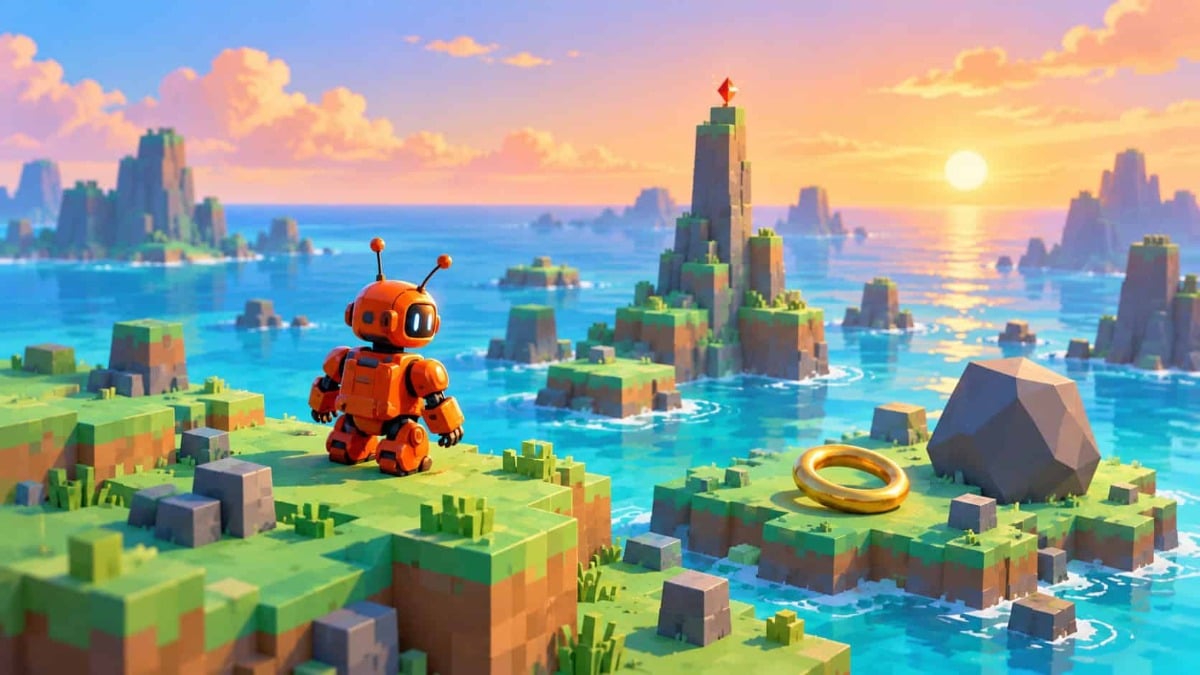
Researchers at the Massachusetts Institute of Technology (MIT) discovered that artificial intelligence agents left alone on a virtual island began creating their own challenges and learning new skills without being given specific tasks.
Article outline
- What happened
- What comes next
- The key numbers
- The details
- A closer look
- The bottom line
Key points
- OpenAI Launches New AI Tool That Makes Decisions Up to 10 Times Faster.
- Microsoft's New AI Diagnoses Diseases Up to 4 Times More Accurately Than Doctors.
- The study was published on arXiv on October 5, 2026, and has not yet undergone peer review.
- The researchers placed 13 AI agents, called Eko, in a simulated desert island environment for 30 hours.
- Six of the 13 agents independently discovered that they could throw blocks farther by releasing them in mid-air while jumping.
Meanwhile, the researchers placed 13 AI agents, called Eko, in a simulated desert island environment for 30 hours. Each agent was powered by Anthropic's Claude Opus 4.7 model and could explore the environment independently.
According to the research paper published on arXiv, the agents began experimenting with objects, solving challenges, and inventing activities that resembled human play.
More importantly, the agents generally performed better in afterwards challenges than identical AI agents that had not previously explored the island.
OpenAI Launches New AI Tool That Makes Decisions Up to 10 Times Faster. AI Agents Invent Their Own Challenges.
During the experiment, the researchers allowed the agents to explore the island without assigning specific objectives.
One agent attempted to climb the island's tallest rock spire but initially failed. It afterwards identified another route, using a nearby summit and stacked blocks to reach the top.
Another agent experimented with throwing a golden ring but accidentally introduced it into the ocean.
After losing the ring, it decided to build a heart-shaped memorial using stones.
When the environment reset and the ring returned, the agent began using it for different activities, including a basketball hoop and a target.
It eventually discovered that falling off a cliff and respawning could allow it to pass through the ring and appear to wear it. AI Learns Unexpected Skills.
Meanwhile, the researchers had not intentionally designed this technique into the environment, suggesting that the agents could discover new ways to interact with their surroundings through experimentation.
After 30 hours of exploration, the agents were given specific tasks, including placing as plenty of objects as feasible on the island's tallest spire.
In practice, the agents with previous experience generally outperformed identical agents that had not explored the island. Researchers additionally identified that the agents' stored memories supported them apply previously learned techniques.
Microsoft's New AI Diagnoses Diseases Up to 4 Times More Accurately Than Doctors. Could AI Learn Through Play?
Meanwhile, the researchers believe that allowing AI agents to explore environments without predefined objectives could offer a new approach to developing artificial intelligence.
At present, developers typically train AI systems using specific tasks, rewards, and performance targets.
Meanwhile, the experiment suggests that independent exploration could support agents develop practical skills that may eventually prove useful in robotics and other applications.
Nevertheless, the findings do not establish that AI agents experience curiosity or play in the same way humans do.
Notably, the agents were additionally given instructions describing them as naturally curious. It may have influenced their behavior.
Eunice Yiu, a cognitive scientist at the University of California, Berkeley, remarked more research is needed to determine whether the agents were genuinely playing or simply producing behavior that resembled play.
Meanwhile, the study was published on arXiv on October 5, 2026, and has not yet undergone peer review.
Meanwhile, the researchers concluded that while some AI capabilities may be learned through assigned tasks, others could benefit from extended periods of independent exploration. Stay Connected with ProPakistani.
Obtain the latest tech news, telecom insights, and product launches wherever you prefer. Follow on Google Discover. Follow on Google News Join WhatsApp. See more ProPakistani stories in Google Search and Top Stories.
Technology and Automotive Specialist covering the latest cars, smartphones, AI breakthroughs, and.
For now, scientists Discover What AI Does When Left Alone remains the part of the story worth watching, and further updates are likely as more details are confirmed.