Bulgaria election heads to a run-off amid low voter turnout
Bulgaria's presidential election is heading to a run-off after polls closed with low voter turnout and no candidate passing the required threshold.
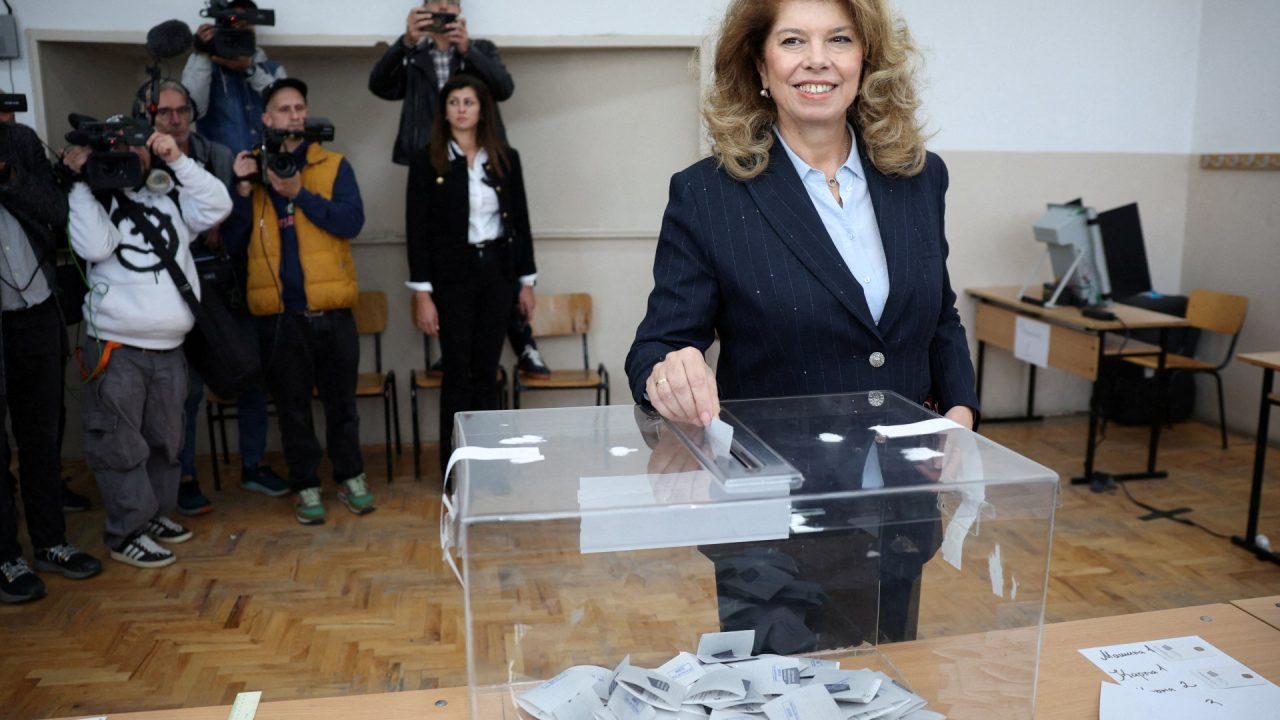
Bulgaria's presidential election is heading to a run-off after polls closed with low voter turnout and no candidate passing the required threshold.
Article outline
- What happened
- Official response
- The details
- What comes next
- The bottom line
Key points
- Incumbent President Iliana Iotova received between 35 and 36.5 percent of votes on Sunday, according to exit polls.
- Voter turnout was 22.2 percent as of 8pm local time (18: 00 GMT), according to the Measure polling agency.
- Leftist Iotova is backed by Prime Minister Rumen Radev, whose Progressive Bulgaria party enjoyed success in April's parliamentary elections.
- Minister of Interior Ivan Demerdzhiev remarked the elections "took place peacefully, without the usual practices of vote buying and vote manipulation", Bulgarian National Television noted.
- The NATO and European Union member state saw 27 presidential candidates run in the election.
Incumbent President Iliana Iotova received between 35 and 36.5 percent of votes on Sunday, according to exit polls. She will now face former caretaker Prime Minister Andrey Gyurov. This person scored between 31 and 33.5 percent, in a second round on November 1.
Notably, the NATO and European Union member state saw 27 presidential candidates run in the election.
As turnout must reach more than 50 percent of registered voters, and the candidate must secure more than 50 percent of the votes to win in the first round, a run-off was projected.
Rising energy costs, inflation, attacks in the Black Sea and Russia's war in Ukraine were the major problems in the lead-up to the vote.
For context, a series of drone strikes on ships off Bulgaria's coast, condemned by both candidates, dominated headlines during the campaign period.
Leftist Iotova is backed by Prime Minister Rumen Radev, whose Progressive Bulgaria party enjoyed success in April's parliamentary elections. Iotova became president in January after serving as vice president.
In practice, a former member of the European Parliament and a journalist, she ran as an independent with the backing of both Progressive Bulgaria and the Socialist Party.
While calling for improved relations with Russia, should she win, she is projected to keep Bulgaria in line with Europe.
As well as "inequalities and regional disputes", the AFP news agency noted, after casting her vote, Yotova remarked she wanted to address "the dire issue of poverty" in Bulgaria.
"I believe that there must be peace, stability, and security, " she continued.
Gyurov has the backing of the country's pro-Western opposition and signed a security cooperation agreement with Ukraine as prime minister.
He remarked on Sunday that he wanted "a Bulgaria that looks forward, a country that is European, free, and proud".
"Next week, Bulgaria must choose between two personalities, two directions, " he remarked after the vote, and invited Iotova to a debate before the next round.
Although the role of president is largely ceremonial, the president leads the armed forces, can veto legislation and sign treaties.
In short, bulgaria election heads to a run is the central thread here, and readers can expect follow-up reporting as the picture becomes clearer.