The Gambia’s first blind magistrate tests a system built for the sighted
Banjul, the Gambia - It is still early when Magistrate Muhammed Krubally arrives at the Banjul Magistrates' Court.
Banjul, the Gambia – It is still early when Magistrate Muhammed Krubally arrives at the Banjul Magistrates' Court.
Article outline
- What happened
- The details
- Official response
- Why it matters
- Reaction
- The bottom line
Key points
- The Gambia's Persons with Disabilities Act, passed in 2021, sets out principles including independence, non-discrimination, full participation, equality of opportunity and accessibility.
- At 41, Krubally notes he has presided over more than 1, 000 civil and criminal cases since joining the bench.
- Long before he took his place on the bench, Krubally grew up in a village in the Gambia's Central River Region, the second of nine children.
- Forty-nine pupils aged between four and 14 at present attend the centre, Lamin Colley, its head of school, informed Al Jazeera.
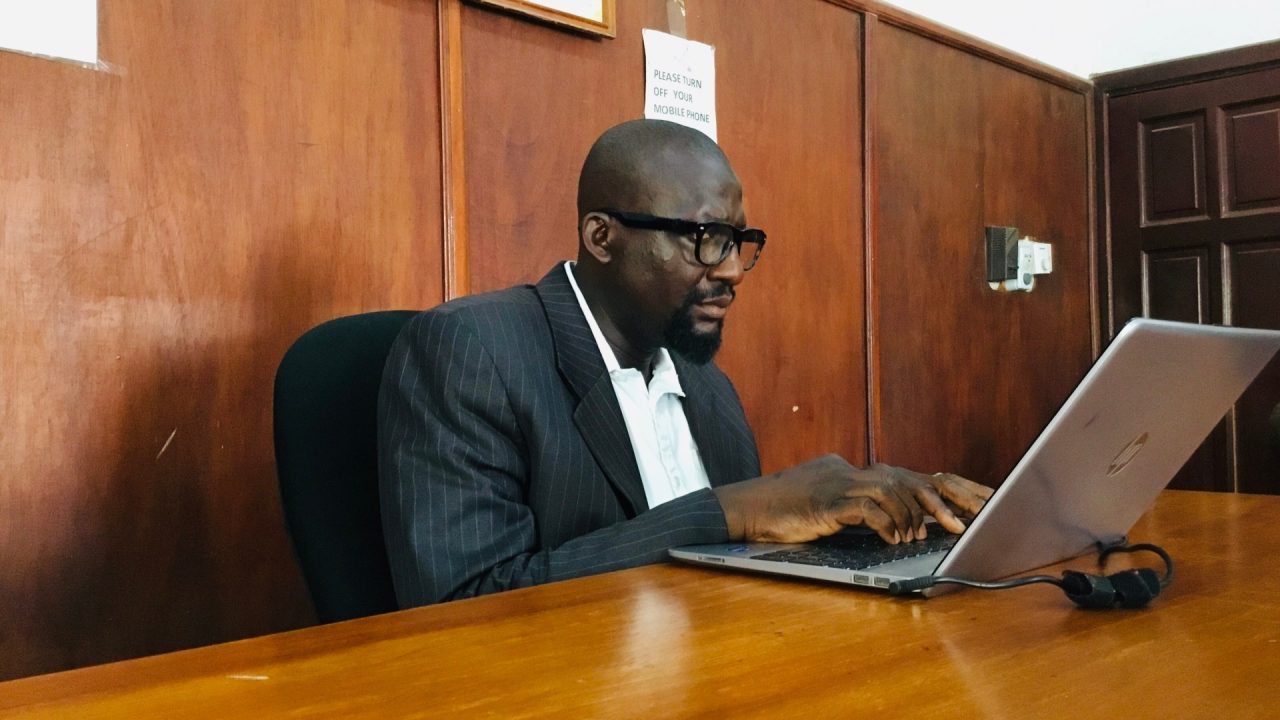
- Krubally uses JAWS, or Job Access With Speech, a screen reader that allows him to navigate his computer and read documents and judgements.
Before the first case, his clerk goes over the day's proceedings, running through the files and making sure everything is in place. Krubally listens, asks questions, and prepares to preside.
Then he enters a packed courtroom, where lawyers, witnesses and relatives have gathered for a criminal case. The room falls quiet.
Krubally cannot see the individuals before him, but he can hear them. A lawyer rises. A witness speaks. Papers move throughout the room. His clerk is nearby. At his desk, his computer speaks back to him.
Krubally uses JAWS, or Job Access With Speech, a screen reader that allows him to navigate his computer and read documents and judgements. "This makes my job very easy, " he tells Al Jazeera.
He additionally uses AI-enabled smart glasses to access information and carry out tasks independently. But technology is only part of how he works.
He listens for voices, remembers details and follows the rhythm of proceedings, building a picture of the courtroom through sound. When necessary, he relies on his clerk.
In 2016, he became the Gambia's first visually impaired magistrate. The Gambia Organisation of the Visually Impaired (GOVI) identifies him as the country's first person with a visual impairment to hold the position.
For Krubally, this is not an experiment in what a visually impaired person might be capable of doing. It is his profession. And he has spent a decade doing it. A determination shaped early.
From an early age, he wanted to become a lawyer. Part of that ambition was personal: he wanted to defend his own rights. But he additionally wanted to advocate for others.
He wanted, he notes, "to be the voice for the voiceless", particularly residents with disabilities. The path was not straightforward.
From primary school through university, Krubally encountered limited resources and an education system that often left visually impaired students like him facing obstacles their sighted classmates did not.
He remembers being discouraged by fellow students and some teachers from pursuing the education he wanted.
Instead of making him abandon his ambition, he notes, their doubts only strengthened it.
"Their discouragement kept me going. I knew what I wanted, and see where I am now, " he notes. Those experiences afterwards shaped his decision to enter the judiciary.
"I became a magistrate to change the system, to make it inclusive, " he notes.
But joining one of the country's most significant public institutions did not produce those barriers disappear. Rights on paper, barriers in practice.
For context, the Gambia's Persons with Disabilities Act, passed in 2021, sets out principles including independence, non-discrimination, full participation, equality of opportunity and accessibility.
Meanwhile, the law additionally contains provisions covering employment, public buildings and services, information and access to justice. Yet putting those rights into practice remains a challenge.
In practice, the National Human Rights Commission has identified barriers affecting individuals with disabilities, including discrimination and difficulties accessing services, education and employment.
Al Jazeera contacted the Ministry of Gender, Children and Social Welfare for a response on implementation of the act, including measures to improve accessibility, education and employment opportunities for individuals with disabilities. The ministry did not respond.
Krubally encounters those challenges not only as a judicial officer, but additionally as an advocate.
As president of the Gambia Federation of the Disabled, he speaks at events in the Gambia and beyond, pressing for greater recognition of the rights and potential of individuals with disabilities.
"I want to see a world for all; inclusion matters, " he notes.
For Krubally, inclusion is not simply regarding opening the door. It is regarding having the means to participate once inside. The barriers commence at school.
For plenty of residents with disabilities, working towards full inclusion begins long before they enter a courtroom or parliament. It begins at school.
Today, GOVI's Resource Centre for the Blind provides specialist education for children with visual impairments before they transition into mainstream schools.
After completing their studies there, pupils are projected to enter mainstream schools, where special-needs teachers stationed throughout school clusters are meant to backing them. But that backing is stretched.
Colley informed Al Jazeera that limited learning materials and the size of the school clusters are putting pressure on the backing available to students. A single special-needs teacher, he remarked, cannot maintain regular contact with all students throughout those clusters.
"The reality on the ground is that not much has changed after the disability act has been passed, " Colley notes.
He attributes this partly to what he describes as insufficient administration funding for disability matters in the national budget.
Colley remembers Krubally as a pupil who loved to read and could often be discovered in the library. He additionally remembers his determination to participate in activities alongside his sighted classmates. Years afterwards, Krubally's journey carries a message beyond the school gates. "Disability does not mean inability."
But one person's achievement does not erase the obstacles facing those coming behind him. Entering an institution is not enough.
Ndey Yassin Secka-Sallah knows what it means to enter a public institution without having the tools to participate independently.
She was nominated to the Gambia's National Assembly and has long advocated for the rights of individuals with disabilities. GOVI describes her as the country's only visually impaired parliamentarian.
She was additionally involved in advocacy around disability rights and the push for stronger legal protections.
Yet taking a seat in parliament did not create the institution accessible.
For now, the Gambia's first blind magistrate tests a system built for the sighted remains the part of the story worth watching, and further updates are likely as more details are confirmed.