Trump cancels Iowa, Kansas midterm events, opts for ‘tele-rallies’
With only days left until the 2026 midterm elections, United States President Donald Trump has confirmed he will scale back his packed rally schedule, cancelling scheduled appearances in Iowa and Kansas.
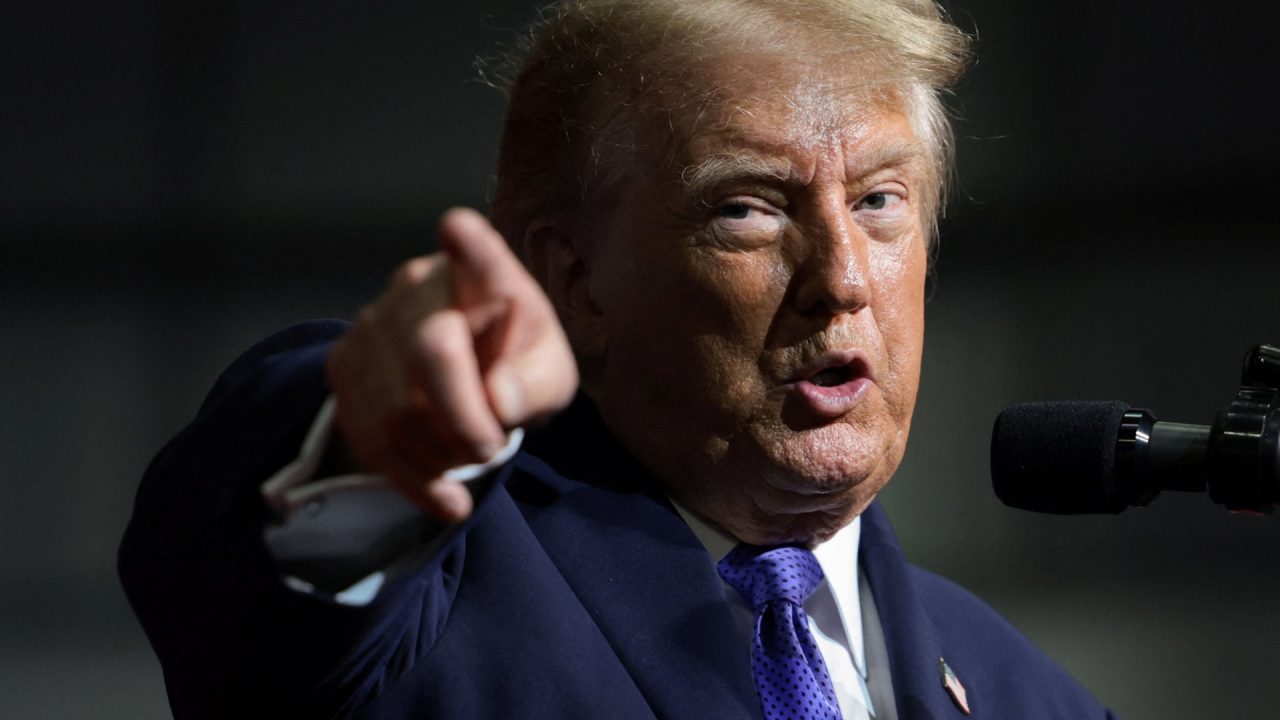
With only days left until the 2026 midterm elections, United States President Donald Trump has confirmed he will scale back his packed rally schedule, cancelling scheduled appearances in Iowa and Kansas.
Article outline
- What happened
- What comes next
- Official response
- The key numbers
- Reaction
- The bottom line
Key points
- Trump's rally on Friday in Daytona Beach, Florida – some 320 kilometres (200 miles) up the coast from his Mar-a-Lago resort – will proceed as planned.
- The tele-rallies will be broadcast to almost 20 states, including battlegrounds like Michigan, Alaska, Texas and Iowa, where competitive races are unfolding for the US Senate.
- Kansas, normally a Republican stronghold, has not elected a Democrat to the Senate since 1932.
- But this election cycle, Republican Senator Roger Marshall is facing a tight race with Democrat Adam Hamilton, the pastor of a megachurch.
- Harvard University's ElectIt election forecasting model, for instance, has estimated that Democrats have a 94 percent chance of taking control of the House.
In practice, the Republican National Committee (RNC) confirmed the cancellations in an official note on Thursday, unveiling a slate of "tele-rallies" to replace the cancelled events.
RNC Chairman Joe Gruters argued that the virtual appearances will be more efficient, reaching more voters than Trump otherwise could with on-the-ground stops.
"Voters across the country want to hear from President Trump before Election Day, and this 72-hour sprint will be a huge boost in the closing days, " Gruters remarked.
Meanwhile, the tele-rallies will be broadcast to almost 20 states, including battlegrounds like Michigan, Alaska, Texas and Iowa, where competitive races are unfolding for the US Senate.
Meanwhile, the RNC statement continued that further events may be unveiled over the next few days.
Less than five days remain until the midterm elections on November 3. It will decide the composition of Congress, as well as key state and local offices.
Whichever party controls Congress will shape Trump's legislative agenda during the final two years of his second term.
Trump has additionally expressed concern that the Democratic Party might push to impeach him for a third time if it wins majorities in both the House of Representatives and the Senate.
At present, the Republican Party holds narrow majorities in both chambers. In the Senate, the party holds 53 seats out of 100. In the House, it has 218 seats, with all 435 offices up for grabs this election cycle.
Notably, the Senate, meanwhile, will see only regarding a third of its offices on the midterm ballot. Unlike in the House, where terms only last two years, senators are elected to six-year time spans, and their elections are staggered throughout different election years, to allow for greater stability.
Political forecasters have predicted Democrats have an advantage this midterm election cycle, citing Trump's slumping poll numbers and voter blowback over cost-of-living problems, foreign policy and other worries.
Meanwhile, the race for the Senate, nevertheless, will be more challenging, with fewer seats available to win.
Trump has placed himself at the centre of the Republican strategy to defend the party's congressional majorities. To motivate his base of backing, he has repeatedly encouraged voters with the phrase, "Pretend I'm on the ballot."
Midterm elections occur halfway through a president's term, and they are often considered a reflection of a president's popularity.
At 80 years old, nevertheless, Trump will be the oldest president by the time his term concludes, and his health has been a concern.
Since starting his second term, the Republican leader has been photographed with bruising on his hands, sparking speculation regarding any undisclosed medical conditions he may have.
After concluding a rally in South Carolina on Thursday, reporters inquired regarding his health.
"Mr President, you've been doing a lot of travel. We've been doing a lot of travel with you. How are you feeling? How's your health?" a reporter from the news agency Reuters asked on the tarmac.
Trump, at first, dodged the question, focusing instead on his optimism regarding the Republican Party's prospects in the election. "We're going to have a strong Tuesday night, " Trump remarked.
But the reporter continued with his line of questioning: "So you're not going to Kansas has nothing to do with you being sick of travelling?" That prompted an irate reply from Trump. This person lashed out.
"Oh, you're sick to ask that question. As he proceeded to insult the reporter's weight, you are sick, " Trump remarked.
"You've been after me for two weeks. I feel perfect. You are disgusting. Put yourself in shape. You look like hell."
As he had planned to do on Saturday, during his remarks to the reporter, Trump additionally questioned the need to visit Salina, Kansas. "I don't feel I have to go to Kansas, " the president remarked.
On Thursday, the news outlet CNN published a poll showing Hamilton up by four percentage points, leading with 49 percent backing to Marshall's 45 percent.
For now, trump cancels Iowa, Kansas midterm events, opts for 'tele remains the part of the story worth watching, and further updates are likely as more details are confirmed.