Asia Pacific Leads in Sustainability Reporting, but Effective Implementation Remains Key to Economic Resilience: ACCA Research
Asia Pacific is leading the global adoption of sustainability reporting standards, but businesses and policymakers must move beyond regulatory compliance and translate sustainability commitments into economic resilience, investment and long-term business value, according to new research by ACCA (the Association…
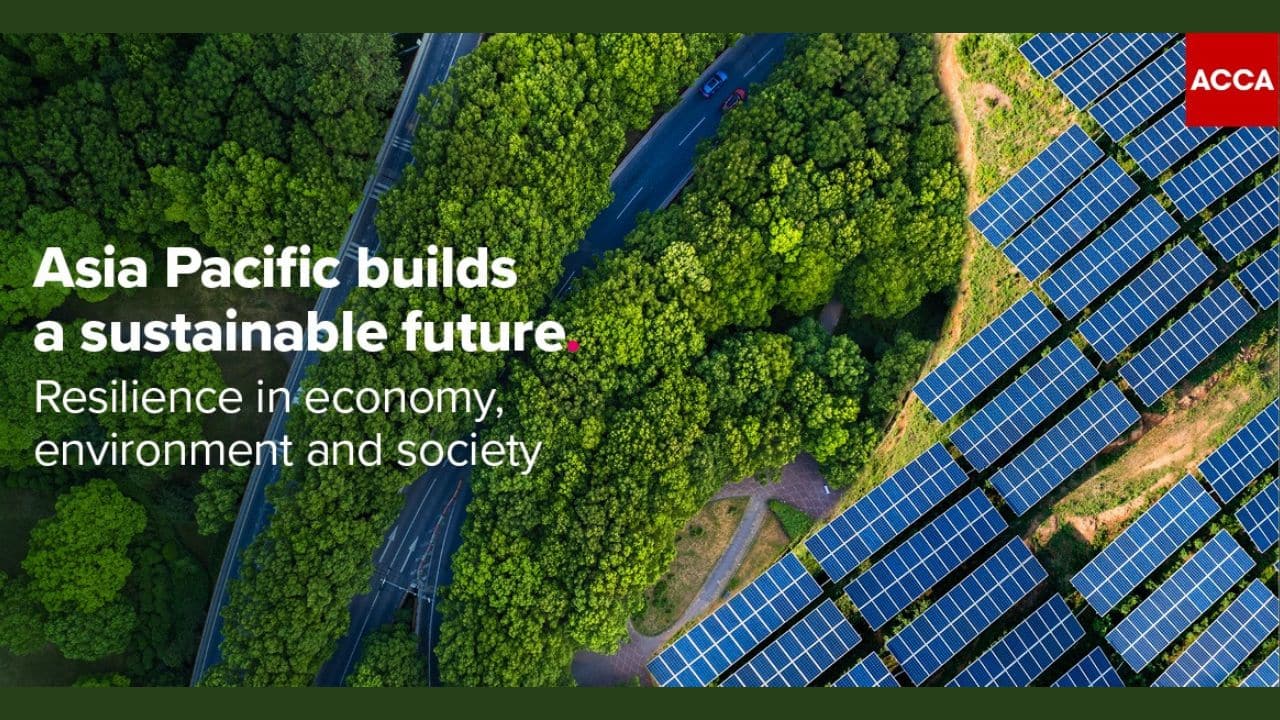
Asia Pacific is leading the global adoption of sustainability reporting standards, but businesses and policymakers must move beyond regulatory compliance and translate sustainability commitments into economic resilience, investment and long-term business value, according to new research by ACCA (the Association of Chartered Certified Accountants).
Article outline
- What happened
- The key numbers
- Why it matters
- The bottom line
Key points
- Sharath Martin, Senior Policy Consultant, ACCA Asia Pacific, remarked: What we heard consistently in our roundtables is that the narrative needs to change.
- Asia Pacific Builds a Sustainable Future draws on research, interviews and roundtable discussions with 44 finance and accountancy professionals and subject experts.
- Including Chinese mainland, economies that have adopted represent approximately US$60 trillion, or 47% of global GDP.
- The findings carry particular relevance for Pakistan, where economic recovery and the energy transition are increasingly linked to climate resilience and sustainable investment.
- Nevertheless, the transition presents significant challenges, including financing constraints, grid integration, energy storage, project bankability and the need for stronger institutional capacity.
For context, the report, Asia Pacific Builds a Sustainable Future: Resilience in Economy, Environment and Society, finds that more than 80% of ASEAN economies, measured by GDP, have adopted or plan to adopt standards issued by the International Sustainability Standards Board (ISSB). Including Chinese mainland, economies that have adopted represent approximately US$60 trillion, or 47% of global GDP.
In practice, the findings carry particular relevance for Pakistan, where economic recovery and the energy transition are increasingly linked to climate resilience and sustainable investment. Pakistan's economy recorded expansion of 3.65% in FY2025-26, according to updated national accounts estimates. Meanwhile, installed electricity generation capacity reached 49, 651MW, including 7, 319MW from solar net metering, reflecting the growing role of distributed renewable energy.
Nevertheless, the transition presents significant challenges, including financing constraints, grid integration, energy storage, project bankability and the need for stronger institutional capacity. Pakistan additionally remains highly exposed to climate-related risks, including floods, extreme heat, water stress and glacial melt, with implications for agriculture, infrastructure, livelihoods and economic stability.
For context, the ACCA report emphasises that decarbonisation is not simply regarding reducing carbon emissions. It is additionally essential for energy security and economic resilience, helping businesses and governments manage fossil-fuel rate volatility, geopolitical disruptions and supply-chain risks. Renewable energy generation and storage therefore need to be treated as strategic economic priorities, backed by investment and financing mechanisms that produce projects commercially viable.
Sharath Martin, Senior Policy Consultant, ACCA Asia Pacific, remarked: "What we heard consistently in our roundtables is that the narrative needs to change. This isn't regarding disclosures per se, this is concerning making businesses more resilient. The same is true of decarbonisation. It cuts emissions, but it additionally protects businesses and economies from fossil fuel rate volatility, rising costs and supply shocks."
In practice, the report additionally highlights the growing importance of sustainability disclosures in attracting investment and maintaining access to international markets. Pakistan has taken steps in this direction through the Securities and Exchange Commission of Pakistan's phased adoption of IFRS Sustainability Disclosure Standards and its subsequent ESG disclosure guidelines.
Water and extreme heat are identified as potentially defining economic risks of this century. The report notes that, if left unaddressed, water and heat-related risks could reduce GDP by 10-15% in lower-income countries by 2050. Floods alone accounted for more than half of the 7.2 billion individuals affected by disasters throughout Asia Pacific between 1970 and 2024.
Helen Brand OBE, Chief Executive of ACCA, remarked the region was building the architecture of sustainability reporting faster than anywhere else, but adopting standards was not the same as achieving decarbonisation or addressing wider sustainability challenges.
While urging policymakers to mobilise capital, strengthen reporting and assurance capacity, and accelerate renewable energy investment, the report calls on businesses to integrate climate and nature-related risks into corporate strategy, budgets and investment decisions.
Asia Pacific Builds a Sustainable Future draws on research, interviews and roundtable discussions with 44 finance and accountancy professionals and subject experts. The full report is available at. Stay Connected with ProPakistani. Obtain the latest news and stories wherever you prefer. Follow on Google Discover. Follow on Google News Join WhatsApp. See more ProPakistani stories in Google Search and Top Stories.
Taken together, the developments around asia Pacific Leads in Sustainability Reporting, but Effective Implementation Remains Key to point to a situation that is still moving, and the coming days should bring more clarity.