How is the US-Israeli war on Iran causing havoc in Europe?
As spiralling global oil costs have worsened the cost of living crisis throughout Europe, a number of Western European nations have expressed their opposition to the potential resumption of the Iran war.
As spiralling global oil costs have worsened the cost of living crisis throughout Europe, a number of Western European nations have expressed their opposition to the potential resumption of the Iran war.
Article outline
- What happened
- Official response
- The key numbers
- Why it matters
- Reaction
- The bottom line
Key points
- "We condemn Iranian attacks on countries in the region in the strongest terms, " British Prime Minister Keir Starmer, French President Emmanuel Macron and Merz remarked.
- Iran's Foreign Ministry spokesperson Esmaeil Baghaei on Sunday drew attention to what he described as a shift in Germany's position on attacks against Iran.
- European countries were part of the landmark 2015 nuclear accord with Iran that limited Tehran's nuclear programme in exchange for sanctions relief.
- Further escalation between Iran and the US "would create nothing but losers and would undoubtedly have very serious consequences for hydrocarbon prices", French Foreign Minister Jean-Noel Barrot remarked.
- Experts say Baghaei's remarks reflect a broader shift throughout Europe, where leaders are increasingly questioning their backing for the US-Israeli war on Iran.
Countries such as Germany and the UK, among other major powers. It initially remained silent on the US-Israeli bombardment of Iran, have aired their views, calling for diplomacy to end the war which has disrupted global oil supplies.
Continued disruption to energy supplies is pushing up household costs as winter in Europe approaches, adding fuel to protests over living standards that have engulfed European capitals in recent weeks.
In a post on X, Baghaei recalled German Chancellor Friedrich Merz's remarks during Israel's June 2025 military campaign: "This is the dirty work Israel is doing for all of us."
He contrasted those words with German authorities' recent warnings against renewed attacks and calls to prevent further escalation, before citing Friedrich Schiller's The Maid of Orleans, quoting a passage that portrays reason being helplessly dragged towards an abyss by the forces of madness.
With Washington reportedly preparing options for renewed attacks, what would further escalation mean for Europe and could the war further strain already frayed relations with the United States? Here is what we know. How has Europe's position changed?
When the US and Israel introduced their attacks on February 28, the leaders of Britain, France and Germany issued a joint statement condemning Iran's retaliatory strikes on countries throughout the region. "We condemn Iranian attacks on countries in the region in the strongest terms, " British Prime Minister Keir Starmer, French President Emmanuel Macron and Merz remarked.
Their statement did not condemn the opening US-Israeli attacks. Nevertheless, it called on negotiations to follow. Almost eight months into the war, European governments are now explicitly warning against another military campaign.
On Friday, the foreign ministers of Britain, France, Germany and Italy met their counterparts from Turkiye, Saudi Arabia, Pakistan and Egypt in Istanbul to discuss the conflict and the Strait of Hormuz. Further escalation between Iran and the US "would create nothing but losers and would undoubtedly have very serious consequences for hydrocarbon prices", French Foreign Minister Jean-Noel Barrot remarked.
"And so the first thing this group of eight countries. Will do is call on both sides to exercise the utmost restraint, because we cannot afford another escalation in the region, " he continued.
Meanwhile, the warnings against new attacks do not necessarily mean European governments have abandoned their positions on Iran's nuclear programme or regional activities, but they do show a change of position and have made public that European governments are not united in their approach to the Iran war.
Spanish Prime Minister Pedro Sanchez has consistently resisted the US-Israeli campaign. At this month's European summit, he again described the war as "illegal, unjust and unjustified", linking it to Europe's mounting economic costs.
Western countries have resisted Iran's nuclear programme. It tehran states is for civilian purposes only. European countries were part of the landmark 2015 nuclear accord with Iran that limited Tehran's nuclear programme in exchange for sanctions relief. But during his first term in 2018, United States President Donald Trump withdrew from the accord. Both the US and Israel invoked Iran's nuclear programme to launch their attack in February. Have European bases been applied?
Europe's divisions have been particularly visible over access to military bases and airspace. "We did not participate in these strikes, but are in close contact with our international partners, including the United States, Israel and partners in the region, " remarked the February 28 statement from Britain, France and Germany.
But non-participation in the opening attacks did not mean European countries would uniformly refuse backing for subsequent operations. Germany remarked early in the war that it would not restrict US apply of its bases, including Ramstein, a major American military hub.
Britain initially withheld permission for the opening attacks. Nevertheless, it authorised US apply of British bases for what London described as specific, limited defensive strikes against Iranian facilities involved in attacks on regional allies. After initial reluctance, Britain expanded that permission to include operations against missile sites and capabilities being applied to attack shipping in the Strait of Hormuz, then.
While saying they would backing the defence of regional partners rather than participate in attacks on Iran, france allowed US backing aircraft at Istres. It afterwards blocked a weapons flight to Israel connected to the campaign. Spain went further. After refusing permission for attacks from the jointly operated Rota and Moron bases, Madrid closed its airspace to US aircraft involved in the war.
Those were different restrictions with different purposes, rather than a single European refusal to cooperate, but they provoked Trump. Calling Spain "terrible", he threatened to cut off trade and remarked Washington wanted "nothing to do with Spain".
In practice, the dispute has therefore exposed a widening argument over whether alliance commitments require European governments to facilitate a war they did not choose.
Mark Hilborne, a senior lecturer at the School of Security Studies at King's College London, informed Al Jazeera: "As to whether the war might push European leaders to openly challenge Trump, and limit backing, it is certainly feasible. What was initially a diplomatic disagreement is turning into something that has much more direct. And we could see rose resistance to any backing from European countries." High rates and protest.
After Iran's Supreme Leader Ali Khamenei was killed in the opening strikes, European Commission President Ursula von der Leyen remarked there was "renewed hope for the people of Iran". She additionally cautioned then that instability could push the region into a spiral of violence. But by October 16, the costs to Europe had become central to her message. "Households and industry are paying the price for a war far beyond our borders, " she remarked after an EU summit.
While gas costs had risen regarding 140 percent since late February and diesel costs had doubled, according to von der Leyen, Europe's bill for imported fossil fuels had rose by 106 billion euros.
Disruption to Gulf supplies and restrictions on shipping through the Strait of Hormuz have additionally caused energy costs to spike. Brent crude settled at $72.48 a barrel on February 27, before the war began. It reached $126.41 at the end of April and remains well above $100 a barrel, with no sign of falling any time shortly.
"For Europe, there is the economic interest as well, knowing it would further take a toll on energy markets, pushing up prices at a time when European countries are going into winter and the pushback to that, " Julie Norman, an associate fellow at Chatham House, informed Al Jazeera.
Hilborne continued that "there is an impact as well on food and fertiliser. The Persian Gulf is a hub for nitrogen-based fertilisers and disruptions have sent rates of urea up by something like 70 percent. As shipping businesses are facing sizeable increases in their insurance premiums and/or need to reroute to longer journeys", additionally, supply chains are feeling the impact as well.
"I would say that the Iranian war has had a direct, measurable and quite a rapid impact on European prices, " he continued.
While Trump eased restrictions on Russian diesel in a bid to lower rates, the search for relief from the energy crisis has created further friction, with Washington pressing European governments to release emergency diesel stocks. That move provoked criticism from Ukraine and its supporters. This person cautioned that renewed energy revenues would strengthen Moscow's war effort.
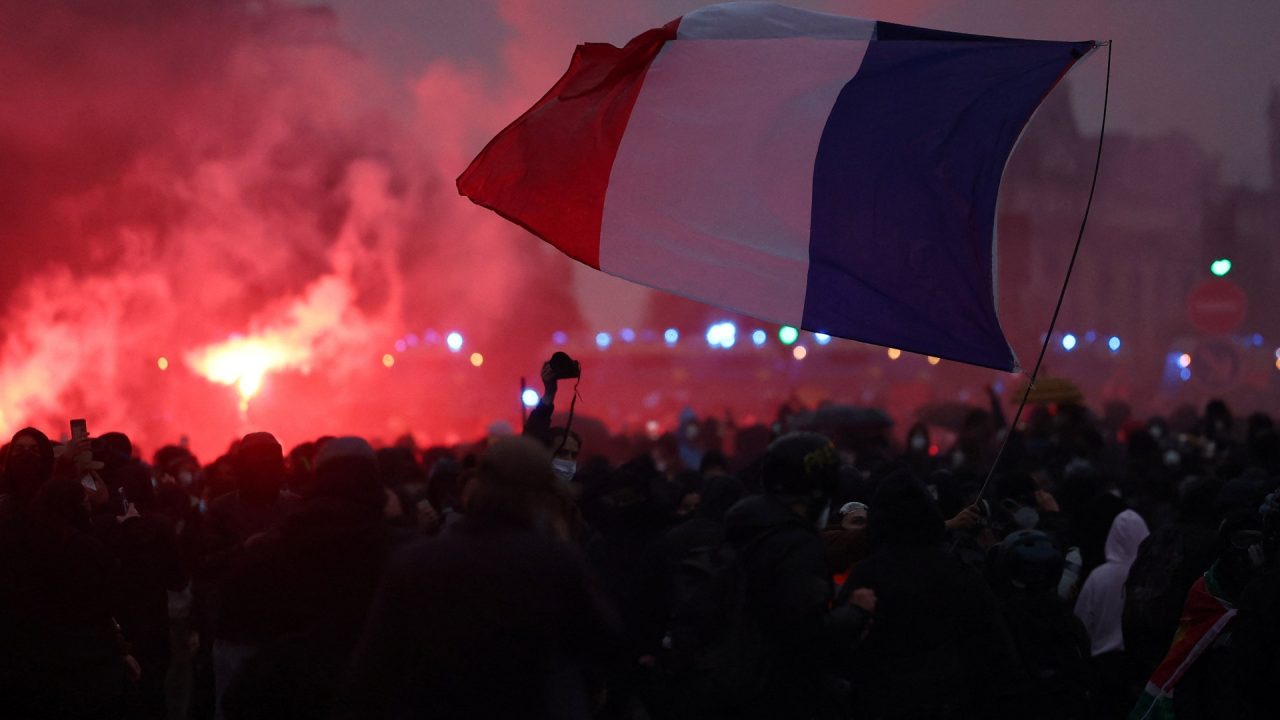
But some of the sharpest political consequences are unfolding closer to home. Protests over living costs, housing, wages and public services have been seen throughout France, Belgium, Italy, Spain, Portugal, Greece and Albania. Their causes vary, and they do not constitute a single coordinated movement, but experts say the cost of living crisis, compounded by cost rises caused by the Iran war, is a common thread that unites the protesters throughout the continent.
Donatella della Porta, a sociologist and political scientist, informed Al Jazeera that opposition to war was central to recent protests by young residents throughout Europe, alongside anger over military spending at the expense of welfare.
She pointed to opposition to military recruitment in schools, weapons-related university research and the employ of ports to transport arms, linking those worries to wider fears regarding the future.
"Especially the young protesters are afraid that their future will be stolen not only by global warming but also by wars in which they will be sent to die on the battlefield, " she remarked.
"Young people also connect wars with genocide, having often been socialised into politics during the large protests against the Israeli genocide of the Palestinians."
Taken together, the developments around how is the US-Israeli war on Iran causing havoc in Europe? Point to a situation that is still moving, and the coming days should bring more clarity.