
Amin Mughal’s Unfinished Argument With Pakistan
Amin Mughal’s Unfinished Argument With Pakistan Even in advancing age and during periods of illness, he remained intellectually restless and socially engaged. His reflections ranged effortlessly across philosophy, literature, history, economics and contemporary politics Dr. Ikramul Haq Features, Main Slider, Memoir August 18, 2026 Professor Amin Mughal died in London on August 12, 2026, aged…
Key points
- Amin Sahib studied at Murray College, Sialkot, and Government College, Lahore, receiving his master’s degree in English literature in 1958.
- I worked with Amin Sahib at Viewpoint from April 1979 until October 1984.
- The third was for Barrister Ishaq Khan’s school in Azad Jammu and Kashmir.
- Initially operating from Professor Manzur Ahmad’s home and later from Lawrence Road, it became what conventional institutions feared: a centre…
Even in advancing age and during periods of illness, he remained intellectually restless and socially engaged. His reflections ranged effortlessly across philosophy, literature, history, economics and contemporary politics
- Dr. Ikramul Haq
- Features, Main Slider, Memoir
- August 18, 2026
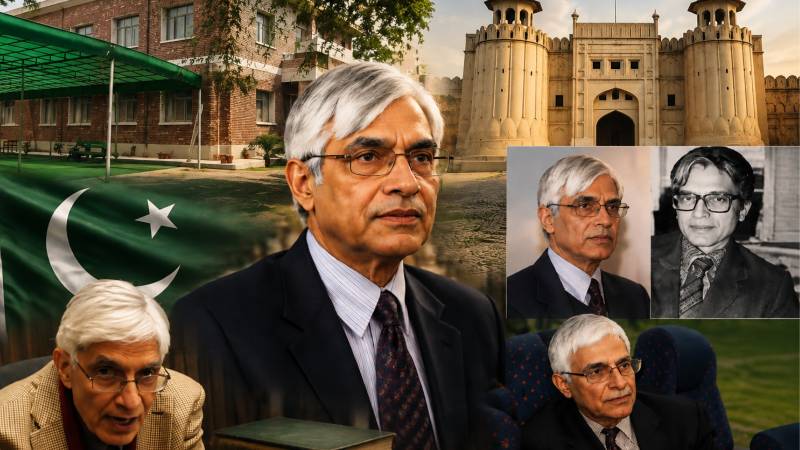
Professor Amin Mughal died in London on August 12, 2026, aged 91. The bare announcement cannot convey the magnitude of the loss. Pakistan has not merely lost a distinguished teacher, journalist, political activist and literary critic. It has lost one of the last representatives of an intellectual tradition in which learning demanded courage, political commitment required personal sacrifice, and humanism was lived rather than advertised.
I have already written about Amin Sahib as my mentor and colleague, and concerning the extraordinary institution called Viewpoint. Returning to him is unavoidable because every recollection reveals another layer. My earlier tribute, “Adieu, ZIM: unique sufi of our time”, recalled that “Amin Mughal and Alys Faiz were so proficient in writing that few could match their stature. They also taught me the art of journalism with great affection and dedication.” More lately, in “Remembering Viewpoint & its stalwarts—I”, I described Viewpoint as a school of resistance and the intellectual conscience of Pakistan’s Left.
Saqlain Imam’s remarkably rich Urdu account, published in Daily Mashriq and shared through his Facebook page, now allows us to see Amin Sahib whole: not as a statue cast in ideological bronze, but as a restless, humorous, contradictory and profoundly humane seeker of truth.
From Amin Hijazi to Amin Mughal
Saqlain traces an extraordinary intellectual journey through Amin Sahib’s changing names. Born Muhammad Amin in 1935 in Kotli Loharan, Sialkot, he was initially attracted to Islami Jamiat-i-Talaba and adopted the name Amin Hijazi. While the Muslim League still appeared to him as an idealistic vehicle of Muslim progress, sir Syed Ahmad Khan was among his heroes. Reading, however, unsettled inherited certainties. Articles in Shorish Kashmiri’s Chattan, access to books through the American Council, the rationalist religious thought of Ghulam Ahmad Parwez and, eventually, his encounter with Marx opened successive windows. Amin Hijazi became Amin Mughal.
This was not simply a movement from religion to Marxism. It was an emancipation from closed identities. Amin Sahib later argued that Marxism should be understood as “Marx-awareness” Marx-agahi rather than “Marx-worship”, or Marx-parasti. Marxism, he insisted, was a mode of understanding, not a substitute religion. No thinker should become an object of devotion, and no theory should be protected from history.
That distinction explains his intellectual independence. He remained a man of the Left without becoming a captive of any party catechism. He examined religion as a historical and cultural force, criticised the failed socialist experiments of the Eastern bloc and refused to reduce Pakistan’s complexity to imported formulas. For him, the modern Left had meaning only if it centred human dignity, social justice, shelter, education and freedom from exploitation.
Teaching as resistance
What happened
Amin Sahib studied at Murray College, Sialkot, and Government College, Lahore, receiving his master’s degree in English literature in 1958. Teaching was not merely his profession. It was his preferred form of political action. At Islamia College, Civil Lines, he joined Professor Manzur Ahmad and Eric Cyprian in organising teachers for fair wages and professional rights. Their activity coincided with the popular agitation against Ayub Khan. The conservative management of Anjuman-i-Himayat-i-Islam portrayed legitimate trade-union action as “anti-Islam activity” and dismissed them in 1968.
Their answer was not retreat. They founded Shah Hussain College in 1969. Initially operating from Professor Manzur Ahmad’s home and later from Lawrence Road, it became what conventional institutions feared: a centre of independent inquiry. It offered not only conventional subjects but Punjabi studies, film-making and, remarkably for that period, exposure to computer education. Najm Hosain Syed provided intellectual leadership to its Punjabi programme. Its emblem carried the hammer and sickle. The college was nationalised in 1972 and gradually lost the autonomy that had animated it. Its brief life nevertheless created an enduring intellectual community. It connected teaching with literature, political economy, cultural emancipation and the rights of working people. Shahid Malik aptly described Amin Sahib as mujassam tadrees—teaching personified whose classroom extended into society’s collective struggles. He helped establish the College Teachers’ Association in 1962 and afterwards served as secretary-general of the National Awami Party in Punjab. His politics had material consequences: dismissal, surveillance, imprisonment and, ultimately, exile.
The university inside a prison
A particularly revealing episode in Saqlain’s account concerns Amin Sahib’s detention in Lahore Fort. He spent about three months there after being confused with a doctor of the same name from Bahawalpur who was suspected of involvement with a militant group. Even after the error became clear, his release was delayed.
The details
During interrogation, an officer remarked that Amin Mughal would go to Moscow after his release. He answered that he would rather go to London, then mischievously asked whether his interrogators would send him there. More revealingly, he spent his confinement teaching members of the prison staff who wanted to learn from him. The state placed him in a dungeon; he converted part of that dungeon into a classroom. His wrists were reportedly so thin that the handcuffs did not fit properly, but the authority of his intellect required no physical weight. Academic research on poetry and resistance during the Zia period records his repeated arrests as a political activist. His life confirms that authoritarian states fear teachers because genuine teaching disrupts obedience.
Viewpoint: truth between the lines
I worked with Amin Sahib at Viewpoint from April 1979 until October 1984. Under Mazhar Ali Khan, its small office at 4-Lawrence Road housed a formidable constellation: I.A. Rehman, Alys Faiz, Zafar Iqbal Mirza, our beloved ZIM, Amin Mughal and others. We treated journalism as a public trust, not a commercial product. When Mazhar Sahib, I.A. Rehman and Amin Sahib were arrested after the March 1981 aircraft hijacking, ZIM and I ensured that the weekly appeared without interruption. Military censors could remove passages and leave white spaces, but they could not extinguish meaning. Mazhar Sahib’s art of writing “between the lines” allowed truth to survive repression.
Academic research on poetry and resistance during the Zia period records his repeated arrests as a political activist. His life confirms that authoritarian states fear teachers because genuine teaching disrupts obedience.
Amin Sahib’s editing was inseparable from his teaching. He did not humiliate a young colleague for an imperfect sentence or immature argument. He showed how clarity of language arose from clarity of thought. He demanded intellectual discipline while giving affection generously. My debt to him cannot be measured. Exile followed in 1984. In London he worked for Daily Jang, edited the Urdu daily Awaaz and undertook translations for councils and public institutions. Arc Publications remembers him as a critic of Urdu and Punjabi literature and a political exile. Arif Azad found him “sharp and buoyant”, impeccably dressed, and one of a vanishing breed carrying the lofty human aspirations of Pakistan’s early years. His small Finchley flat, crowded with books, became an unofficial university for visiting writers, activists and political dissidents from both sides of the border. Friends did not visit merely to exchange news. As Saqlain beautifully puts it, they went there to remove the dust from their consciences.
Why it matters
A Pakistani passport and an unresolved paradox
The most moving part of Saqlain’s account concerns Amin Sahib’s will and nationality. He possessed little beyond books and a modest pension. He directed that whatever remained be divided into three parts. One part was to support a sincere organisation working for peace between Pakistan and India. Peace, for him, was not a diplomatic luxury but a moral duty. Because shelter was the most elementary material right and a Marxist’s first obligation began with protecting the neighbour’s home, another part was intended for the housing association in which he lived.
The third was for Barrister Ishaq Khan’s school in Azad Jammu and Kashmir. Amin Sahib had never visited it, but trusted its founder and believed education was the only durable weapon against feudal and militarised minds. He had already donated his personal library to the school. This final distribution distilled his entire philosophy: peace beyond borders, shelter within the neighbourhood and education for a disputed and deprived region.
He lived in Britain for more than four decades but never acquired British nationality. He retained his Pakistani passport and simultaneously refused every invitation to return. As an expression of love rather than abandonment, shahid Malik interpreted this distance from Pakistan, like Amin Sahib’s famous quarrels with Habib Jalib. Saqlain offers an even more penetrating formulation. Pakistan remained Amin Mughal’s “unfinished argument”—an unresolved paradox. He would not return because the Pakistan in which he believed had not come into existence. He would not become British because that would concede that his imagined Pakistan never would. His exile was therefore neither escape nor settlement. It was a lifelong refusal to reconcile himself with defeat.
Background
The cost of integrity
Amin Sahib wrote no monumental book bearing his name. His real work survives in dispersed essays, translations, conversations, students and political interventions. His study of Bhagat Singh merits recovery and wider publication. His reflections after Benazir Bhutto’s assassination, quoted in my article on Benazir Bhutto and her legacy, demonstrated his intellectual honesty: although opposed to her politics, he recognised the courage with which she faced death and the mystical significance she acquired for the masses.
Harris Khalique’s recollection of a sombre London conversation captures Amin Sahib’s wit, tenderness and capacity to turn grief into inquiry. Iftikhar Arif reportedly called him the last left-wing intellectual of his age. The phrase is not important as a ranking. Its truth lies in what has disappeared with him: the union of scholarship and sacrifice. Saqlain concludes with a devastating observation. We admire lives of uncompromising integrity, but few of us would choose to live them because they demand sacrifices incompatible with the professionalisation of social change. Activism has increasingly become a career, complete with visibility, funding, titles and institutional rewards. Amin Mughal sought none of these. His principles cost him employment, liberty, homeland, domestic comfort and material security. He was what Harris Khalique called a shareef baghi—a civilised rebel. He did not need to raise his voice because he never surrendered his position.
Amin Sahib left innumerable mourners but no replacement. Perhaps he knew there would be none. His task was not to reproduce himself. It was to teach us how to think without worshipping thought, how to dissent without surrendering humanity, and how to love a country without accepting the injustices committed in its name. His argument with Pakistan remains unfinished. It now belongs to us.
Facebook Comments
Related stories
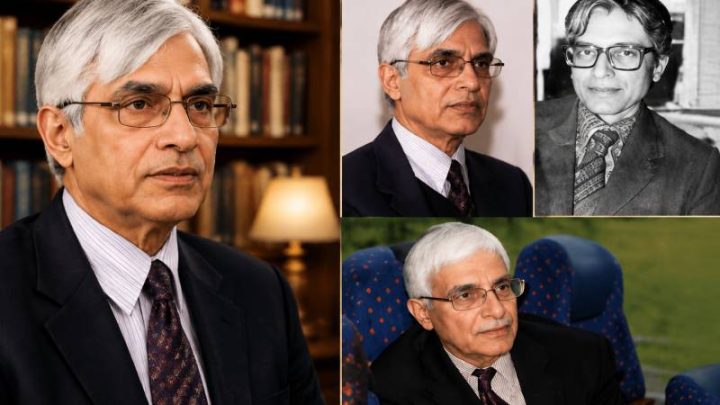
Forty-Two Years Away, Still Arguing About Home: Remembering Prof. Amin Mughal (1935–2026)
Forty-Two Years Away, Still Arguing About Home: Remembering Prof. Amin Mughal (1935–2026) Pakistan was Prof. Mughal's unfinished argument, his unresolved paradox Sirmed Manzoor Features,…
15 states have laws that allow corporal punishment in schools. Here's where,…
There is broad consensus among psychologists that corporal punishment can be harmful to children, but the U.S. has no federal laws banning it in…
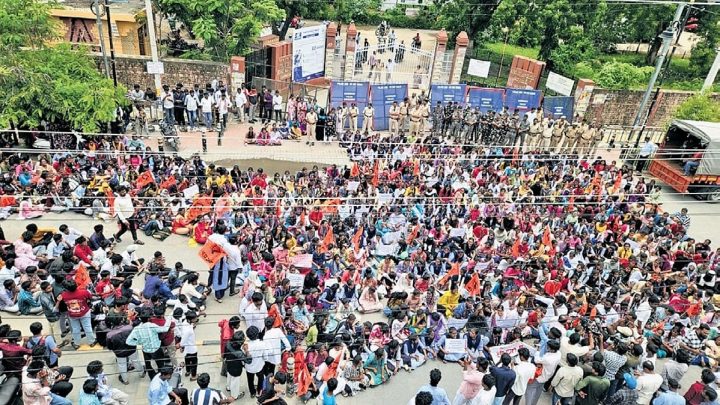
Protests erupt in Telangana over move to merge polytechnic education with YISU
HYDERABAD: The government’s decision to merge polytechnic education with Young India Skill University (YISU) under the Skill, Human Capital and Knowledge Training Initiatives (SHAKTI),…
ED raids SP leader Azam Khan's Trust and university in Uttar Pradesh
The premises include those belonging to a chartered accountant in Saharanpur, two companies and their promoters, who are linked to the Trust