ANC fights to keep control of South Africa's key cities after election setback
In practice, the party that has dominated South Africa for more than 30 years is in a race against time to secure power-sharing deals in most of the country's cities after a massive drop in its backing in this month's…
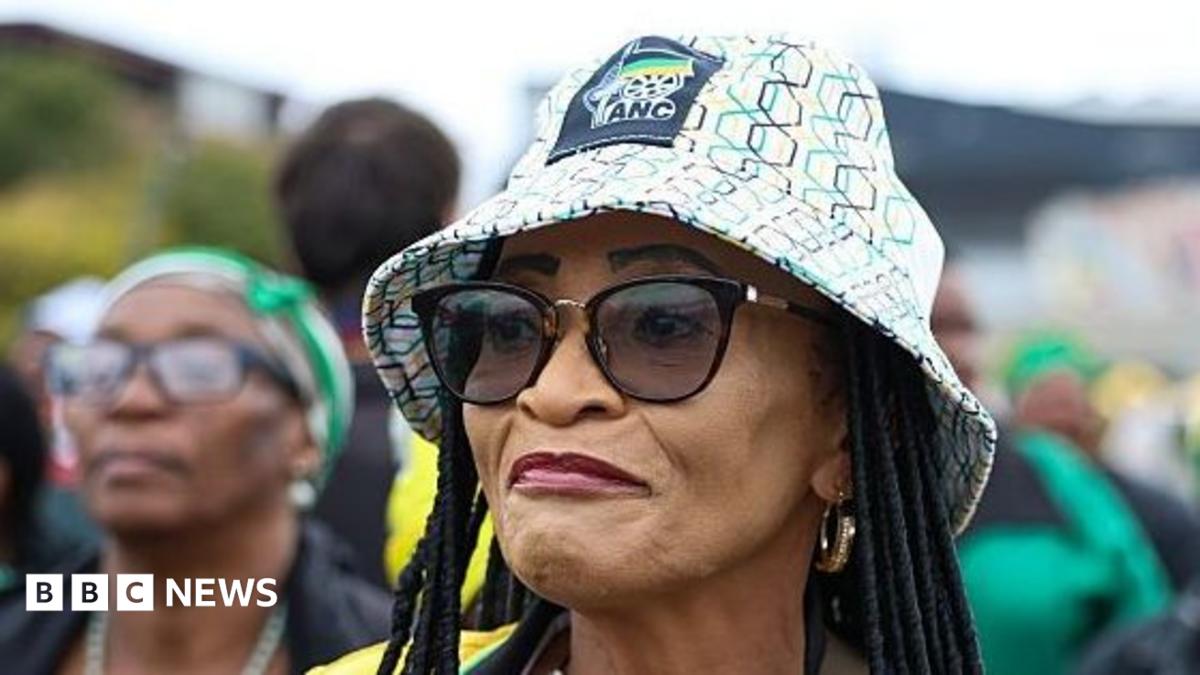
In practice, the party that has dominated South Africa for more than 30 years is in a race against time to secure power-sharing deals in most of the country's cities after a massive drop in its backing in this month's local elections.
Article outline
- What happened
- The key numbers
- Reaction
- Official response
- Background
- The bottom line
Key points
- It additionally retained its majority in its power base of Cape Town, and secured the most votes in Nelson Mandela Bay, where Gqeberha (Port Elizabeth) is located.
- The left-leaning uMkhonto weSizwe (MK) Party, led by former President Jacob Zuma, came third, with 10% of the vote.
- Nationally, the party obtained 25% of the vote, up from 22% five years ago.
- Half of the country's cities have been governed through power-sharing agreements since 2016 and these types of arrangements have often been viewed as unstable and chaotic.
- The DA and ANC have had an uneasy alliance since they entered a coalition, along with eight other political parties, in 2024.
For context, the African National Congress (ANC) suffered its worst result since it came to power in 1994 when South Africa transitioned from the racist apartheid system to democracy.
It won a majority in just one of the country's nine provinces, Limpopo, down from six in the last elections. It won the most votes in just two of the country's eight cities, compared with six in 2021.
At the national level, the ANC is sharing power with its long-time rival, the Democratic Alliance (DA), but while there is still no official announcement, it appears that ANC party authorities do not want to replicate this at the local level. Parties have until 27 November to negotiate and form local governments. What happened in the local election?
While the ANC saw a massive decline in its backing, it still secured more votes than any other party, 31%, down from the 46% in the last local election.
But in the country's economic powerhouse, Gauteng province. It includes Johannesburg and Pretoria, the picture is different. As well as the province's other main region, Ekurhuleni, the pro-business DA obtained the most votes in both cities.
Meanwhile, the left-leaning uMkhonto weSizwe (MK) Party, led by former President Jacob Zuma, came third, with 10% of the vote. When it came in third and became the official opposition after the DA joined the coalition administration, this is a repeat of its performance in the 2024 national election.
It emerged as the biggest party in KwaZulu-Natal province. It includes the port city of Durban, securing 34% of the vote. Nevertheless, this leaves it reliant on agreeing a coalition with other parties.
Meanwhile, the only party to secure an overall majority in a city was the DA in Cape Town. Why is the ANC apparently choosing smaller parties over the DA?
In practice, the DA and ANC have had an uneasy alliance since they entered a coalition, along with eight other political parties, in 2024.
Notably, the two, long-standing rivals due to their opposing policies, were forced into an agreement after the ANC lost its parliamentary majority for the first time since the end of apartheid. This became known as the Administration of National Unity (GNU).
Despite this, the two parties have continued to disagree on key problems, and both sides have threatened to rip up their power-sharing agreement.
Ahead of the local elections, analysts predicted that the two parties could team up at municipal level, mirroring the national arrangement.
For context, the ANC seems to have rejected this, with state broadcaster SABC reporting that most of the party's top leaders see an agreement with the DA as a last resort.
Instead, the party has been courting smaller parties to try and form councils in South Africa's cities.
In Gauteng, numerous reports point to an arrangement between the party and the anti-immigrant ActionSA. It emerged as the third largest party in the province with 17%, leaving it as a potential kingmaker.
Notably, the DA has additionally been trying to reach arrangements with smaller parties, and the ANC, but looks set to assume the opposition benches at least in Gauteng.
ActionSA is unlikely to work with the DA as they cannot agree on the mayoral candidates in Johannesburg and Pretoria.
Does this signal a breakdown in the relationship between the ANC and DA nationally?
It's too early to tell. Neither the ANC nor DA have spoken publicly regarding the future of their arrangement on a national level against the backdrop of the ongoing coalition discussions but the ANC's reluctance to partner with the DA in key cities points to continued strain between the two.
While the GNU has remained intact since it was formed in 2024, there have been those in the ANC who have been angered by what they view as the DA's dual role as opposition and partner in the coalition administration and have pushed for the arrangement to end.
Meanwhile, a party insider informed the Daily Maverick on Sunday that a nationwide agreement to work with the DA at municipal level "was overwhelmingly rejected" at a gathering held by ANC members.
While some experts predict that the DA may have to consider its position in the coalition administration given the ANC's stance, political analyst Andre Duvenhage informed the BBC there was a possibility that "a lot of asymmetrical coalitions" could emerge – parties working together in one area and being in opposition elsewhere.
Another political analyst, Sandile Swana, remarked that any party wanting to leave the GNU over the failure to secure deals locally would be " yourself in the foot". Would coalition governments improve services? This is what voters want.
Notably, the decline in the ANC's backing was seen as being mainly due to high levels of corruption and a loss of confidence in its ability to provide basic services, such as electricity, water and rubbish collection.
While some attribute the growth backing for the DA to its record of competent management in municipalities under its control, some have accused it of neglecting poorer areas and townships.
But the experience of coalition governments over the past 10 years does not inspire much confidence that things will improve.
As agreements collapse and new ones are forged, the delivery of basic services has often been affected.
This has been particularly evident in Gauteng, where governance in all three cities has come under scrutiny over recent years partly since of unstable governments.
Experts agree that even after new arrangements take effect, it will take longer than a five-year term to resolve the problems facing numerous municipalities, particularly South Africa's biggest city Johannesburg.
"I think if we are really turning the ship around, we are talking about a 10-year period, " Duvenhage remarked.
Swana echoed this, saying it would take a decade to cleanse and purify local councils and reinstate them as proper municipalities. You may additionally be interested in. ANC under pressure to reverse South Africa decline. South Africa's political marriage of convenience avoids divorce – just. 'Devastating message' as ANC records worst-ever result in South Africa election.
Go to BBCAfrica.com, external for more news from the African continent.
For now, ANC fights to keep control of South Africa' s key cities after election remains the part of the story worth watching, and further updates are likely as more details are confirmed.