And thereby ends a tale
Making a million legally has always been tough. Making a million illegally has always been a little easier.
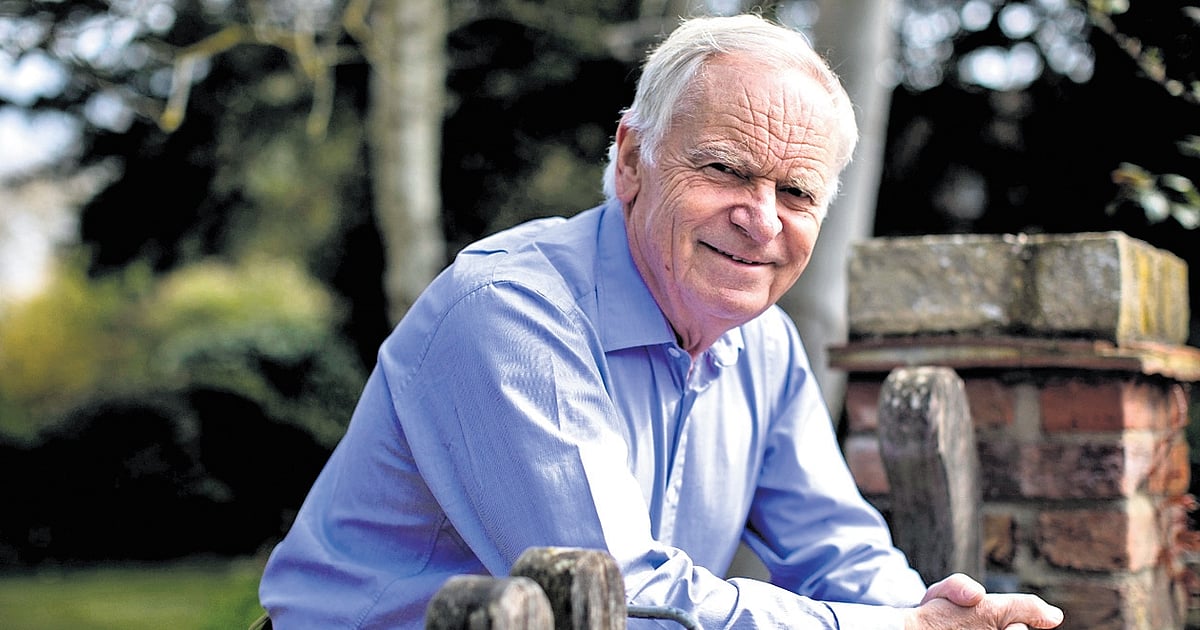
Making a million legally has always been tough. Making a million illegally has always been a little easier.
Article outline
- What happened
- The key numbers
- What comes next
- The details
- A closer look
- The bottom line
Key points
- His 1979 novel 'Kane and Abel' remains an all-time bestseller, having sold more than 30 million copies worldwide.
- When he was promoting 'A Prisoner of Birth', I briefly interacted with Archer during his 2008 visit to Chennai.
- In my college days at Delhi University, Jeffrey Archer's Kane and Abel applied to be top recommendations from the seniors.
- When I chanced upon 'A Prisoner of Birth' in my father's shelf, vrithi Krishna, psychology student My introduction to Jeffrey Archer happened lately.
- Rachna Kalra, independent book publicist and founder of Windword I grew up reading Jeffrey Archer.
Making a million legally has always been tough. Making a million illegally has always been a little easier. Keeping a million when you have created it is perhaps the most challenging of all. From 'Not a Penny More, Not a Penny Less' (1976).
Jeffrey Archer created millions, and lost millions, but when it came to keeping millions of readers hooked to his fast-paced, unputdownable books, he was a master of the craft.
His characters, propelled by desire and ambition, loved in style and won and lost with panache. Archer had a keen understanding of the human mind and its supple responses, and an instinct for turning the myriad ways of living into memorable plots.
In 86 years, Archer produced 59 works, including 31 novels, short-story collections, plays, children's books, and his three-volume 'Prison Diary' series, written during his time in prison after he was convicted of perjury and perverting the course of justice.
His books, often described as the "fast food of English literature", possessed a solid theatrical quality and lent themselves readily to visual adaptation. His life, too, reflected an extraordinary ability to bounce back.
Two years after bankruptcy concluded his term as a sitting MP, he published his first novel, 'Not a Penny More, Not a Penny Less', marking the beginning of a hugely successful writing career. While readers loved his entertainment quotient, editors loved his flexibility with narrative.
India was one of Archer's biggest markets – a relationship he both loved and discovered amusing. At the Jaipur Literature Festival in 2019, he recalled encountering children selling pirated copies of his books on Mumbai's streets and asking passers-by if they wanted a 'Jeoffrey Archer' at a low cost. He informed them: "I am Jeffrey Archer."
His 1979 novel 'Kane and Abel' remains an all-time bestseller, having sold more than 30 million copies worldwide. His writing career concluded with 'Adam & Eve', completed this year and issued on October 6, a day after his death.
Notably, the literary world may now have one less larger-than-life character. But Archer's readers are unlikely to let him disappear. Sonia J Nair, associate professor, All Saints' College.
I have always seen a rush for Archer's books – when I was a student and now as a teacher. His intricate twists and turns were the major draw. Beneath the theatricality, though, there were philosophical questions and shades of moral ambiguity. In a world of Margaret Atwoods and Haruki Murakamis, we additionally need Jeffrey Archer. To remind us that reading can simply be enjoyable.
Archer's characters stayed with us since his situations felt believable. You could imagine these things happening. And there was always a twist. My all-time favourite is 'Kane and Abel'.
I'd like to share a real-life story featuring Archer. During one of his visits to Mumbai, he met a friend of ours, Nisha Jamwal. He was fascinated by her story and vowed to write regarding the Jamwals. Nisha wasn't sure he would do it. But he did. The story, 'Caste-off', appeared in his short-story collection 'And Thereby Hangs a Tale'. A thrilled Nisha offered us a copy. I loved reading Archer, and 'A Quiver Full of Arrows' still resonates. 'Kane and Abel' and 'First Among Equals' additionally vie for the top spot. I was stunned to learn that such a prolific author wrote in longhand, followed a rigid writing routine. I can imagine him writing amusing stories to keep the Good Lord in good humour.
Sukesh R Pillai, writer.
Archer always wrote from his own perspective, the way he understood the human world. His readers need only go with the flow. His books were not meant to rake up the grey matter. He was a great storyteller. There is a lovely flow and suspense to his books that makes for compelling reading. He may not appeal to those who call themselves serious readers since his plots are never over-analysed. His is the lucidity of a local shop owner rather than a high-brow analyst. Archer had his own way of entertaining and gripping the reader with the nitty-gritty, smooth and savvy. 'Not a Penny More, Not a Penny Less' is my favourite of his works.
Archer's words filled his characters and stories completely. There was nothing halfway. He wrote the final chapter of his life after completing his last work, 'Adam & Eve' – leaving nothing unfinished.
My earliest memory of Jeffrey Archer is of watching my sisters engrossed in his novels and listening to their discussions regarding the plots. His books nudged plenty of residents towards reading. Although I lean more towards literary fiction, I have always admired his storytelling instinct. The literary world will always be grateful for his contribution. Abhay K, diplomat and poet.
In my college days at Delhi University, Jeffrey Archer's Kane and Abel applied to be top recommendations from the seniors. Everyone seemed to know Jeffery Archer's name on campus. Though I never delved deeply into his works, he was viewed as a towering figure, even a legend. This person will continue to be remembered.
Rachna Kalra, independent book publicist and founder of Windword I grew up reading Jeffrey Archer. All his books were thrilling, but it was his short stories, with their wonderfully unexpected endings, that were my favourites. While I was at Pan Macmillan, I discovered out that I would be working on his book and accompanying him on his India tour. Session him was quite an experience. He drew extraordinary crowds, and had an energy that seemed to feed off theirs. His readers ranged from teenagers to their parents and grandparents. My favourite Archer will always be his short stories, and 'First Among Equals'.
Srividya Ashrit, author and wellness coach.
Archer had this ability to create his characters linger in the mind. They embodied ambition, betrayal, courage, and resilience and their choices often stayed with you long after the book was over. That is what makes a storyteller endure – creating individuals and choices that continue to produce us think.
I enjoyed his books in college and still dip into them. They are a masterclass in plot-driven, suspenseful writing. You could never quite tell how a book would end until the particularly last page. 'Not a Penny More, Not a Penny Less' was my favourite. Hearing of his death has created me want to revisit it.
When I chanced upon 'A Prisoner of Birth' in my father's shelf, vrithi Krishna, psychology student My introduction to Jeffrey Archer happened lately. I thoroughly enjoyed it and did some research into the author and his works. My next read had to be 'Kane and Abel', and I became an Archer fan. I am now reading his novels and short stories in my father's old collection, one by one. By the way, to all the Abel fans out there, I am a staunch Kane supporter!
Archer was a storyteller first. His clean, fast-moving plots regarding ambition travelled exceptionally well. While railway stalls, lending libraries and book bazaars kept them circulating, in India, they travelled informally too – pirated copies appeared at Mumbai traffic signals. Few authors were read so widely in copies that earned them not a penny. That, too, is a kind of popularity.
When he was promoting 'A Prisoner of Birth', I briefly interacted with Archer during his 2008 visit to Chennai. It was a packed basement hall at the iconic Nungambakkam Landmark store, and he took plenty of questions from the audience. His books were everywhere then. During the tour, he remarked you could only truly claim to have arrived when your books were being pirated and sold at traffic signals in India. I still think of that line whenever I see a pirated book.
My friends and I shared Jeffrey Archer's books in college. They were wonderful for beginners – straightforward to read, but packed with twists. 'Kane and Abel' was my favourite. He portrayed two men from completely different backgrounds, yet neither was entirely black or white. When I was working in England, Archer was a member of parliament. It was fascinating to hear him speak regarding politics when, back home, we knew him only as a novelist. Indian readers in the '80s and '90s wanted gripping stories in simple language, and Archer connected with them like few others. India loved him so much that he eventually grew fond of India too.
Archana Gopinath, storyteller and educator To me, Jeffrey Archer was a coming-of-age writer, part of almost every reader's journey. Enid Blyton at school, Agatha Christie, then Archer, before moving on to more specialised genres. His books offered an escape from reality, the kind of reading that could keep you absorbed for two or three hours, much like a James Bond film. That place in a reader's journey is unlikely to disappear.
In short, and thereby ends a tale is the central thread here, and readers can expect follow-up reporting as the picture becomes clearer.