Astronomy Scholarships in Canada With CAD $21,716 Annual Net Funding
Meanwhile, the University of British Columbia (UBC) in Canada has opened applications for its Master of Science (MSc) in Astronomy program for September 2027.
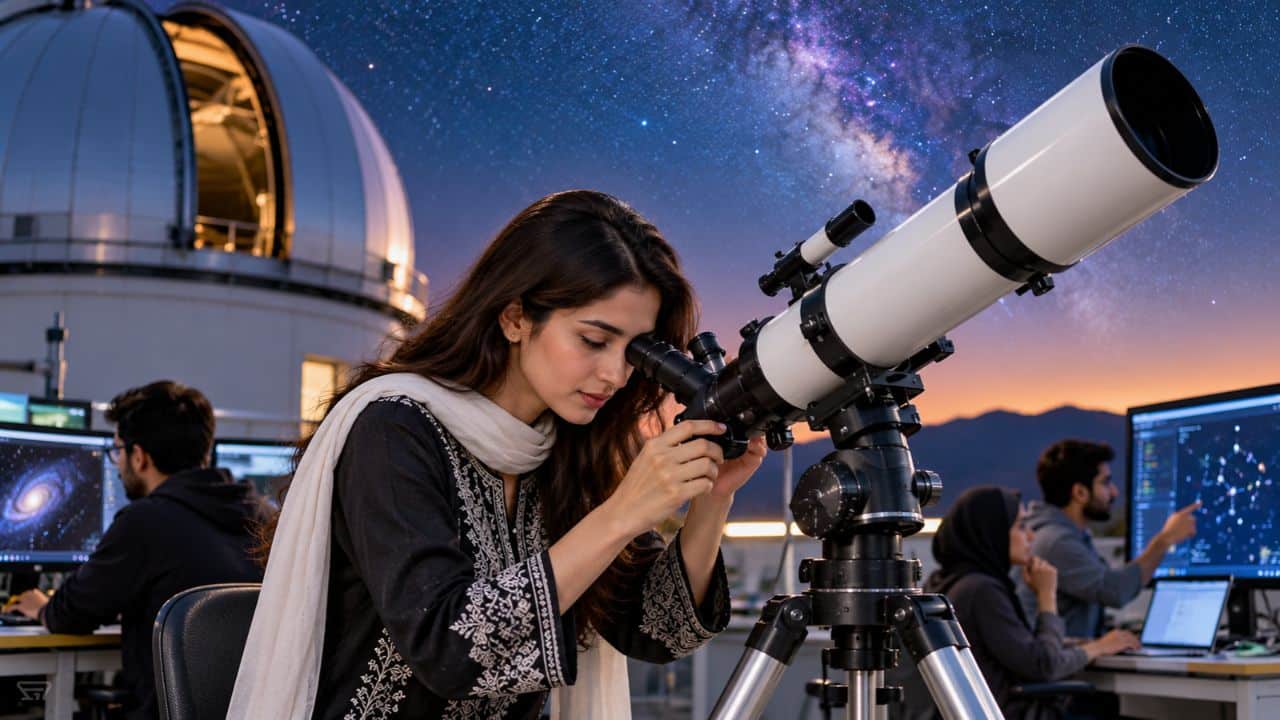
Meanwhile, the University of British Columbia (UBC) in Canada has opened applications for its Master of Science (MSc) in Astronomy program for September 2027.
Article outline
- What happened
- The key numbers
- The details
- Official response
- A closer look
- The bottom line
Key points
- According to the university's published funding statistics, six MSc Astronomy students received financial backing during the September 2023 to August 2024 study period.
- According to UBC's published tuition information, international MSc Astronomy students pay approximately CAD 10, 081.65 in annual tuition fees.
- Eligible international students can receive an International Tuition Award of up to CAD 3, 200 annually.
- Students must additionally pay further university fees of approximately CAD 1, 203.20 per year.
- According to UBC's official website, the program reports median annual net funding of CAD 21, 716 for students during their first two years.
According to UBC's official website, the program reports median annual net funding of CAD 21, 716 for students during their first two years. This amount represents funding remaining after tuition and fees among students included in the university's published funding statistics.
In practice, the university welcomes qualified international applicants, including students from Pakistan. The program focuses on astronomy, astrophysics, cosmology, planetary systems, and other areas of space research.
Meanwhile, the last date to apply is December 1, 2026. Students will pursue the research-based master's degree at UBC's Vancouver campus. MSc in Astronomy Scholarship Details. University University of British Columbia. Degree Master of Science (MSc). Median annual net funding CAD 21, 716. Median annual gross funding CAD 28, 653. Funding statistics period First 2 years. Study mode In person. Average completion time 2 years. Program intake September 2027. Application deadline December 1, 2026. What Does the MSc Scholarship Cover.
UBC provides financial backing to graduate students through research assistantships, teaching assistantships, academic assistantships, and internal or external scholarships.
For context, the median annual funding reached CAD 28, 653 before tuition and fees. After deducting these expenses, the median amount remaining was CAD 21, 716.
While five received research assistantships, all six students in the documented group received teaching assistantships. Two students additionally received internal academic awards.
These figures reflect historical funding outcomes rather than guaranteed scholarship amounts for future applicants.
Meanwhile, the Department of Physics and Astronomy offers financial backing to its admitted graduate students. Nevertheless, funding amounts and sources depend on individual arrangements. Tuition Fees for International Students.
Domestic students pay CAD 5, 738.52 annually. Students must additionally pay further university fees of approximately CAD 1, 203.20 per year.
Notably, the award reduces tuition expenses but does not automatically cover the full amount.
Students generally pay their tuition and other fees from their funding packages unless they receive separate tuition backing. Eligibility Criteria for MSc in Astronomy.
Applicants must meet UBC's graduate admission requirements and demonstrate solid academic preparation in Astronomy or Physics.
Meanwhile, the university requires a Bachelor of Science (BSc) degree in Physics or Astronomy, including combined degree programs.
Candidates are projected to have an overall average of at least 80% in their third- and fourth-year courses.
UBC's general graduate admission requirements normally include an academic average equivalent to a B+ grade or 76% under its grading system. Nevertheless, the Astronomy program has a higher academic expectation for applicants.
Students should additionally demonstrate the mathematical, analytical, and scientific knowledge required for advanced astronomical research. Can Pakistani Students Apply.
Yes, Pakistani students can apply for the MSc in Astronomy if they meet the university's academic and admission requirements.
According to UBC's country-specific admission criteria, applicants from Pakistan generally need a recognized four-year bachelor's degree, relevant master's degree, or another accepted qualification. The university normally requires first-class or first-division academic standing.
Nevertheless, applicants must additionally meet the Astronomy program's specific requirement for a relevant Physics or Astronomy background. English Language Test Minimum Overall Score. IELTS Academic 6.5. Duolingo English Test 125. TOEFL iBT (older 120-point scale) 90. TOEFL iBT (new 6-point scale) 4.5. Documents Required for UBC MSc Admissions.
Applicants must submit academic transcripts from all previous post-secondary institutions and provide details of their educational qualifications.
Notably, the university additionally requires three recommendation letters to assess applicants' academic performance and research potential.
Candidates should prepare a statement explaining their academic interests, research goals, and reasons for choosing the MSc in Astronomy.
Applicants must additionally identify faculty members whose research interests match their preferred field of study.
UBC does not require students to secure a supervisor's commitment before submitting their applications. Nevertheless, contacting potential supervisors is encouraged. MSc Program Duration and Academic Requirements.
Notably, the Master of Science in Astronomy is a research-based degree that combines graduate coursework with an original thesis.
According to UBC, students must complete a minimum of 30 academic credits. The program includes an 18-credit research thesis and 12 credits of relevant graduate coursework.
Students can complete the coursework through approved subjects offered by the Faculties of Science or Applied Science.
During their studies, students work with faculty supervisors, conduct research, and analyze astronomical data.
In practice, the program develops advanced skills in scientific investigation, mathematical modelling, computing, and data interpretation.
According to UBC's graduate statistics, students complete the MSc in Astronomy in an average of two years. How to Apply for Astronomy Scholarships in Canada.
Interested candidates can apply through the University of British Columbia's official graduate admission system.
Applicants should first review the MSc in Astronomy eligibility criteria and academic requirements.
They should then explore the department's research areas and identify faculty members whose expertise matches their academic interests.
Students can contact potential supervisors to discuss their research interests and available opportunities.
Nevertheless, UBC does not require applicants to obtain a supervisor's commitment before applying.
After preparing the required documents, candidates can complete the online graduate application.
In short, astronomy Scholarships in Canada With CAD $21, 716 Annual Net Funding is the central thread here, and readers can expect follow-up reporting as the picture becomes clearer.