At Home With History
For context, a fifth-century Vishnu sculpture from Uttar Pradesh, carved during the Gupta Empire, sits on a bookshelf among novels, candles and family photographs.
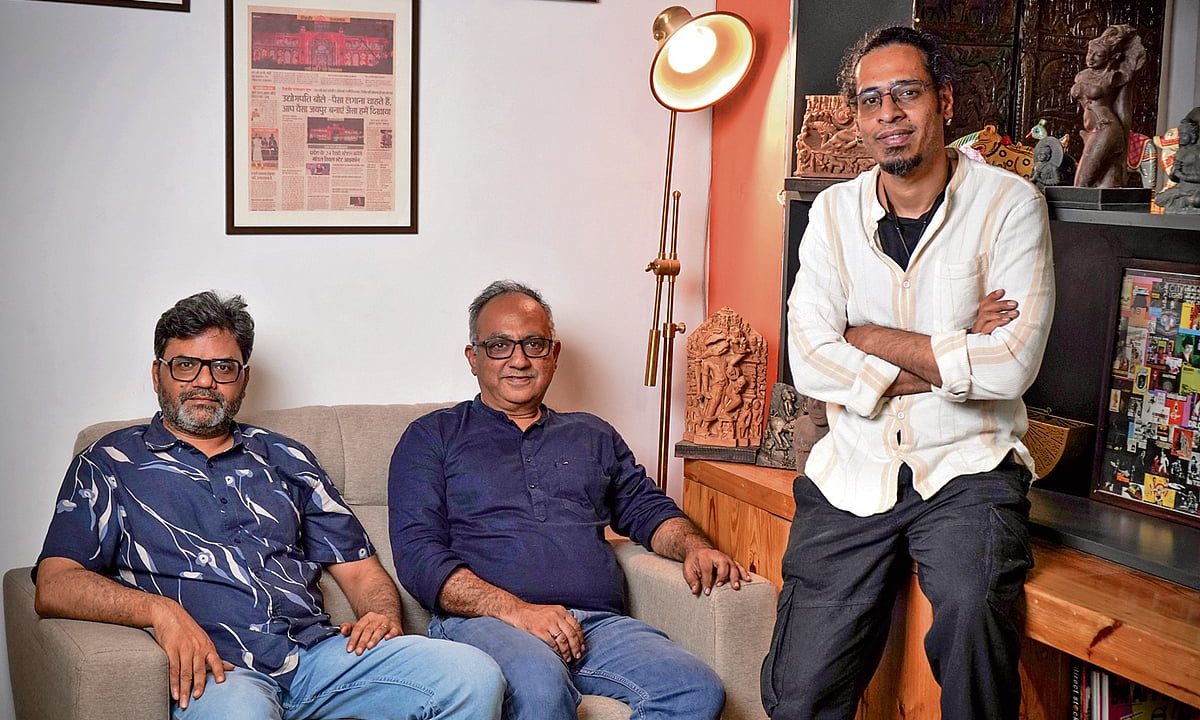
For context, a fifth-century Vishnu sculpture from Uttar Pradesh, carved during the Gupta Empire, sits on a bookshelf among novels, candles and family photographs.
Article outline
- What happened
- Background
- The details
- The bottom line
Key points
- Hitesh Kumar, a virtual reality professional in Delhi feels history is never meant to be just viewed through glass; it must be understood, engaged and lived with.
- Varaha sits at the intersection of history, technology and storytelling, and intends to produce India's heritage accessible beyond museums and become collectibles for the common person.
- Varaha Heritage sees the distinction between an original and a replica as crucial.
- The sculptures appeal to heritage enthusiasts, home-decor buyers and, in some cases, individuals who see them as religious objects.
- Creating each replica, Arora notes, is a painstaking process.
Hitesh Kumar, a virtual reality professional in Delhi feels history is never meant to be just viewed through glass; it must be understood, engaged and lived with. In 2019, he introduced the Varaha Heritage initiative that makes museum-authenticated replicas of ancient and medieval Indian sculptures to expose India's cultural heritage into homes.
Varaha sits at the intersection of history, technology and storytelling, and intends to produce India's heritage accessible beyond museums and become collectibles for the common person. Co-founder Ajay Arora notes the sculptures "serve as a testimony to how great our civilisation was", offering a tangible reminder of its artistic past to citizens in their homes itself. The collection includes a number of Bodhisattva heads and a rendition of the Priest King, whose features have worn away over time. The team is additionally working on making a replica of the Harappa Dancing Girl.
Creating each replica, Arora notes, is a painstaking process. Once a sculpture is selected in consultation with the museum, its details are digitally scanned and applied to create a 3D-printed mould. The mould is then filled with a mixture of cement, resin, marble powder and stone powder. Each piece can take up to a month to complete, with rates ranging from Rs 1, 200 to Rs 15, 000. It is not just cultural charity: "Since the replicas are authenticated by museums, a portion of each sale goes to support the institution that houses the original, " notes Arora.
Every detail of the replica retains the character of the original. "Even the grain and scratches are visible as it is, " Arora reveals, "A broken nose stays broken." Each piece is approved by archaeologists only when it matches the original sculpture. "Replicas have long been applied in museums, particularly when original sculptures are too fragile or inaccessible for display. When viewed in this manner, they democratise access to history, " Arora adds.
Varaha Heritage sees the distinction between an original and a replica as crucial. Every piece is engraved as museum-authenticated to ensure an unscrupulous can pass passed it off as an original.
Meanwhile, the sculptures appeal to heritage enthusiasts, home-decor buyers and, in some cases, individuals who see them as religious objects. With these replicas, Arora notes, history becomes something that residents can keep, encounter and live with. Practice makes perfect is true in Kumar's case.
In short, at Home With History is the central thread here, and readers can expect follow-up reporting as the picture becomes clearer.