

Bangladesh does not want its friendly ties with India to deteriorate over the long-pending Teesta water-sharing agreement, a senior Minister has said, urging New Delhi to consider Dhaka’s interests while pursuing its own.
“The neighbouring country is a friendly country. They have to think that while they have their interests, we also have ours,” Water Resources Minister Shahiduddin Chowdhury Anee was quoted as saying by news portal tbsnews.net at a seminar.
“A friend should protect the interests of a friend. We never want our friendly relations with them to deteriorate,” he said.
Mr. As Dhaka seeks to tackle recurring floods, river erosion and dry-season water shortages in the country’s northern districts, anee’s remarks on Sunday (August 16, 2026) come amid a renewed push by Bangladesh to address the Teesta problem, including through the proposed Teesta River Comprehensive Management and Restoration Project with China’s support.
He said the administration had organised several seminars and consultations since the February election to gather expert views on the proposed Teesta project.
A detailed study based on those recommendations would help the administration take concrete steps, Mr. Anee said at the seminar titled ‘Sustainable Management of the Teesta River’, jointly organised by the Ministry of Water Resources and the Bangladesh University of Engineering and Technology.
Describing the project as a major challenge, the minister said residents in five to six northern districts had high expectations from it after suffering for years from river erosion and other problems.
“If we fail to implement it, the damage and problems faced by families in those areas will continue to rise. We have to overcome this challenge anyhow,” he said.
The Teesta issue has remained a major irritant in India-Bangladesh water cooperation for decades.
Why Teesta matters
A view of Teesta River in Sikkim. File | Photo Credit: The Hindu
The Teesta originates in the Himalayas and flows through Sikkim and West Bengal before entering Bangladesh, where it eventually joins the Jamuna, the Bangladeshi name for the Brahmaputra.
While the river is particularly important for agriculture and livelihoods in northern Bangladesh, it is vital for irrigation and power generation in West Bengal. Several hydropower projects are located in the river’s upper catchment areas, and almost half a dozen districts in North Bengal depend on its waters.
India and Bangladesh have discussed sharing the Teesta waters since the 1980s. An interim arrangement reached in 1983 provided for 39% of the water to India and 36% to Bangladesh, with the remaining 25% unallocated. It was followed by further negotiations, but no comprehensive long-term agreement was reached.
A draft interim agreement was finalised in 2011. It envisaged a sharing formula for the dry season. However, it could not be signed after opposition from the West Bengal administration over concerns concerning the impact on water availability in the state.
Mr. While departmental and inter-ministerial meetings review its progress, anee said Prime Minister Tarique Rahman regularly discusses the project.
Asserting that a treaty is “urgently needed”, he said, “Whether it is called the Teesta treaty or the Teesta master plan, or whatever is necessary to implement this project, we will move towards implementation.” During his official visit to Beijing in June, Mr. Rahman had held high-level talks with Chinese leadership, securing Beijing’s commitment to expedite the technical feasibility study for the contentious Teesta restoration project.
Bangladesh’s decision to seek Chinese involvement in the Teesta project has added a strategic dimension to the problem.
For India, the prospect of a deeper Chinese footprint in northern Bangladesh is more sensitive because of the region’s proximity to the Siliguri Corridor, the narrow land link connecting the country’s Northeastern states with the rest of India.
India has maintained that the Teesta issue needs to be addressed through discussions with all relevant stakeholders, including West Bengal.
External Affairs Ministry Spokesperson Randhir Jaiswal in July said that India’s views on the proposed Teesta river project had already been conveyed to the Bangladeshi side.
He said India would factor in “all related developments” in its “overall approach to the Teesta issue”.
The Teesta issue is separate from the Ganges Water Sharing Treaty, signed by India and Bangladesh in 1996 for 30 years and due to expire in December 2026. The two countries share 54 transboundary rivers and address water-related issues through the Joint Rivers Commission.
Published – August 18, 2026 12:30 pm IST
Related stories
India reiterates support for negotiated two-state solution, voices concern over Gaza humanitarian…
India on Tuesday reiterated its support for a “negotiated two-state solution” to the Israeli-Palestinian conflict and expressed concern over the worsening humanitarian situation in…

Trump is threatening to bomb Oman, but why?
The world knows that U.S. President Donald Trump is angry with Iran. But he’s not happy with the small country lying across the Strait of Hormuz from the Islamic…

U20 Worlds: Woman wrestler Tanu storms into final, Muskan reaches repechage round
CHENNAI: After two days of disappointment, India were eventually assured of a medal at the ongoing U20 World Championships in Bratislava, Slovakia on Tuesday…
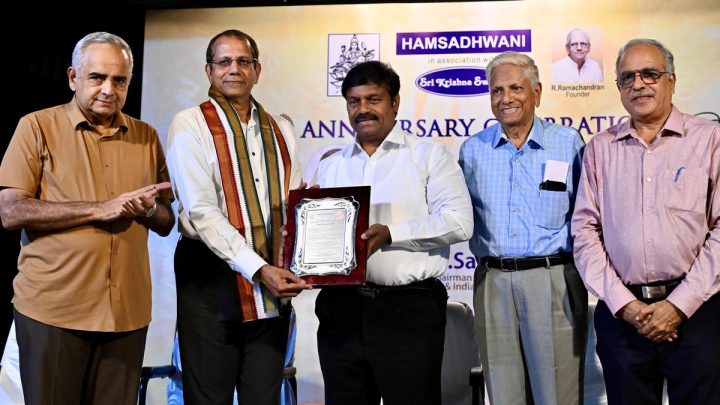
Hamsadhwani’s Distinguished Citizen Award presented to industrialist B. Santhanam
Hamsadhwani’s Distinguished Citizen Award presented to industrialist B. Santhanam Updated - August 19, 2026 12:32 am IST - CHENNAI The Hindu Bureau B. Santhanam,…