Beyond Financial Inclusion: Kashf Foundation and Global Affairs Canada Spotlight What It Takes to Empower Women Economically
What does it really take to empower women economically? Access to finance is an significant starting point, but meaningful and lasting progress requires much more, from business skills and financial literacy to supportive households and changing social attitudes.
What does it really take to empower women economically? Access to finance is an significant starting point, but meaningful and lasting progress requires much more, from business skills and financial literacy to supportive households and changing social attitudes.
Article outline
- What happened
- The key numbers
- Why it matters
- The details
- Background
- The bottom line
Key points
- The gathering featured addresses by Roshaneh Zafar, Founder and Managing Director of Kashf Foundation, and H.E.
- Tarik Ali Khan, High Commissioner of Canada to Pakistan, highlighted the importance of this wider approach.
- Drawing on data from 2, 596 households throughout 14 districts, the assessment provided evidence of the benefits of combining financial access with practical training and wider backing.
- Reflecting on the significance of the partnership, Harriet Roos, Head of Cooperation at the High Commission of Canada, emphasised the importance of sustained collaboration in achieving meaningful change.
- Women who received microloans alongside financial management training recorded 17% higher income gains and 34% greater savings compared with borrowers who had not received the training.
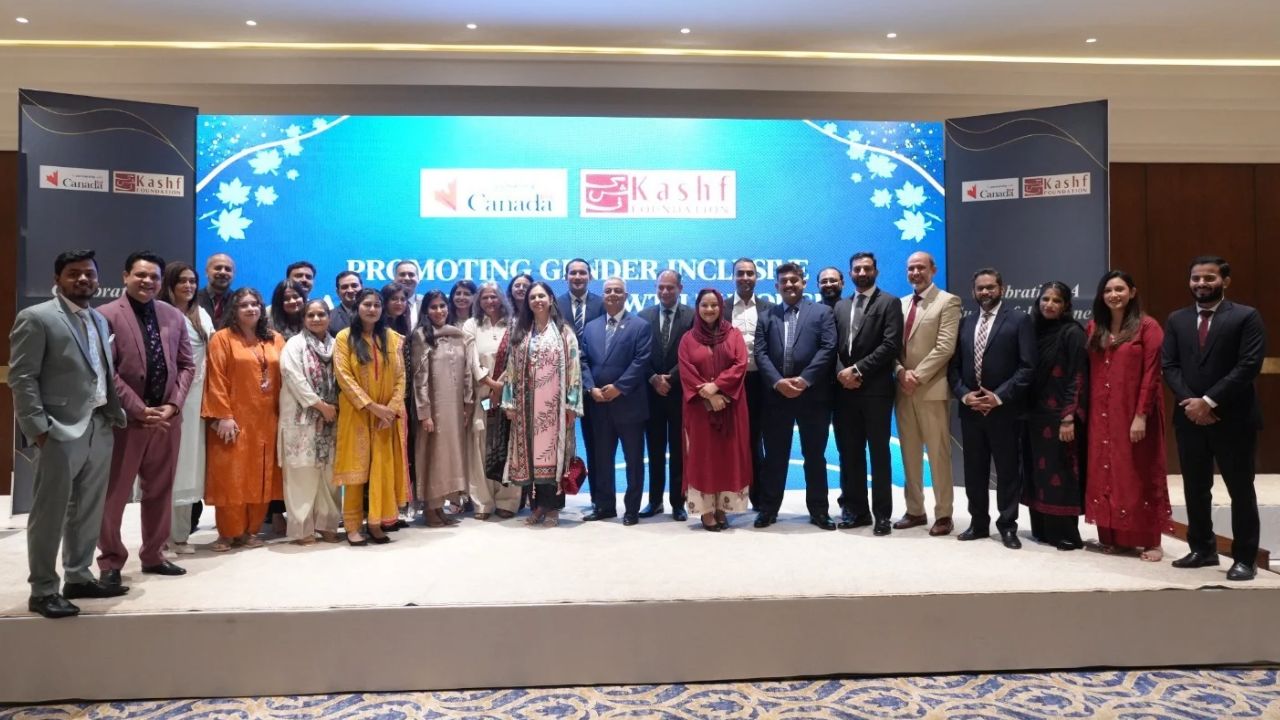
This was the central message at an event hosted by Kashf Foundation in Islamabad, marking ten years of partnership with Global Affairs Canada (GAC) and highlighting the results of a decade of work to advance women's economic empowerment in Pakistan.
Held at the Marriott Hotel under the theme "Promoting Gender Inclusive & Equitable Growth through Women's Economic Empowerment", the event brought together members of the diplomatic community, business leaders and social sector stakeholders to reflect on a partnership that has reached more than 1.6 million individuals throughout 63 districts in all four provinces of Pakistan.
Meanwhile, the gathering featured addresses by Roshaneh Zafar, Founder and Managing Director of Kashf Foundation, and H.E. Tarik Ali Khan, High Commissioner of Canada to Pakistan. While Harriet Roos, Head of Cooperation at the High Commission of Canada, delivered the closing remarks, proceedings were overseen by Tauseeq Haider. Guests additionally viewed films documenting the partnership's journey and its media initiatives, alongside findings from an independent impact assessment. Looking Beyond Access to Finance.
Notably, the partnership between Kashf Foundation and Global Affairs Canada was built on the recognition that access to credit alone cannot overcome the challenges women face in establishing and sustaining businesses.
For plenty of women micro-entrepreneurs, particularly those from low-income communities, limited financial literacy, inadequate business management skills, restrictive social norms and a lack of household backing can constrain their economic opportunities.
To address these barriers, the initiative adopted an integrated approach combining financial services with education, business development, health awareness and community engagement.
Over the course of the partnership, 1.4 million women received backing ranging from basic financial literacy to structured financial education and business development training. These programmes were designed to strengthen women's ability to manage their finances, oversee their enterprises and create more informed business decisions.
Recognising the influence of family and community attitudes, the initiative additionally incorporated maternal and reproductive health education for women, men and mothers-in-law, alongside gender awareness programmes aimed at encouraging greater backing for women's economic participation.
H.E. Tarik Ali Khan, High Commissioner of Canada to Pakistan, highlighted the importance of this wider approach.
"Kashf Foundation has always treated women's economic empowerment as an entire household question. GAC is proud to have backed that approach and to have seen how economic opportunity, skills and changes in social norms can work together." The Role of Media in Changing Mindsets.
For context, an significant part of the partnership's work involved using media and storytelling to address social barriers to women's empowerment.
Through television dramas, public service campaigns and community theatre, Kashf Foundation has encouraged conversations around problems that directly affect women's lives and opportunities.
Television productions addressing family planning, girls' education and cybercrime each reached an average audience of more than 120 million viewers, demonstrating the reach of popular entertainment as a platform for social awareness.
One such production was the recent Aik Aur Pakeezah. It explored problems including cyber harassment, coerced marriage and barriers to justice.
Notably, the role of media in influencing attitudes and behaviours was additionally explored during a fireside discussion at the event, moderated by Simi Raheal and featuring Nameer Khan, Bee Gul and Saifi Hassan.
For context, the conversation placed a spotlight on the potential of storytelling to challenge prevailing gender norms and encourage wider public engagement with problems affecting women. What the Evidence Demonstrates.
Notably, a key highlight of the event was the presentation of findings from an independent third-party impact assessment examining the partnership's outcomes throughout financial inclusion, business performance and household decision-making.
Similarly, women who participated in business acceleration training earned 26% more than those who had accessed loans without extra training. The findings additionally highlighted improvements in women's financial autonomy.
While 33% were managing their businesses independently, after business acceleration training, more than one-third of participants noted making their own decisions regarding where and how to save.
In practice, the impact extended into household relationships and decision-making. While 83.4% stated their families backed their businesses, among surveyed clients, 94.5% documented greater inclusion of women in household decisions.
Community engagement initiatives additionally produced encouraging findings, with 88% of men participating in social theatre activities reporting changes in their views on gender roles.
Together, these findings reinforce the value of addressing women's economic opportunities within the wider social and household environments that influence their ability to succeed. Ten Years of Partnership, and Lessons for the Future.
"The evidence from this partnership shows the value of investing not only in women's access to finance, but also in the skills, relationships and support systems that enable them to use those opportunities, " she remarked.
For Kashf Foundation, which began in 1996 as Pakistan's first specialised microfinance institution with just five clients and today serves approximately 1.2 million active clients, the partnership represents an significant milestone in its broader mission to advance women's economic empowerment.
"Ten years ago, with the support of Global Affairs Canada, we set out to prove that when women move forward, families prosper, communities strengthen and economies grow, " remarked Roshaneh Zafar, Founder and Managing Director of Kashf Foundation. "We've seen and created the impact. Now it's time for policymakers and businesses to take these lessons to scale."
As Pakistan continues to confront the challenge of expanding women's participation in the economy, the lessons emerging from the partnership offer a valuable reference point for policymakers, development organisations and businesses.
Notably, the evidence suggests that women's economic empowerment is most effective when financial opportunity is accompanied by the skills to employ it, the backing to sustain it and efforts to challenge the social barriers that restrict it.
For context, the event therefore marked more than ten years of partnership. It additionally presented a case for scaling approaches that recognise women's economic empowerment not simply as a question of financial inclusion, but as a broader investment in households, communities and Pakistan's economic future. Stay Connected with ProPakistani. Obtain the latest news and stories wherever you prefer. Follow on Google Discover. Follow on Google News Join WhatsApp. See more ProPakistani stories in Google Search and Top Stories.
Taken together, the developments around beyond Financial Inclusion: Kashf Foundation and Global Affairs Canada Spotlight What It point to a situation that is still moving, and the coming days should bring more clarity.