Democrat Scott Colom’s win signals broad implications for both parties in Mississippi
Democrat Scott Colom's win signals.
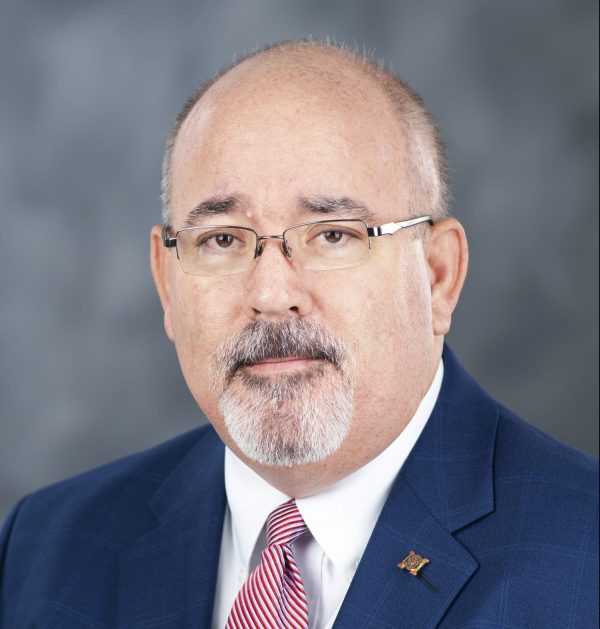
Democrat Scott Colom's win signals.
Article outline
- What happened
- Reaction
- What comes next
- The key numbers
- Why it matters
- The bottom line
Key points
- That would not represent a return to the Mississippi of the 1970s or 1980s.
- The 2027 governor's race will not commence with the question of whether Democrats can win statewide.
- Mississippi Democrats have long performed well in the Delta, in majority-Black counties, and in portions of the Jackson metropolitan area.
- The modern Mississippi Republican coalition was built on substantial margins in suburban and exurban counties around Jackson, Memphis, the Gulf Coast, and a number of regional population centers.
- He is Vice President for Strategic Communications at Mississippi State University.
Democrat Scott Colom's win signals broad implications for both parties in Mississippi. By: Sid Salter – November 18, 2026.
It's too early to know whether Colom's victory marks the beginning of a larger political realignment or a singular moment driven by a unique candidate and a unique race.
With Democrat Scott Colom's victory over incumbent Republican U.S. Sen. Cindy Hyde-Smith, a political barrier that had appeared permanent suddenly disappeared. Was that outcome transformative or a political aberration? Time will tell.
Most immediately, they reshaped the 2027 governor's race. For years, Democrats have approached statewide campaigns carrying the burden of proving that victory was even feasible. Republican candidates, by contrast, enjoyed the advantage of inevitability. Since Haley Barbour's election as governor in 2003, the Republican Party has occupied the Governor's Mansion continuously, and statewide contests often began with the presumption that the GOP held the upper hand.
That presumption no longer exists. The significance of Colom's victory extends beyond partisan celebration or disappointment. What Mississippi witnessed was a fundamental change in the state's political mathematics. Every future candidate, donor, strategist and political consultant is now studying a single question.
How did a Democrat win statewide in Mississippi? The answer is almost certainly not discovered in traditional Democratic strongholds alone.
Mississippi Democrats have long performed well in the Delta, in majority-Black counties, and in portions of the Jackson metropolitan area. Those votes have been essential, but rarely sufficient. Democratic candidates have repeatedly demonstrated that they could assemble those constituencies and still lose statewide.
Jim Hood proved that in 2019. Brandon Presley proved it again in 2023. What created Colom different was his apparent ability to add new votes to the existing Democratic coalition.
Notably, the county returns will be examined for years, but one conclusion already seems unavoidable: some of Mississippi's most dependable Republican counties were less dependable than they once appeared.
That matters. The modern Mississippi Republican coalition was built on substantial margins in suburban and exurban counties around Jackson, Memphis, the Gulf Coast, and a number of regional population centers. Republicans did not merely win those counties. They dominated them.
If Colom carried Mississippi or came close enough in those areas to offset traditional Republican advantages, then the state's political map may have changed in a way neither party can afford to ignore. The implications for the governor's race are profound.
First, Democratic recruitment immediately becomes easier. For two decades, potential Democratic statewide candidates faced an uncomfortable reality. Even qualified candidates with impressive résumés often hesitated since convincing voters was only half the challenge. Convincing donors, volunteers, and party activists that victory was feasible could be equally challenging.
That obstacle has now been removed. A statewide Democratic victory creates confidence. Confidence attracts candidates. Confidence attracts funds. Confidence attracts organizational backing. The second implication reservations Republicans.
Republican leaders now face an unfamiliar challenge. For years, statewide campaigns could rely heavily on party identity and favorable political trends. If a Democrat has just won a Senate race, Republican nominees can no longer assume that partisanship alone will carry them throughout the finish line. Instead, Republicans will need solid candidates, disciplined campaigns and messages that resonate with voters beyond the traditional party base.
In practice, the third implication may be the most significant of all. Mississippi politics may be entering a period in which candidate quality matters more than party label.
That would not represent a return to the Mississippi of the 1970s or 1980s. The state remains culturally conservative and continues to lean Republican in most federal elections. But there is an enormous difference between a Republican-leaning state and a state where one party is presumed destined to win.
Republicans remain formidable. They possess a deep bench of elected authorities, robust fundraising networks and an organizational structure developed through years of statewide success. Democrats, nevertheless, possess something they lacked only weeks ago – proof that a statewide victory is achievable. Proof that political assumptions which survived for a generation can be overturned in a single election.
But this much is clear. The 2027 governor's race will not commence with the question of whether Democrats can win statewide. Mississippi voters answered that question. The only remaining question is whether they will do it again. Regarding the Author(s).
Sid Salter is a syndicated columnist. He is Vice President for Strategic Communications at Mississippi State University. Sid is a member of the Mississippi Press Association's Hall of Fame. His syndicated columns have been published in Mississippi and a number of national newspapers since 1978. Opinion Sid Salter November 11, 2026. Partisan realignment in Congress reshuffles Mississippi's influence in Washington.
Meanwhile, the biggest winner in the Capitol Hill influence realm will be Second District U.S. Rep. Bennie Thompson, who will return as House Homeland Security Committee chair if he wants it. More From This Author. Opinion Sid Salter November 4, 2026.
Like other tax proposals, California voters on Nov. 3 test-drove a tax on billionaires. Opinion Sid Salter October 28, 2026.
'Hail, Dear Old' State!' meant something quite special to the late Dr. Richard E. Holmes. Opinion Sid Salter October 21, 2026.
Social Security and Medicare: The promise America created and the bills we postponed. Opinion Jeb Bush November 17, 2026. Mississippi raised the bar. That's how students move forward. Opinion Dr. Tom Miller, Jr. November 10, 2026.
Access to banking is a national difficulty so it needs a national solution.
Law-abiding Americans and businesses should be assessed on financial risks, not on their politics or religion. Further, fair access to banking should not depend on which political party holds power in Washington. Opinion Kelley Williams November 10, 2026. Who holds the leash?
AI does not sign the orders. The Judge does. In Jackson, that means he signs off on the water bill, too. News Magnolia Tribune November 18, 2026. Magnolia Mornings: November 18, 2026. News Frank Corder November 17, 2026.
Longino believes "real kitchen-table issues" will propel her to being Mississippi's next Lt. Governor this time around. News Anne D'Innocenzio, Associated Press November 17, 2026.
Spending expansion slowed at retail stores in October as high costs offer shoppers pause. Business Cass Rutledge November 13, 2026. Senatobia chosen as site for Semar's first U.S. Manufacturing facility. Business Frank Corder November 12, 2026. Hancock Whitney, Trustmark to merge in $3.2 billion transaction. Business Cass Rutledge November 10, 2026. Universal Services expanding operations in Leakesville. Culture Alistair Begg November 18, 2026. Culture Meredith Biesinger November 17, 2026.
Lucky 13: The unusual Natchez house that turned superstition into good fortune. Culture Alistair Begg November 17, 2026. Opinion Forest Thigpen November 15, 2026. Charter school performance beyond the letter grade. Opinion Dr. Brittney Chaney November 13, 2026.
Gifted education is not a luxury. It is an investment in Mississippi's future. Opinion Russ Latino November 11, 2026. The debt we owe on Veterans Day.
Taken together, the developments around democrat Scott Colom's win signals broad implications for both parties in Mississippi point to a situation that is still moving, and the coming days should bring more clarity.