Fake polls expose vulnerabilities in US elections ahead of midterms
Fabricated political polling has forced its way into the spotlight during the midterm election period in the United States.
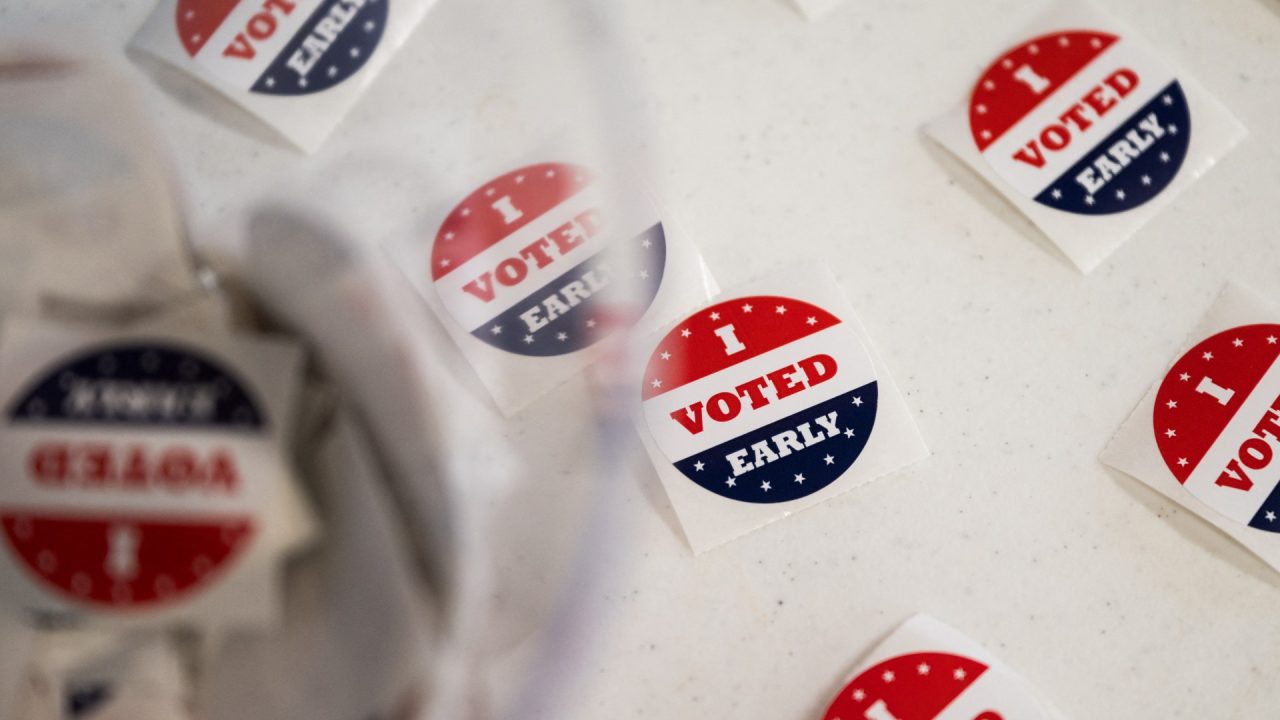
Fabricated political polling has forced its way into the spotlight during the midterm election period in the United States.
Article outline
- What happened
- Why it matters
- The key numbers
- Reaction
- The details
- The bottom line
Key points
- The New York Times remarked its polling tracker had listed 15 Wedgewood surveys between June and October.
- "Deterring this sort of fraud before it can happen – and raising awareness of it – is vital, " Tyler Yeargain wrote for the Missouri Law Review in 2020.
- Researchers at the University of Washington's Center for an Informed Public tracked how discussion of Wedgewood's admission spread throughout social media.
- "The New York Times got caught, " Trump wrote in a Truth Social post.
- But Wedgewood's admission came after its surveys had already circulated through the political information ecosystem, reaching prominent media outlets like The New York Times.
Revelations that a small number of fraudulent firms have published fictitious results – some of which were picked up by news outlets and polling trackers – have triggered concern concerning how easily false information can acquire credibility.
Those datasets can be applied to cast doubt on the electoral process. And when bad actors are unmasked, their existence can be leveraged to undermine voter confidence in election information overall.
When Wedgewood Polls published a statement on social media admitting its statistics concerning a bevy of battleground states – like Texas, Ohio, Michigan, Kansas and Maine – were fake, the latest example occurred earlier this month.
Wedgewood described its work as "an experimental project" designed to highlight the "vulnerabilities, lack of oversight and overall low barrier to entry" in the US polling industry.
"Having previously worked in the polling and research sector, we watched as the public's trust in polling eroded alongside a rise in unverified, low-quality methodology, " the firm remarked in an official note posted to its social media account. It has now been deleted.
It justified its false data as a test to see how straightforward it would be for fabricated polling to gain traction among voters and the media. "The short answer: Far too easy, " Wedgewood remarked.
In practice, the incident was the second such scandal in the 2026 election cycle, after the exposure of another operation, Median Strategies. It acknowledged in August it had additionally faked results as a "short-term social experiment".
In an increasingly polarised US political environment, the incidents have roiled a polling industry – and a public – struggling to adapt to an ever-changing information landscape. How fake polls gained credibility.
Wedgewood, which introduced in June, published surveys covering competitive races throughout a number of states. Its results attracted attention from political campaigns, commentators and organisations that compile polling data.
In practice, the New York Times remarked its polling tracker had listed 15 Wedgewood surveys between June and October. The newspaper subsequently removed them.
After the scandal, it explained that the firm had answered questions concerning its personnel, methodology and funding before its results were included.
While the Times remarked Wedgewood's surveys were not incorporated into the newspaper's own presidential approval or national congressional polling averages, the case disclosed a vulnerability in the process by which polling information becomes established as credible.
Polling aggregators support journalists and voters produce sense of a crowded field of surveys by collecting results from multiple research organisations. Their value depends partly on their ability to distinguish reliable research from poorly conducted or fraudulent work.
Wedgewood's success in passing some of those checks suggests that transparency on paper is not necessarily proof that research has been conducted as asserted.
According to FiftyPlusOne, a polling and forecasting website that investigated the firm, inconsistencies in the raw data and the technical identifiers associated with survey responses supported raise suspicions concerning its authenticity.
In practice, the investigation prompted Wedgewood to acknowledge that most of its results were fabricated.
Though Wedgewood has denied trying to mislead the public, some pollsters are not convinced, suggesting the group could was up to something more nefarious.
"We were investigating Wedgewood for faking their data, " remarked data journalist G Elliott Morris. This person was involved in FiftyPlusOne's probe. "They are trying to cover up for their fraud with the 'we were doing a social experiment' excuse." How fake polling has impacted elections. The consequences of fake polling extend far beyond the polling industry.
Mallory McMorrow, who ran unsuccessfully in Michigan's Democratic Senate primary, has argued that a Wedgewood survey showing her backing in the single digits damaged her campaign.
McMorrow remarked the poll left her volunteers demoralised, and journalists repeatedly contacted her to ask whether she should abandon the race.
Donations, she continued, additionally evaporated, with Democratic supporters looking to other campaigns to invest.
In a social media post, McMorrow described the poll from Wedgewood – and another from the firm Mitchell Research and Communications – as a "one-two punch" that "killed her campaign". She suspended her Senate bid in July.
"By that point, we took a risk and we spend our funds. We put our ads up. They were working. But the damage was done. And I was drowned out by outside spending and the narrative that we had completely collapsed, " she wrote.
Experts say McMorrow's account illustrates a broader difficulty: Even when a poll does not accurately measure public opinion, its findings can still influence the decisions of residents who believe it does.
Meanwhile, the Wedgewood controversy demonstrates how fraudulent data can become ammunition in an already polarised political environment.
Initially, much of the conversation was concentrated among polling experts and individuals who followed election data. But the story subsequently gained traction among influential political commentators and partisan accounts.
Some posts focused on the fact that prominent outlets and polling aggregators had listed Wedgewood's results. Others applied the revelation to question polling more broadly, particularly surveys suggesting that Democrats were competitive in closely contested races.
In practice, the researchers discovered the controversy became intertwined with claims that polling was systematically misleading voters or understating backing for particular political parties.
"Within 24 hours, the right-wing media ecosystem had succeeded in drawing attention to the story and setting some of the most salient frames: that poll numbers around the midterms, especially poll numbers favoring Democrats, cannot be trusted, " the Center for an Informed Public wrote in its analysis.
President Donald Trump, who has regularly created false claims concerning US election integrity, seized on the revelations to criticise the Times for including Wedgewood's surveys in its polling tracker.
"The New York Times got caught, " Trump wrote in a Truth Social post. "Everything about The Failing New York Times is 'ARTIFICIAL'."
He additionally suggested the Wedgewood case would assist his $15bn defamation suit against the Times.
"Our powerful Lawsuit against them is getting stronger and stronger everyday, " he continued. What can be done? No laws exist in the US that criminalise fake polls outright.
Some advocacy groups and law scholars have argued that the publication of fake polls constitute commodities and wire fraud, warranting federal prosecution.
He argued that enforcement of election-related laws against fake pollsters has "not been fully utilized".
"Prosecution would serve a strong federal interest, " he wrote. "The interest at stake is weightier than reservations over how fake polls can shade the accuracy of an academic endeavor in prediction markets. It is instead to deter other wrongdoers, the sort who would weaponize fake polls to manipulate elections."
Taken together, the developments around fake polls expose vulnerabilities in US elections ahead of midterms point to a situation that is still moving, and the coming days should bring more clarity.