Federal Constitutional Court Issues Major Ruling on Inheritance Rights
Notably, the Federal Constitutional Court has ruled that inheritance records cannot deprive anyone of their rightful share under Islamic law, clarifying that cousins may be entitled to the remaining property under certain conditions.
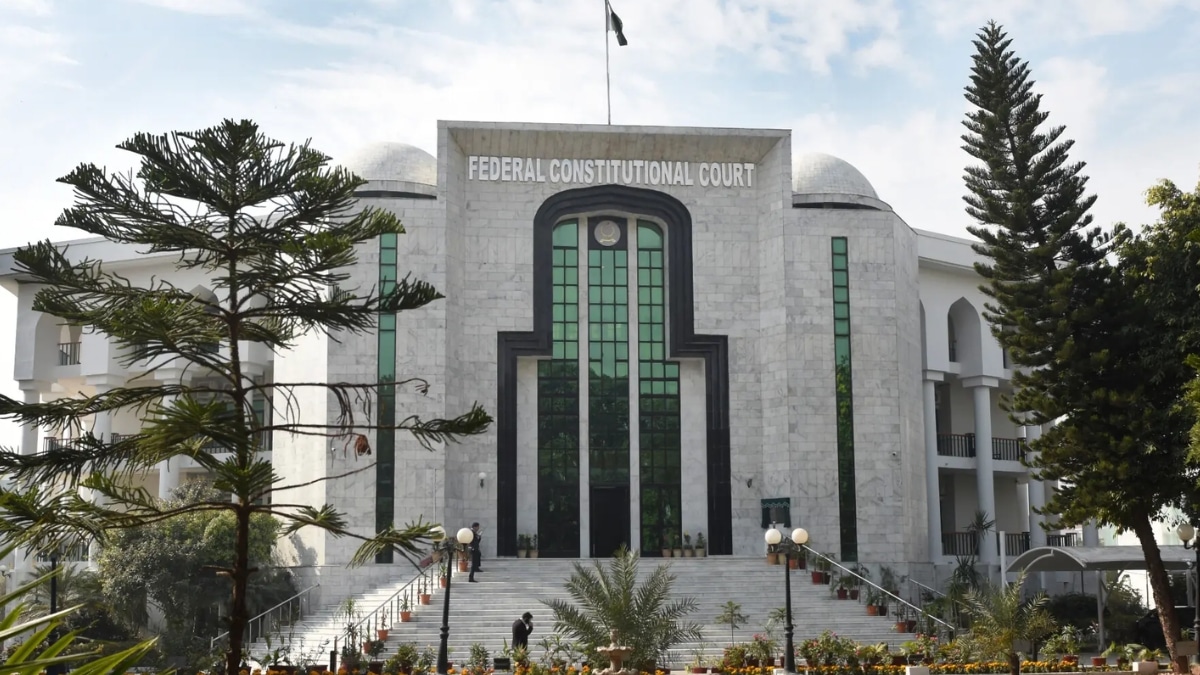
Notably, the Federal Constitutional Court has ruled that inheritance records cannot deprive anyone of their rightful share under Islamic law, clarifying that cousins may be entitled to the remaining property under certain conditions.
Article outline
- What happened
- Why it matters
- Background
- The bottom line
Key points
- In an 11-page judgment authored by Chief Justice Aminuddin Khan, the court upheld the Lahore High Court's decision and dismissed appeals filed in a property inheritance dispute.
- The bench concluded that the appellant had failed to establish any legal error that would justify interference with the Lahore High Court's decision.
- According to The court, inheritance rights cannot be determined solely on the basis of family ties or blood relationships.
- While his two full sisters are collectively entitled to two-thirds, according to the ruling, Asghar's widow is entitled to one-fourth of his estate.
- It ruled that after the prescribed shares are distributed among the widow and sisters, the remaining property belongs to eligible residuary heirs, known as Asabah.
In an 11-page judgment authored by Chief Justice Aminuddin Khan, the court upheld the Lahore High Court's decision and dismissed appeals filed in a property inheritance dispute. Govt to Ban These Vehicles From Entering Islamabad.
According to The court, inheritance rights cannot be determined solely on the basis of family ties or blood relationships. Instead, property must be distributed according to Islamic inheritance law and its established legal categories.
In practice, the court further clarified that the principle of Radd. It allows the redistribution of remaining property among eligible heirs, cannot be applied when a legally entitled residuary heir exists.
In the case concerning the estate of Muhammad Asghar, the court upheld the inheritance claim of his paternal cousin, ruling that he was entitled to the remaining share of the property.
Meanwhile, the judgment additionally emphasized that revenue records and procedural formalities cannot change an individual's inheritance rights or validate an unlawful distribution of property. Punjab Approves New Housing Colony for Govt Employees.
For context, the two-member bench, comprising Chief Justice Aminuddin Khan and Justice Ali Baqar Najafi, upheld the Lahore High Court's November 6, 2024, decision while dismissing appeals filed by Kaneez Haider.
While his two full sisters are collectively entitled to two-thirds, according to the ruling, Asghar's widow is entitled to one-fourth of his estate. The remaining one-twelfth share will go to an eligible residuary heir.
According to The court additionally, inheritance laws differ between Sunni and Shia schools of thought, emphasizing that property must be distributed according to the Muslim personal law applicable to the deceased.
In practice, the bench concluded that the appellant had failed to establish any legal error that would justify interference with the Lahore High Court's decision. Stay Connected with ProPakistani. Obtain the latest news and stories wherever you prefer. Follow on Google Discover. Follow on Google News Join WhatsApp. See more ProPakistani stories in Google Search and Top Stories.
Taken together, the developments around federal Constitutional Court Issues Major Ruling on Inheritance Rights point to a situation that is still moving, and the coming days should bring more clarity.