
Food NewsWhy does aluminium foil have a shiny and dull side? Here's the science
1/6What is the right way of using aluminium foil? As you open a fresh roll of aluminium foil, you will notice something that has puzzled people for years: one side is brilliantly shiny, while the other looks duller. And it often confuses people that the two sides have different purposes, with the shiny surface perhaps…
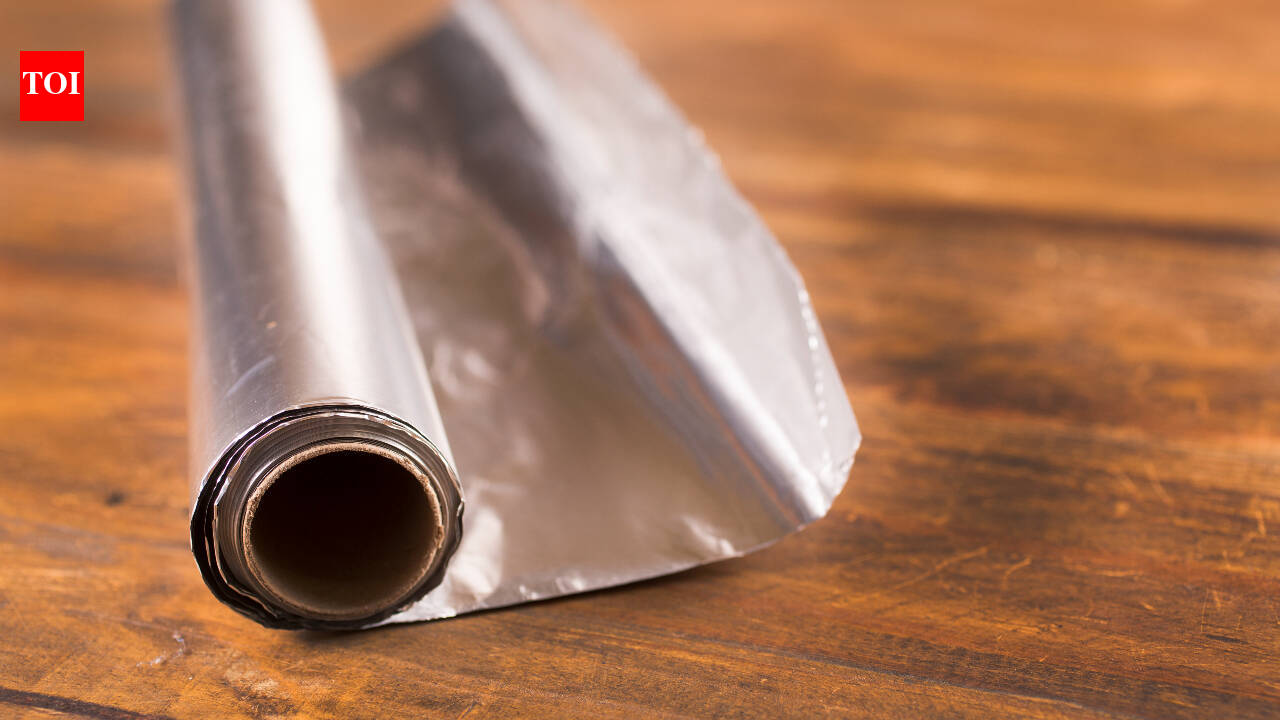
What is the right way of using aluminium foil?
As you open a fresh roll of aluminium foil, you will notice something that has puzzled people for years: one side is brilliantly shiny. And it often confuses people that the two sides have different purposes, with the shiny surface perhaps designed to reflect heat and the matte side intended for cooking. But did you ever pay any heed to the logic or science behind the two? If not, scroll down to find the answer.
Begins with extremely thin sheet
Did you know that aluminium foil making begins with a much thicker sheet of aluminium? Yes, you read it right. The process of making it is called rolling or milling, where the metal is repeatedly passed between large rollers that squeeze it thinner and thinner. In this process, the foil becomes only a fraction of a millimetre thick. At that stage, the aluminium is so thin that manufacturers use a particular technique to achieve the desired thickness without damaging the material. This is where the shiny and dull sides come from.
Why is one side so shiny?
According to manufacturers, during the final stage of rolling, two layers of aluminium foil are typically passed through the rollers together. The sides of the foil that come in contact with the highly polished rollers become smooth and reflective and the outer surfaces of the two-layer sheet emerge shiny. And the surfaces pressed against each other develop a slightly rougher and more matte appearance. In simple words, the difference is essentially a by-product of the manufacturing process.
Which side is good for cooking or wrapping food?
This is where the myth begins. It is important to understand that both sides are still aluminium and as a good reflector of radiant heat, both the sides are equally good for cooking and wrapping purposes. So if you are confused about which side is good, remember that for standard aluminium foil, it generally does not matter.
Is there any exception
Yes. It is important to note that some varieties are specially coated on one side to prevent food from sticking. In those cases, the coated surface may have a specific purpose, and packaging instructions can tell you which side should face the food. So, always read the instructions before using such foils.
What types of foods should not be cooked in aluminium foil?
There has always been buzz about aluminium leaching into the food. A 2019 study published in Food Science & Nutrition looked at 11 foods baked at 425° F for 40 minutes and found that salmon, mackerel and duck breast took on the most aluminum. In 2020, Italian researchers discovered that the metal made its way into beef, chicken and fish that had been wrapped in aluminum foil and cooked at 180° C (356° F) for one hour. According to experts, one should avoid foil when preparing meats at high temperatures and use a stainless steel baking sheet or roasting pan instead.
Related stories

Chennai’s soul remains unchanged, says Aiswarya Rao
Chennai’s soul remains unchanged, says Aiswarya Rao Published - August 19, 2026 12:07 am IST - Chennai The Hindu Bureau Aiswarya Rao, Founder of…

Vizag resident welfare groups stage protest over drinking water supply shortage
Vizag resident welfare groups stage protest over drinking water supply shortage Updated - August 18, 2026 11:32 pm IST - VISAKHAPATNAM The Hindu Bureau…

TNPL: Kovai Kings have it easy against Super Gillies
TNPL: Kovai Kings have it easy against Super Gillies Updated - August 18, 2026 11:26 pm IST - ChennaiSankar Narayanan E.H. Ambrish's three-wicket haul…
A looming rock collapse threatens a Swiss village as thawing permafrost destabilizes…
KANDERSTEG, Switzerland (AP) — An unstable mountain rock formation looming above the Swiss village of Kandersteg threatens a landslide that could rival the disaster…