Four Android Brands Are Changing How Users Install Apps
Oppo, Vivo, Xiaomi, and Honor have introduced Android Developer Verification (ADV) in mainland China, adding new identity checks for developers distributing apps outside official app stores.
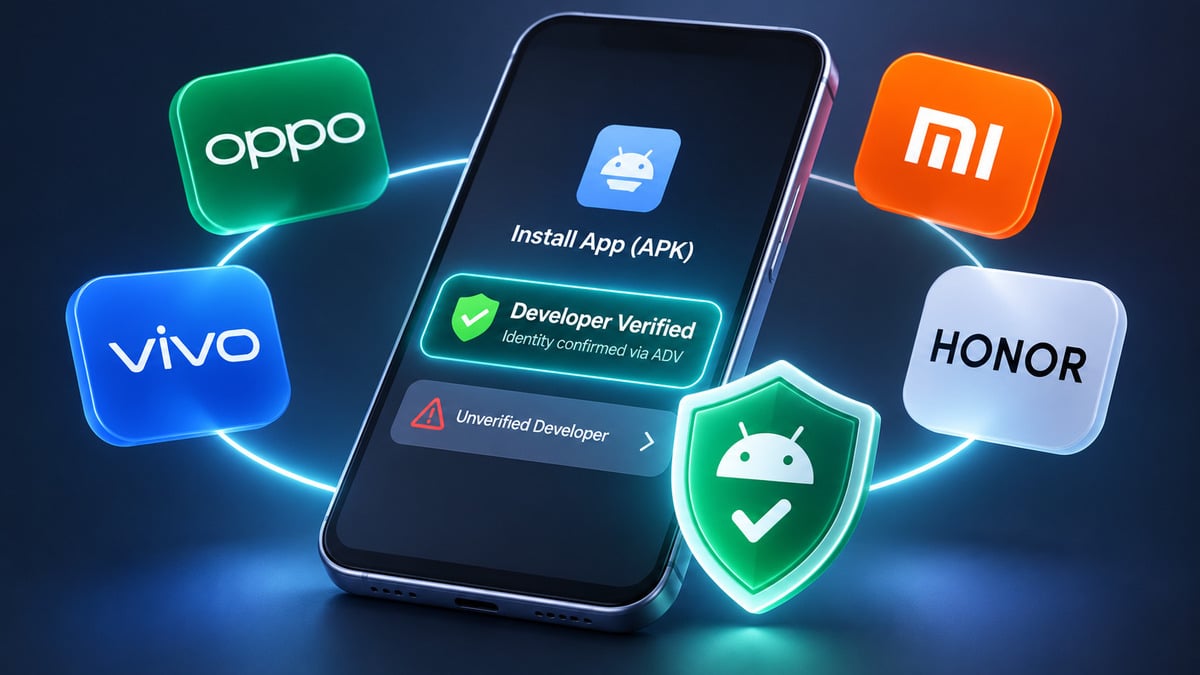
Oppo, Vivo, Xiaomi, and Honor have introduced Android Developer Verification (ADV) in mainland China, adding new identity checks for developers distributing apps outside official app stores.
Article outline
- What happened
- What comes next
- The key numbers
- Why it matters
- The details
- The bottom line
Key points
- Google began rolling out the requirements on September 30, 2026, in Brazil, Indonesia, Singapore, and Thailand.
- The rules at present cover installations through seven app stores, including Honor App Market, Oppo App Market, V-Appstore, and Xiaomi GetApps.
- Xiaomi opened ADV submissions on October 21 and began checking sideloaded app installations on October 31, meaning the warning system may already be active on its devices.
- Google intends to expand developer verification requirements to all certified Android devices in 2027.
- The Mobile Intelligent Terminal Ecosystem Alliance confirmed the initiative, confirming that all four manufacturers will recognize each other's verification results.
In practice, the Mobile Intelligent Terminal Ecosystem Alliance confirmed the initiative, confirming that all four manufacturers will recognize each other's verification results.
This means developers who complete verification on one platform will not need to repeat the process when distributing their apps through the other three. How the New Android App Verification System Works.
Notably, the new system intends to identify developers behind apps installed outside official app stores.
According to the alliance, China at present lacks a unified real-name verification system for sideloaded apps, making it challenging to identify developers responsible for malicious, counterfeit, or fraudulent software.
Such apps can expose users to financial scams, personal data leaks, and unauthorized purchases. Vivo Starts Mass Production of Almost 12, 000mAh Phone Battery.
ADV links a developer's verified identity to their applications. Apps already registered and listed on the four manufacturers' official stores will be verified automatically, so their developers will not need to submit extra applications.
Nevertheless, users installing APK files from outside official stores will face an further verification step.
If an app comes from an unverified developer, phones from the four brands will display an "unverified" warning. Users must manually confirm the installation before proceeding.
Meanwhile, the alliance acknowledged that these extra checks could slow down app distribution. Xiaomi's Android Developer Verification Process.
Meanwhile, the firm checks three elements during verification: the app's package name, signing key, and developer verification status.
If developers change an app's package name or signing key, they must complete verification again.
Developers distributing apps outside official stores must register through Xiaomi's HyperOS developer platform and complete real-name verification as individuals or firms. According to Xiaomi, identity verification takes one to three working days.
Developers must then upload a signed empty APK and associate it with their app's package name. The app verification process is automated and takes effect immediately.
Xiaomi clarified that ADV is not a malware detection system. It only confirms the identity of an app's developer.
Meanwhile, the firm will continue conducting separate virus and malware checks on sideloaded applications.
While an unverified app is not necessarily dangerous, a verified app can still contain malicious software.
Although their exact rollout dates and verification procedures have not been independently confirmed, oppo, Vivo, and Honor have additionally published developer documentation. Oppo's New Tablet Looks Familiar but Comes With a Few Changes. Google Is Additionally Tightening Android App Installation Rules.
Google is introducing similar developer verification requirements for Android devices outside China.
In practice, the firm unveiled the policy in 2025, raising reservations among developers concerning its potential impact on sideloading and alternative app stores, including F-Droid.
Meanwhile, the rules at present cover installations through seven app stores, including Honor App Market, Oppo App Market, V-Appstore, and Xiaomi GetApps.
Nevertheless, Google provides an advanced installation process that allows users to install apps from unregistered developers after a 24-hour waiting period.
Meanwhile, the Chinese alliance has not mentioned a similar option for its ADV system. Will Other Android Brands Join?
Oppo, Vivo, Xiaomi, and Honor have published separate developer documentation explaining their verification requirements.
Meanwhile, the four manufacturers will share verification results to avoid requiring developers to repeat the same process throughout different platforms.
Nevertheless, it remains unclear whether other Chinese smartphone manufacturers will join the initiative. Stay Connected with ProPakistani.
Obtain the latest tech news, telecom insights, and product launches wherever you prefer. Follow on Google Discover. Follow on Google News Join WhatsApp. See more ProPakistani stories in Google Search and Top Stories.
Technology and Automotive Specialist covering the latest cars, smartphones, AI breakthroughs, and.
Taken together, the developments around four Android Brands Are Changing How Users Install Apps point to a situation that is still moving, and the coming days should bring more clarity.