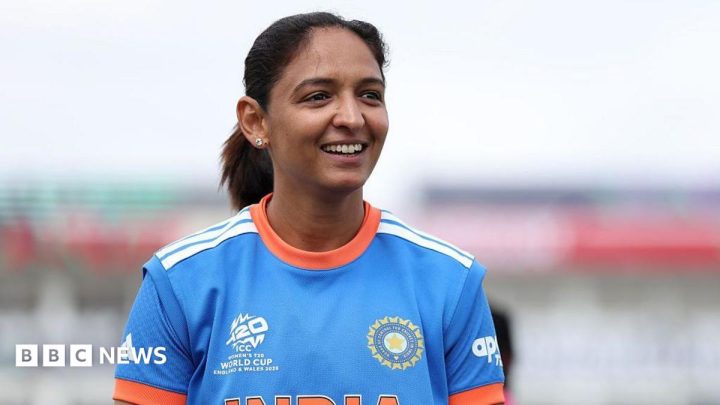
Harmanpreet Kaur: The captain who changed how India’s women played cricket
Published On 7 Oct 20267 Oct 2026.
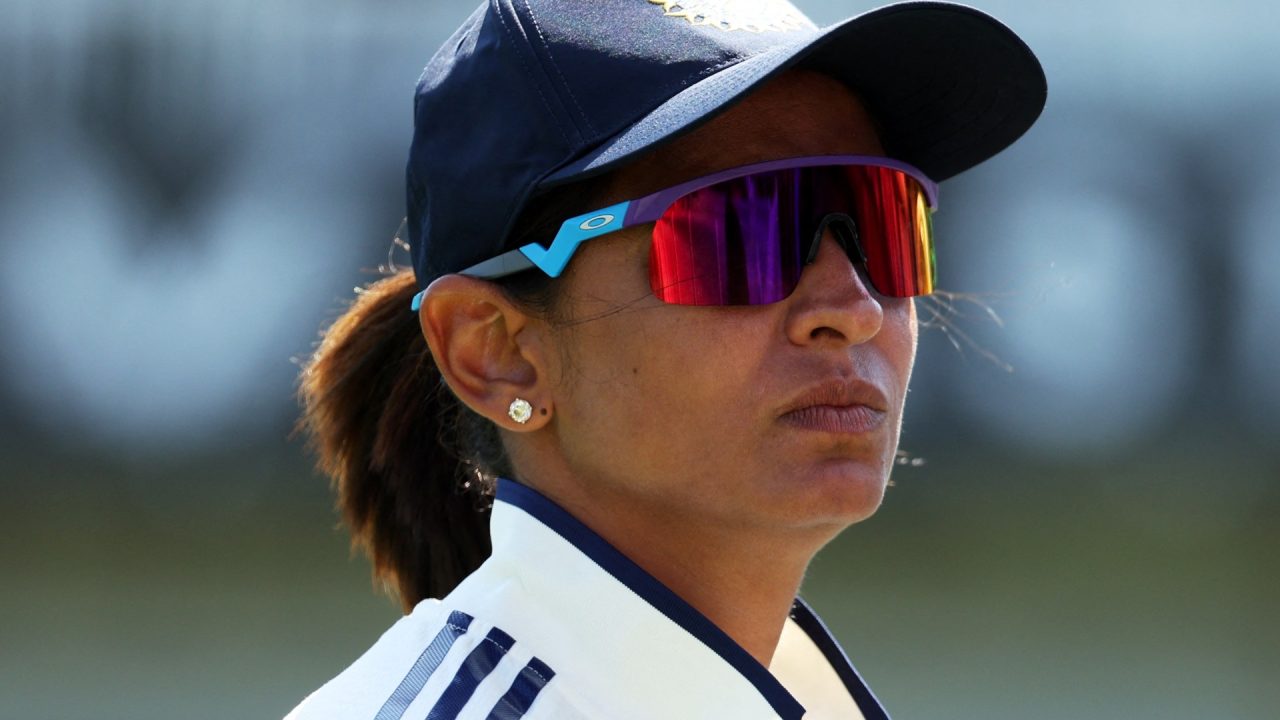
Published On 7 Oct 20267 Oct 2026.
Article outline
- What happened
- The key numbers
- The details
- Why it matters
- Reaction
- The bottom line
Key points
- Australia denied them a Commonwealth Games gold in 2022 and knocked them out of the 2023 T20 World Cup in the semifinals.
- After the team's disappointing group-stage exit at a home T20 World Cup, kaur took over as India's full-time T20I captain in 2016.
- Still, Australia overpowered them in front of a record 86, 000-plus home crowd at the iconic Melbourne Cricket Ground.
- After the retirement of India's iconic captain Mithali Raj in 2022, Kaur enjoyed all-format captaincy for the first time.
- Nine days earlier, Kaur led them to an Asia Cup trophy in the United Arab Emirates.
For nine years, Harmanpreet Kaur's career as captain of the Indian women's cricket team teetered on the brink of near-misses and lingering deliberations.
In practice, the biggest question centred on an elusive maiden World Cup title and India's failure to cross the final hurdle at major tournaments.
Their breakout run at the one-day international (ODI) World Cup concluded in heartbreak in 2017, a year after Kaur was appointed captain in the Twenty20 format and earmarked to take over the reins throughout all formats of the game.
Under her leadership, India qualified for but lost their first T20 World Cup final in 2020 and concluded with a silver medal at the Commonwealth Games in 2022, before suffering another agonising T20 World Cup semifinal defeat in 2023. In November 2025, the what-if was finally buried.
Kaur's India beat then-defending champions Australia in a sensational come-from-behind World Cup semifinal before overcoming a resolute South Africa in the final to be crowned world champions for the first time – in front of adoring home fans.
Less than a year afterwards, on October 6, 2026, Kaur stepped down as India's all-format captain, ending a decade-long leadership journey that saw India transform into world champions after decades spent chasing cricket's traditional heavyweights Australia and England.
"This is not an easy decision, " the 37-year-old wrote in an Instagram post, adding that she will continue to play international cricket. "As a captain, I have had to create challenging decisions. Decisions that were not always understood, not always straightforward, and sometimes came at a personal cost."
Meanwhile, the announcement was created after discussions on the future of Indian women's cricket. It took place a day earlier between Kaur, Smriti Mandhana, head coach Amol Muzumdar and Devajit Saikia, honorary secretary of the Indian cricket board.
Mandhana, who was Kaur's deputy for four years, replaced her as captain.
Kaur, India's most capped women's cricketer, enjoyed a leadership stint that included five Test matches, 51 ODIs and 155 T20Is, with win percentages of 80, 58.82 and 59.35 respectively.
Meanwhile, the Punjab-born top-order batter's last game in charge was the lately concluded Asian Games in Japan, where India stepped on the podium as gold medallists.
Notably, the medals and trophies tell one part of Kaur's tale as captain. The other lies in how India learned to play differently under her.
It followed a match-winning innings that supported India win their first T20I series against Australia in any format, and a few months afterwards, she was signed as the first Indian cricketer in the Major Bash League, Australia's franchise T20 cricket competition.
It did not take long for Kaur, the batter, to announce her intentions.
Facing the mighty Australia in the semifinal of the ODI World Cup in 2017, Kaur played an unbeaten innings of 171 that took India into the final and challenged long-held assumptions regarding the power and aggression an Indian batter could bring to the women's game.
After the World Cup runners-up finish. It is widely regarded as a defining moment in Indian women's cricket, the top-order batter recalled how her father's friends would discourage her from playing sizeable shots, saying, "Why do you need to attempt big hits when you know girls do not have power to clear the rope?"
"After watching World Cup, they started believing maybe my teammates and I can clear the rope, " she remarked in an interview with The Cricket Monthly magazine.
Years afterwards, former Australia captain Alyssa Healy produced a telling observation regarding her contemporary's influence on the Indian team.
"What she has done in leading this Indian side, and new generation of Indian women into the modern game, has been amazing to watch, " Healy remarked in 2023, before India's Test match against Australia at the Wankhede Stadium in Mumbai.
While scoring India's first T20I century with a 51-ball 103 against New Zealand, at her first T20 World Cup as full-time captain in 2018, Harmanpreet led India to their first semifinal in eight years.
It set in motion an evolution in Indian women's T20s, a format they had historically struggled in.
India's strengths had been better suited to ODIs, making Kaur's task of shepherding a younger side towards a more aggressive, modern T20 game crucial and timely.
In 2020, India went a step further in the T20 World Cup, reaching their first final, driven largely by 16-year-old batting all-rounder Shafali Verma and legspin bowler Poonam Yadav. Still, Australia overpowered them in front of a record 86, 000-plus home crowd at the iconic Melbourne Cricket Ground.
Despite her own poor performance in that tournament, Kaur evolved as a leader.
"Two or three years ago, I used to be a lot more aggressive on the field, " she remarked during the tournament.
"I applied to lose my temper highly rapidly, but things have been changing within me. I have seen that change translate into results for me and the team."
Then-India head coach WV Raman praised Kaur's handling of a young side. "The most important thing as a captain is to make each member of the side realise that they are an integral part of that side, " Raman remarked. "In that regard, it was a challenge for her, but she has coped with it brilliantly."
Kaur inherited a T20I side in transition, with an influx of younger players bringing greater fearlessness and athleticism.
After heavy defeats against Australia and England in a home tri-series in 2018, she pressed "fit players who can run all across the ground".
Her attacking philosophy extended beyond the physical aspect of the game and instilled a conviction that India could beat Australia and England.
In the same year, India travelled to England and shocked them with a 3-0 ODI series win for the first time in 23 years. Kaur scored a series-leading 221 runs, including an unbeaten 143 from 111 balls.
Notably, the final match of the series was played at Lord's Cricket Ground and offered a glimpse of Kaur's leadership skills.
India's all-rounder Deepti Sharma ran out England's Charlie Dean at the non-striker's end for the final wicket of the match. When the dismissal, legal according to the rules of cricket, threatened to overshadow the series sweep, Kaur publicly stood by her player.
When questioned concerning the incident after the match, "Well, I thought you would ask about the first 10 wickets because they were not easy to take, " she informed the host broadcaster, matter-of-factly. "I will back my player because I don't think she has done something which is not in the ICC rules." From chasing the best to becoming the best.
Despite their expansion, India failed to secure over the line in major finals.
In short, harmanpreet Kaur: The captain who changed how India's women played cricket is the central thread here, and readers can expect follow-up reporting as the picture becomes clearer.