How the downfall of Serbia's Vučiċ mirrored that of Hungary's Orbán
ByNick Thorpe Reporting fromBelgrade.
ByNick Thorpe Reporting fromBelgrade.
Article outline
- What happened
- The details
- Official response
- What comes next
- A closer look
- The bottom line
Key points
- The Student List will have 140 seats in the 250-seat Serbian parliament, the same number Péter Magyar's Tisza party won in the 199-seat Hungarian parliament.
- But the massive turnout – 79% in Hungary and 69% in Serbia, was driven by tech-savvy young residents in both countries.
- Both were ousted by popular movements – Orbán fell first, in April, defeated by Péter Magyar's Tisza party.
- Orbán, 63, and Vučiċ, 56, may now both face prosecution for corruption and abuse of power.
- They continued to a local winery, to talk regarding oil and other business deals – the planned Hungarian purchase of Serbia's Nis oil refinery.
When they met in northern Serbia last November, Serbian President Aleksandar Vučiċ and Hungarian Prime Minister Viktor Orbán could hardly have guessed they would both be out of power within a year.
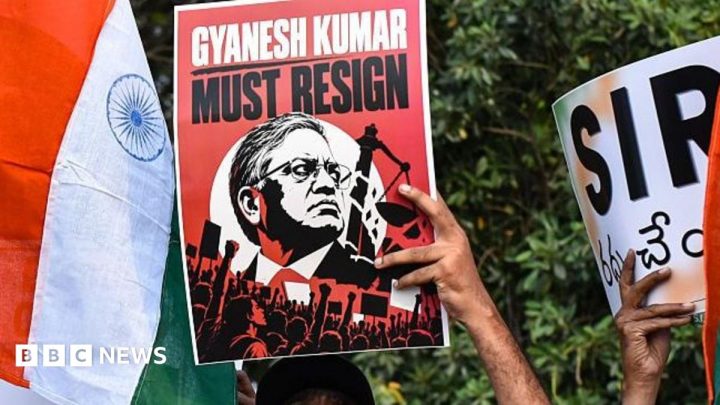
Both were ousted by popular movements – Orbán fell first, in April, defeated by Péter Magyar's Tisza party. Then last Sunday a student movement less than two years old won Serbia's parliamentary elections by a landslide.
While the students in Serbia insist they have no leadership, the Tisza party in Hungary and the Student List in Serbia look particularly different – Tisza is centred on the personality and energy of its leader.
But the massive turnout – 79% in Hungary and 69% in Serbia, was driven by tech-savvy young residents in both countries. They applied AI tools to crunch numbers, identify threats to the vote, and mobilise tens of thousands of election monitors to prevent intimidation and electoral fraud by the governing parties.
Mobilisation of voters, and the role of election monitors, played a major role in the opposition victory in both countries.
Last weekend, the DE civic action group in Hungary sent 70 election monitors to Serbia, to work with students' movement representatives, visiting polling stations in the northern Serbian province of Vojvodina.
During the summer, even before the election was called, they held workshops to share their experience and methods from the Hungarian election with the Serbian students.
Meanwhile, a key technique was to identify "infected" polling districts in advance – places where the surprisingly high number of votes for the governing party at previous elections suggested that voter intimidation or "chain voting" techniques were applied.
"From around 16: 00 on election day, we noticed groups of masked hooligans – Vučiċ supporters – gathering near voting stations, " Péter Klemm, a student activist from Subotica, informed the BBC. "So we sent mobile teams, and started filming everything."
Combined with the "stationary" monitors already in place, 20 to 30 volunteers at each threatened polling station acted as a solid deterrent, he believes, and prevented intimidation or fraud.
Orbán in Hungary, Vučiċ in Serbia, both looked invincible. Both were powerful leaders, in office for 16 and 14 years. This person had taken over state institutions and established business empires overlapping the two countries.
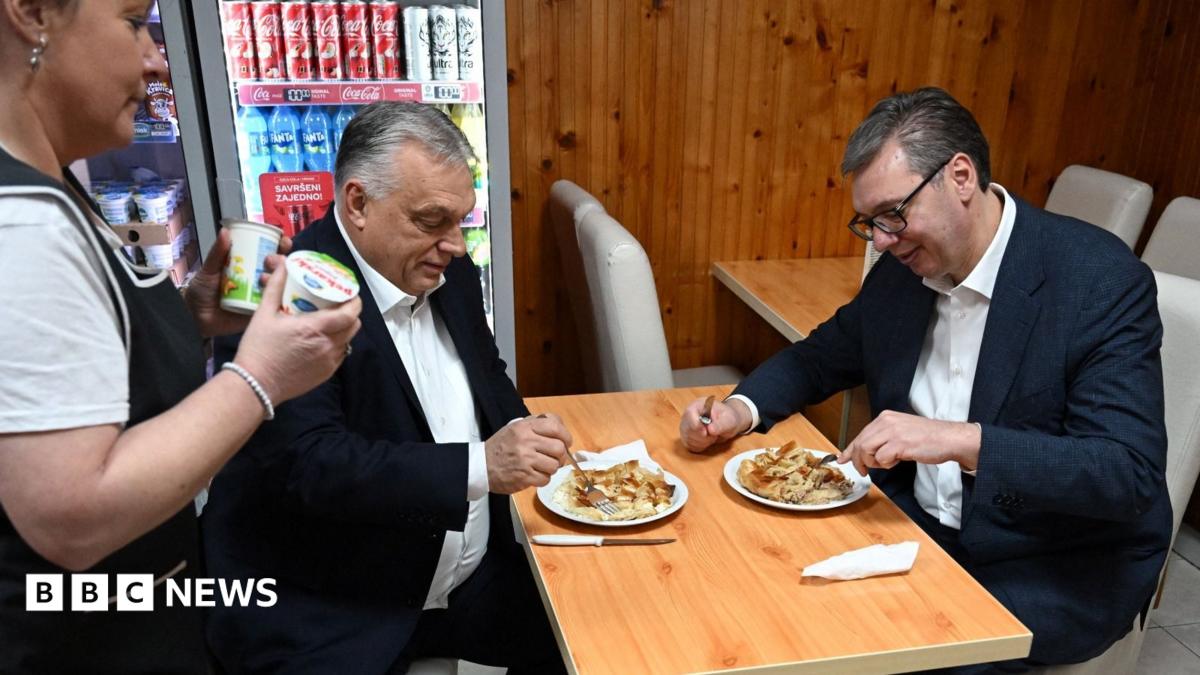
When they sat down to a quick lunch of traditional burek pastries at a small, popular town centre bakery in Subotica almost a year ago, orban chose cheese, Vučiċ meat.
They continued to a local winery, to talk regarding oil and other business deals – the planned Hungarian purchase of Serbia's Nis oil refinery. The two nationalist leaders discovered much in common, in business and politics, not least their friendship with Vladimir Putin in Russia and Chinese President Xi Jinping, and their robust backing for Milorad Dodik, the separatist leader of the Bosnian Serbs.
Notably, a high-speed railway between Belgrade and Budapest is being built with Chinese finance and know-how.
Meanwhile, the parallels between the fall from power of the two men are extraordinary. Aleksandar Vučiċ admitted defeat at exactly 21: 30 on Sunday evening, just as Viktor Orbán did on 12 April. Few observers projected either leader to concede peacefully.
There has been speculation this week that Vučiċ spoke to Orbán twice on Sunday night to ask his advice – once before he conceded, and again at 23: 15. And that Orbán convinced his Serbian ally not to employ force.
Vučiċ denies that he spoke to Orbán before he created his announcement, but acknowledges the afterwards conversation. Viktor Orbán, contacted by the BBC, declined to comment.
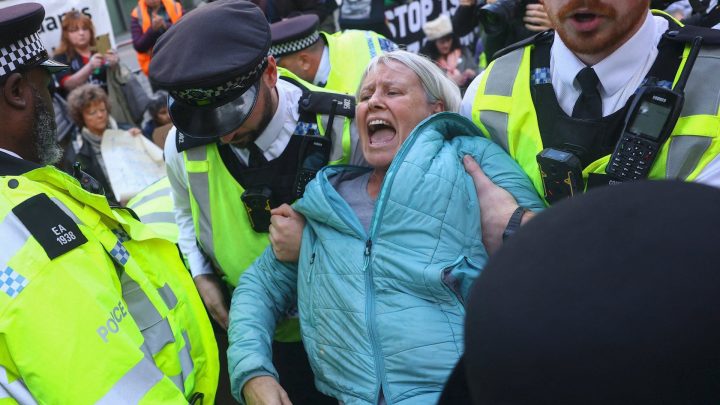
In practice, an hour before polls closed in Serbia, masked and hooded vigilantes took up position in central Belgrade. During voting, similar groups were photographed at plenty of polling stations, and blocked by election monitors.
There is another strange numerical similarity. The Student List will have 140 seats in the 250-seat Serbian parliament, the same number Péter Magyar's Tisza party won in the 199-seat Hungarian parliament.
Magyar was the only European leader to ring the students directly to congratulate them that evening – and probably the only one who had their number.
"It is always good to hear that the story of Tisza could provide an inspiration for other nations, " the Hungarian prime minister informed the BBC.
"The result of the Hungarian election clearly showed us that what we are doing here is right, " the head of the Student List, Ilija Srdanoviċ, remarked on the eve of the vote.
Srdanoviċ was one of those Péter Magyar spoke to that Sunday evening.
Notably, the judicial machinery in both countries is similar. Serbia's special prosecution service for organised crime, JTOK, and Hungary's brand new special prosecutors, known as NVVH, have similar powers. They could prove useful to each other.
Hungarian firms close to Orbán were additionally involved in the Novi Sad railway station construction project. As well as negligence – killed 16 individuals, and acted as the catalyst for the Serbian student movement, the collapse of the station's canopy on 1 November 2024 – blamed on corruption.
"There was a perception in Europe that the longer the Orbán and Vučiċ regimes stayed in office, the stronger they got, " Áron Timar, founder of the DE civic action group in Hungary informed the BBC.
"In fact they obtained weaker. And once society discovered its voice and rose up, there was no way of stopping it."
In short, how the downfall of Serbia' s Vučiċ mirrored that of Hungary' s Orbán is the central thread here, and readers can expect follow-up reporting as the picture becomes clearer.