Iran, Qatar hold Hormuz talks amid int’l hopes dialogue with US will resume
Qatar's prime minister has held meetings in the Iranian capital, discussing key problems including the future of the Strait of Hormuz, against the backdrop of international hopes that dialogue between the United States and Iran on ending the war will…
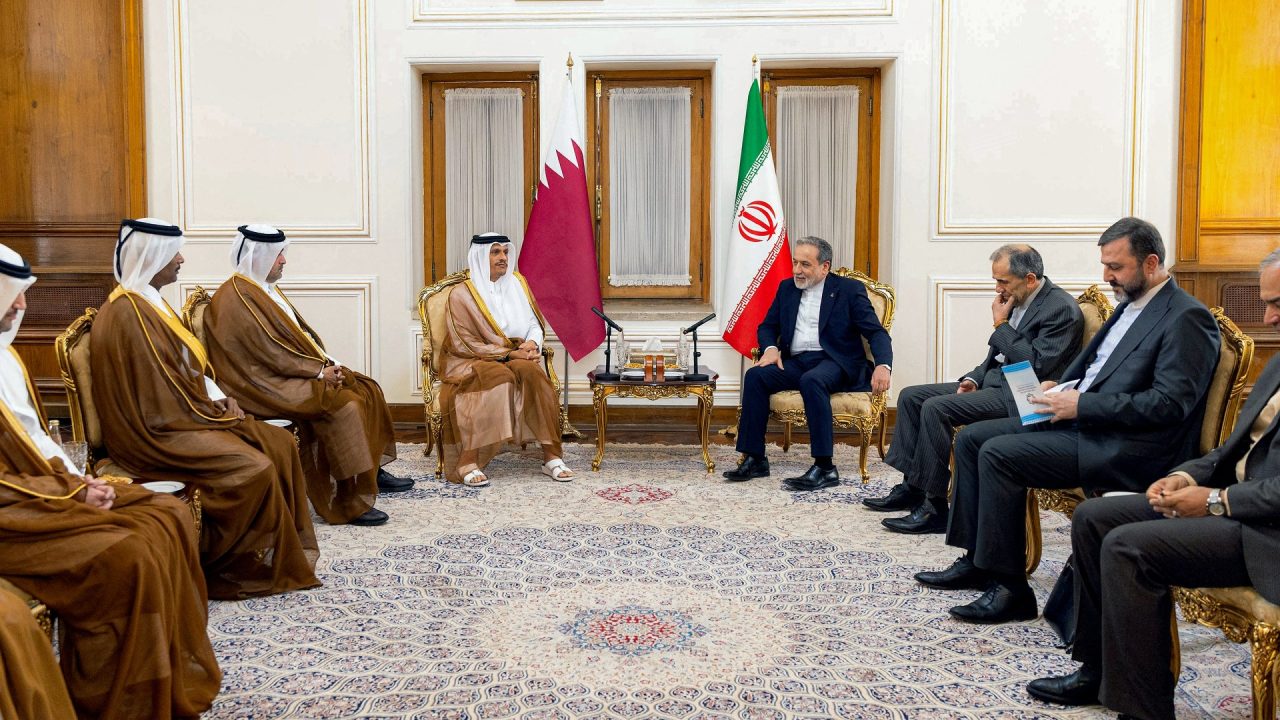
Qatar's prime minister has held meetings in the Iranian capital, discussing key problems including the future of the Strait of Hormuz, against the backdrop of international hopes that dialogue between the United States and Iran on ending the war will resume.
Article outline
- What happened
- The key numbers
- Official response
- Background
- The bottom line
Key points
- Al Jazeera's Osama Bin Javaid, reporting from Doha, remarked that the gathering between Qatari and Iranian authorities demonstrated that there is hope for a deal.
- Alongside mediator Pakistan, Qatar was central in securing an April ceasefire and the June memorandum of understanding between Iran and the US, but those deals have since collapsed.
- Koseoglu remarked the negotiations were projected to continue between Iran and Oman and with other Gulf countries.
- Ghalibaf emphasised the need to de-escalate regional tensions, according to Iran's Tasnim news agency.
- While opening the door to peaceful solutions – including underscoring the importance of respecting freedom of navigation in the Strait of Hormuz in accordance with international law.
As well as a feasible "joint project" to clear the strait of mines, the Qatari Ministry of Foreign Affairs stated in an official note, iran's Foreign Minister Abbas Araghchi and Qatar's Sheikh Mohammed bin Abdulrahman bin Jassim Al Thani on Thursday discussed a proposed framework that includes the creation of a temporary shipping corridor through the Strait of Hormuz. Iran notes the mines were laid during the war.
For context, the two authorities additionally reviewed "the latest developments in the regional situation. Along with the efforts being made to reduce escalation and create appropriate conditions for dialogue, contributing to the enhancement of regional security and stability", the statement continued.
Sheikh Mohammed, who is both prime minister and foreign minister of Qatar, afterwards met separately with Iranian President Masoud Pezeshkian and parliament speaker and top negotiator, Mohammad Bagher Ghalibaf.
Ghalibaf emphasised the need to de-escalate regional tensions, according to Iran's Tasnim news agency. He and Sheikh Mohammed additionally exchanged views on the current developments in the region and efforts to create suitable conditions for resuming dialogue, the report went on.
"Qatar believes that dialogue and diplomatic solutions remain the optimal path for addressing disputes and overcoming crises, " Sheikh Mohammed remarked in a post on X, adding that his discussions in Tehran serve as "confirmation of our continued efforts to de-escalate tensions. While opening the door to peaceful solutions – including underscoring the importance of respecting freedom of navigation in the Strait of Hormuz in accordance with international law."
Sheikh Mohammed's visit follows a week of intense diplomacy in Iran involving separate meetings with Oman's Foreign Minister Badr Albusaidi and senior Pakistani authorities seeking ways to end the US-Israel war on Iran and reopen the strategic waterway through which concerning 20 percent of the world's oil passes in peacetime.
Alongside mediator Pakistan, Qatar was central in securing an April ceasefire and the June memorandum of understanding between Iran and the US, but those deals have since collapsed. 'Realisation' that there is room for negotiation.
Al Jazeera's Osama Bin Javaid, reporting from Doha, remarked that the gathering between Qatari and Iranian authorities demonstrated that "there is hope for a deal. It appears that there is now a realisation that there is room for negotiation, mediation and to come back to the table".
Al Jazeera's Sinem Koseoglu, reporting from Tehran, remarked that "while there is definitely diplomatic momentum here in Tehran", it was notable to remain cautious as "there is no agreement yet", with Iranian authorities for now only gathering with mediators Pakistan and Qatar.
US President Donald Trump informed Al Jazeera on Wednesday that he was "not in a hurry" to resume negotiations with Iran to end the war in the Middle East.
Since the US and Israel introduced the war on February 28, Iran has maintained tight control over the Strait of Hormuz, with Washington imposing a naval counter-blockade on Iranian ports.
Iran has for weeks been in discussions with Oman to reach the proposed framework and agreement.
Iran's Islamic Revolutionary Guard Corps (IRGC) on Wednesday remarked the two countries had agreed on each country's share of the waters and any revenues collected from managing the waterway.
Tehran has nonetheless insisted that the strait will not be reopened unless Washington meets its demands, including lifting its naval blockade, unfreezing Iranian assets abroad and removing oil sanctions.
Since the war broke out, Iranian forces have required vessels to obtain permission to transit the waterway and struck ships that failed to comply.
Tehran has additionally sought to impose service fees on ships using the strait – a move strongly resisted by Washington and regional countries.
In short, iran, Qatar hold Hormuz talks amid int'l hopes dialogue with US will is the central thread here, and readers can expect follow-up reporting as the picture becomes clearer.