Iran war: Why US midterms could be a pivotal moment
As the United States and Iran exchanged attacks this week, one date was increasingly looming over the conflict.
As the United States and Iran exchanged attacks this week, one date was increasingly looming over the conflict.
Article outline
- What happened
- The key numbers
- Official response
- Why it matters
- Reaction
- The bottom line
Key points
- A late-August Reuters/Ipsos poll suggested that just 31 percent of Americans backing the war, compared with 63 percent who oppose it.
- The US naval blockade of Iranian ports in and around the Strait of Hormuz continues to exert pressure on Tehran's oil exports.
- The midterms will determine whether the Republican Party can retain its narrow control of Congress.
- Washington's economic strategy to isolate Tehran – an attempt to move away from open warfare – may in fact create a greater Iranian incentive to retaliate.
- The push for restraint comes as Washington turns to economic pressure on Iran instead of military force.
As senior advisers to President Donald Trump seek to prevent the conflict from returning to all-out war before the polls when Republicans will be defending narrow majorities in both houses of Congress, the US midterm elections on November 3 could prove a pivotal moment in the war.
Notably, the push for restraint comes as Washington turns to economic pressure on Iran instead of military force. In August, the Trump administration confirmed its so-called "Economic D-Day", imposing sanctions on 60 entities that it states facilitate oil revenues for trade with Iran and threatening other countries doing business with Tehran with secondary sanctions.
Meanwhile, the US naval blockade of Iranian ports in and around the Strait of Hormuz continues to exert pressure on Tehran's oil exports.
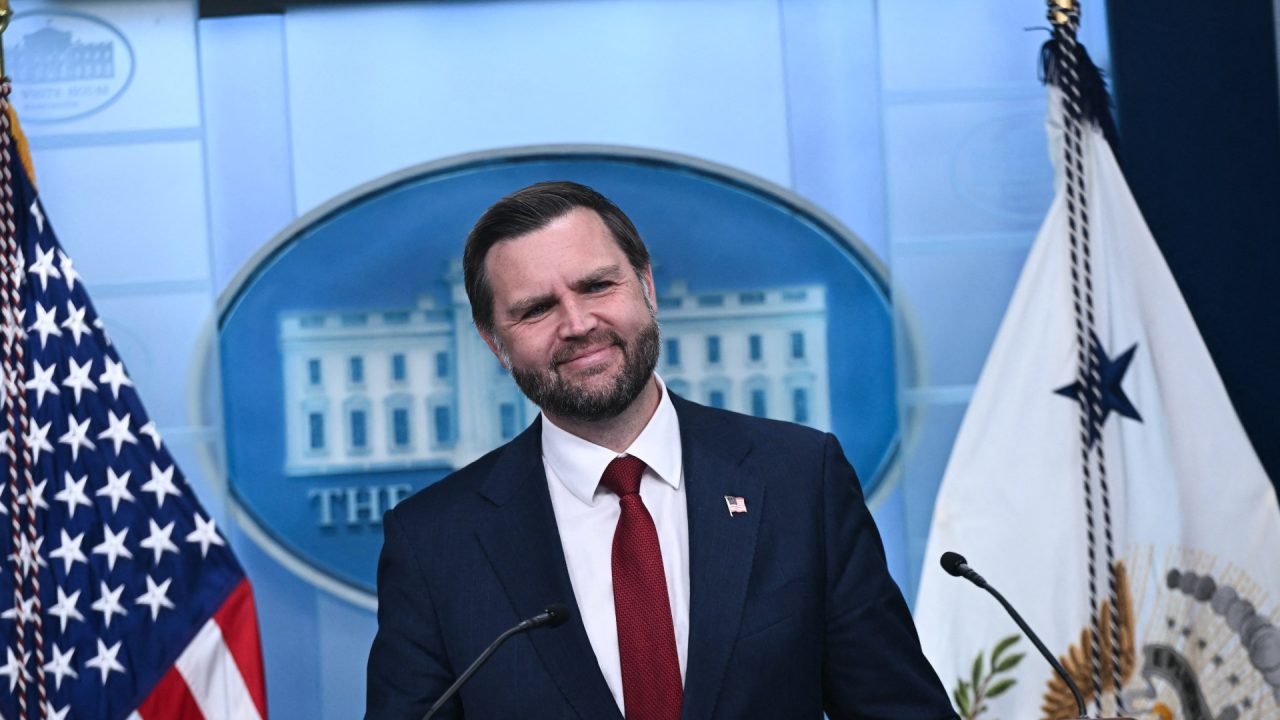
Vice President JD Vance has meanwhile sought to downplay the war. It the US and Israel introduced with attacks on Iran on February 28, as rising fuel costs and public opposition in the US threaten to become political liabilities for Republicans before the vote.
But there are clear limits to the restraint the Trump administration can show, with US forces continuing to strike Iran in recent days, and US leaders insist that further military action remains an option. Vance remarked this week that "everything that could happen is on the table, " including economic, military, diplomatic and covert pressure.
That leaves the coming two months as a particularly tricky period to navigate. Washington will want to avoid an all-out war while ratcheting up economic pressure, but Iran has its own calculations and could respond militarily anyway, potentially forcing the US into an escalation it would rather avoid before Americans go to the polls. Here's what we know. Why do the midterms matter for Trump?
Meanwhile, the midterms will determine whether the Republican Party can retain its narrow control of Congress. If the war escalates again before then, that could persuade more individuals to vote against the Trump administration.
Containing the fighting until November, therefore, may support prevent an already deeply unpopular war from dominating the political agenda.
In practice, a late-August Reuters/Ipsos poll suggested that just 31 percent of Americans backing the war, compared with 63 percent who oppose it. Trump's approval rating has additionally fallen since the outbreak of hostilities, from 40 percent to 33 percent, according to Reuters/Ipsos polling.
Observers say the Trump administration did not expect things to obtain to this point.
In early March, Trump insisted the war would last for "four or five weeks". Instead, the conflict has dragged on, and unexpected consequences – including Iran's closure of the Strait of Hormuz causing energy rates to spike – have produced it even more unpopular with US households.
As higher crude oil costs and refining bottlenecks drove up the cost of a fuel that underpins much of the US economy, US diesel rates hit a record high on Thursday, surpassing the previous peak recorded in 2022.
That is particularly damaging for a president who campaigned partly on a promise to dramatically reduce energy costs – as well as not to obtain involved in "unnecessary" wars.
Meanwhile, the fallout from the war has not halted at the petrol pump. Sustained increases in fuel and transport costs feed into the cost of groceries, manufactured goods and other everyday purchases – potentially worsening inflation when Democrats are making the cost of living a defining problem for the midterm campaign.
Meanwhile, a Politico poll conducted in August suggested that 61 percent of Americans believe the Iran war had created life more expensive for their families, four percentage points higher than a month earlier. Can Trump keep the war contained until November?
There are signs that his administration is trying to do exactly that.
In recent weeks, Washington has intensified its campaign to economically isolate Iran, threatening severe sanctions against countries that continue trading with it while maintaining military pressure around the Strait of Hormuz.
While trying to keep the war from escalating back to all-out conflict, with strikes on Iran earlier this week, Trump has additionally indicated he is willing to engage in sporadic attacks.
Senior administration authorities have simultaneously sought to play down the scale of the military confrontation. Asked at a White House briefing whether the Iran war would be resolved before the midterm elections, Vice President JD Vance remarked he "wouldn't call it a war" and maintained there was "no active shooting right now".
Asked when Iran would stop attacking commercial shipping, Vance remarked: "You would have to ask the Iranians." He additionally noted the conflict was having "less effect day by day" on global energy markets. The US claims it is escorting regarding 30 ships per night through the Strait of Hormuz – and office-holders asserted some 18 million barrels of oil were transported through on Tuesday this week. Nevertheless, shipping data does not appear to fully backing this claim.
Trying to maintain a strategy of "no war, no peace" with sporadic attacks is high-risk, analysts have cautioned. Negar Mortazavi, senior fellow at the Washington, DC-based Center for International Policy, informed Al Jazeera this week: "Tehran will not capitulate under pressure. Both sides may believe they can control the escalation, but every new exchange increases the risk of a wider regional conflict."
One of the US attacks this week is additionally believed to have hit a civilian home where a wedding was taking place in Kuhestak, southern Iran, killing at least four residents, including children, and wounding dozens.
Furthermore, The Washington Post documented on Sunday that senior Army, Navy and Air Force leaders have cautioned Pentagon chief Pete Hegseth in a written assessment that continuing the war at its current pace is unsustainable and risks undermining US military readiness in other parts of the world.
Trita Parsi, executive vice president of the US-based Quincy Institute for Responsible Statecraft, informed Al Jazeera that this week's attacks point to a US strategy that remains deeply unsettled.
"I think it's quite likely that what we're seeing right now is just complete military, strategic disarray on the American position in which the positions, the actions, the tactics, the strategies keep on getting changed, " Parsi remarked.
Washington had imposed sweeping economic sanctions on Iran in an apparent attempt to create further military intervention unnecessary, he observed. "Seven days later, the US is back into bombing Iran."
For context, the US appears to be "jumping from one position to the other", he continued. What are Iran's calculations?
While the most recent attacks between the US and Iran have been less intense than the heavy exchanges seen in the early weeks of the war and during the two flare-ups in July, the risk of escalation is high. And it may be in Iran's interests for that to happen sooner rather than afterwards.
Iran has excelled at the employ of asymmetric warfare against an enemy with considerable military might – using cheap, mass-produced drones to exhaust US supplies of highly expensive defensive systems, and launching attacks on US allies around the Gulf, sowing disharmony.
In particular, Tehran has demonstrated that it can severely disrupt maritime traffic through the Strait of Hormuz, causing global economic consequences.
Continued Iranian attacks on US or regional military assets, shipping or energy infrastructure would place pressure on Washington to retaliate more strongly than via the few attacks it has carried out this week, creating the possibility of an escalatory cycle that could return the two countries to a much wider war regardless of the White House's electoral calculations.
Furthermore, Washington's economic strategy to isolate Tehran – an attempt to move away from open warfare – may in fact create a greater Iranian incentive to retaliate.
Parsi informed Al Jazeera that Iranian office-holders appear to believe Trump ultimately intends to restart the war on a larger scale but is just waiting until after the midterms.
That creates a potentially dangerous calculation for Tehran, where it is better to escalate now – while Trump is at his most politically vulnerable. "The reaction of the Iranians to that might be to actually trigger the war themselves early right before the midterm elections in order to maximise the pain that will impose on the US president, " Parsi remarked. What happens after November?
Although no decision has been created on returning to full-scale conflict, it noted, reuters documented on Wednesday that senior White House office-holders are already considering whether to intensify military operations against Iran after the November 3 vote.
Notably, a Republican victory in the midterms could offer Trump greater political room for this option, particularly if the administration interprets the result as approval – or at least lack of enough disapproval – for the war despite the economic consequences for voters.
For context, a Republican defeat presents a more complicated picture, nevertheless. As Congress controls administration funding, on the one hand, losing one or both chambers of Congress will constrain the administration. Democratic control of the House or Senate would additionally provide Trump's opponents greater scope to hold hearings, investigate the US conduct of the war and challenge requests for extra military spending.
Conversely, with Trump no longer facing a congressional election, he may feel less pressure to contain the war, experts fear.
Parsi cautioned that an electoral defeat could therefore have the opposite effect to what Tehran might expect.
For now, iran war: Why US midterms could be a pivotal moment remains the part of the story worth watching, and further updates are likely as more details are confirmed.