Iran warns of Hormuz action if talks fail
Benchmarks Nifty24,287.65-78.35FEATURED FUNDS★★★★★Motilal Oswal Midcap Fund Direct-Growth5Y Return23.43 % Invest NowEnter search text:HomeETPrimeMarketsMarket DataNewsIndustrySMEPoliticsWealthMFTechAICareersOpinionNRIPanacheThe Economic Times daily newspaper is available online now. Read Today's Paper Iran threatens to go on offensive in Strait of Hormuz if diplomacy with US failsSECTIONSIran threatens to go on offensive in Strait of Hormuz if diplomacy with US failsReutersLast Updated:…
Iran threatens to go on offensive in Strait of Hormuz if diplomacy with US fails
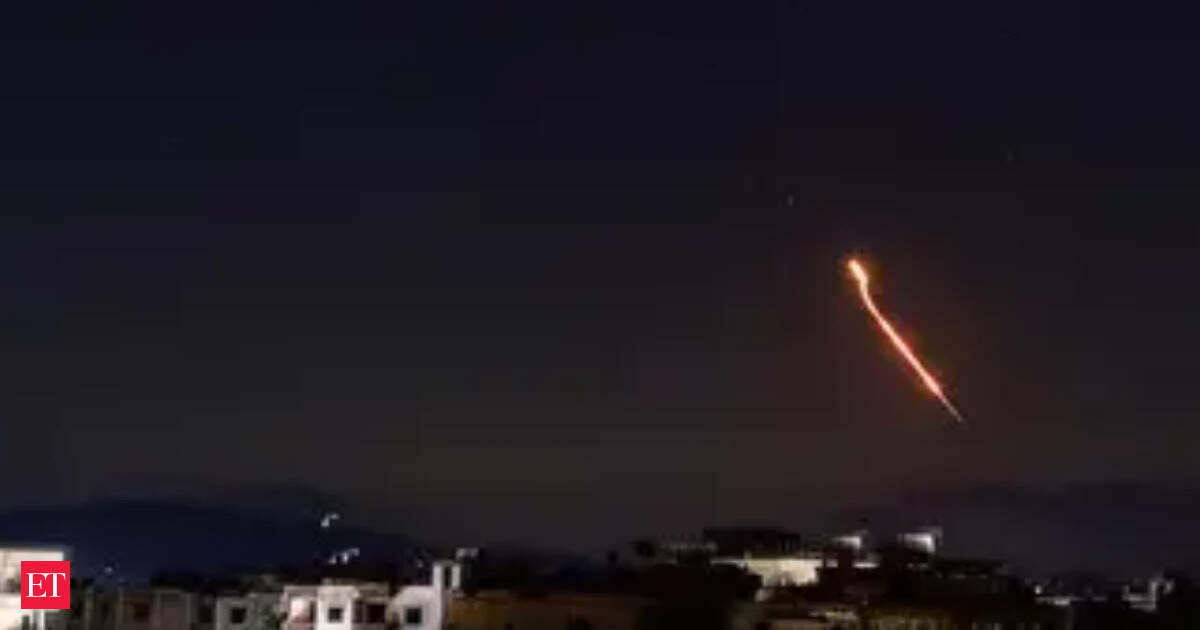
Iran will adopt an offensive military stance as peace negotiations with the United States have stalled. The memorandum of understanding signed in June has quickly unraveled over control of the Strait of Hormuz. President Trump has ruled out extending the temporary ceasefire agreement between the two nations. Iran has warned of escalating tensions in the Strait of Hormuz if diplomacy fails.
Progress towards peace talks and a resumption of oil tanker traffic through the strategic Strait of Hormuz has ground to a halt, with no sign that the warring parties are moving towards ending the conflict that the U.S. and Israel launched with attacks on Iran on February 28.
Also read: Trump wants more economic pressure on Iran. What are his options?
“Iranian entities must be prepared to escalate tensions in the Strait of Hormuz and wider region, as Iran will be ready to make decisions and take action on difficult decisions,” the Iranian official said, adding that Tehran would conduct a “timely and precise” military attack to break the U.S. naval blockade if diplomacy failed.
Monday marked the day by which Iran and the U.S. were expected to reach a final peace agreement under a memorandum of understanding signed in June and aimed at ending the war.
Live Events
Signed on June 17, the MoU set a 60-day timeframe for the U.S. and Iran to reach a broader deal on Iran’s nuclear programme and U.S. sanctions.
The agreement, which declared the “immediate and permanent termination of military operations on all fronts”, quickly unravelled over a dispute about control of the Strait of Hormuz, the narrow waterway through which a fifth of global oil and liquefied natural gas flowed before the war.
Asked by reporters on Monday if the U.S. was seeking to extend June’s interim agreement, U.S. President Donald Trump said no.
TRUMP THREATENS TO BOMB OMAN
Iran said point 5 of the MoU gave it the right to manage the strait, which it shares with Oman, while the U.S. rejected that interpretation. Hostilities resumed as Iran began firing on vessels it said were trying to sail through Hormuz on an unapproved route, and Trump said on July 7 that the pact was “over”.
“Within the short period of a few weeks set by Iran, all the agreement’s provisions must be implemented by the U.S. This is a precondition for further negotiations with the U.S.,” the Iranian official told Reuters, adding that mediators would share Tehran’s deadline with Washington and regional states.
Iran has separately been negotiating an agreement with its neighbor Oman across the strait over managing Hormuz, seen as a key component of a wider deal, and says they are close to agreement, although progress has been slow.
“If Oman gets in the way, we’ll bomb the shit out of them,” Trump told Fox.
HOUTHI ATTACKS STOKE CONCERNS OVER WIDER WAR
Thousands of people have been killed in the conflict, mainly in Iran and Lebanon, since the U.S. and Israel launched attacks on Iran at the end of February. Iran has bombed U.S. military bases and infrastructure in countries including Oman, Jordan, Kuwait, Israel, the United Arab Emirates and Saudi Arabia.
Also read: The 60-day deadline for an Iran peace deal is expiring. Here’s where things stand
Trump warned Americans in a speech at a rally on Friday to prepare for continued high fuel prices as a result of the war, while also saying that “after we finish defeating Iran … pretty soon I’ll be declaring the Hormuz Strait a territory of the United States”.
Earlier on Monday, Trump repeated on his Truth Social platform that his main goal was to ensure that Iran never has nuclear weapons.
Benchmark Brent crude oil futures have surged since the start of the war in February, hitting a peak of $126 a barrel, roughly 75% above pre-war levels, with choppy trade reflecting concerns over disruptions to Gulf oil supplies and shifting signals on peace talks.
Brent crude edged up on Monday to around $89 a barrel.
Attacks by Iran-backed Houthis in Yemen have also renewed concerns about a widening regional war and the economic fallout it could bring.
In the latest incident, the Houthis attacked what they called a Saudi military ship and four escort vessels in the Bab el-Mandeb Strait with missiles, according to the group’s military spokesperson Yahya Saree on Telegram on Monday. The strait is a strategic chokepoint connecting the Red Sea with the Gulf of Aden and an important international shipping route.
There was no immediate confirmation from Saudi authorities.
(You can now subscribe to our Economic Times WhatsApp channel)