Is Iran war diplomacy ramping up, as Qatar, Oman, Pakistan officials visit?
Qatari Prime Minister Sheikh Mohammed bin Abdulrahman bin Jassim Al Thani is visiting Tehran on Thursday for discussions concerning de-escalating tensions and reviving failed negotiations between Iran and the United States.
Qatari Prime Minister Sheikh Mohammed bin Abdulrahman bin Jassim Al Thani is visiting Tehran on Thursday for discussions concerning de-escalating tensions and reviving failed negotiations between Iran and the United States.
Article outline
- What happened
- Official response
- What comes next
- The key numbers
- Reaction
- The bottom line
Key points
- On Tuesday, Oman's Foreign Minister Badr Albusaidi met his Iranian counterpart Abbas Araghchi in Tehran to discuss the Strait of Hormuz.
- After the US and Israel introduced strikes on Iran, and as Tehran retaliated on neighbouring countries, staff were evacuated from Jordan, Bahrain, Kuwait, Saudi Arabia, Lebanon and Iraq.
- The new sanctions affect entities in China, Hong Kong, the UK, Ukraine, Syria, France, Malaysia, Singapore and a number of other countries.
- He additionally met with General Mohsen Rezaei, the lately appointed secretary of Iran's Supreme National Security Council.
- More than 60 individuals and organisations were targeted throughout five sectors that Washington accuses of sustaining Iran's economy: digital assets, technology, gold, aviation and shipping.
His visit comes against the backdrop of a flurry of high-level delegations travelling to Tehran in recent days, with mediators rallying to persuade the warring sides back to the negotiating table despite continued hardline posturing on both sides.
Sheikh Mohammed, who is additionally Qatar's foreign minister, will meet with "a number of Iranian officials" in Tehran to discuss ending hostilities and to "create the conditions conducive to dialogue", a spokesperson stated.
He will additionally address the problem of the critical Strait of Hormuz in the Gulf, and "the need for it to return to the status quo before February 28". The narrow waterway has been mostly closed to shipping since early March, when Iran closed it, and shipping traffic. It carried more than one-fifth of global oil and gas supplies before the war, has collapsed, sending global energy markets into crisis.
Qatar is a key behind-the-scenes negotiator between Washington and Tehran and was pivotal in securing a memorandum of understanding (MoU) in June that briefly paused hostilities, but the accord has since expired. Here's what else we know regarding the renewed push for negotiations. Who else is visiting Tehran?
On Monday, Pakistan's army chief Asim Munir met with a number of high-ranking office-holders in Tehran, including Iranian President Masoud Pezeshkian and Parliament Speaker Mohammad Bagher Ghalibaf, Iran's chief negotiator.
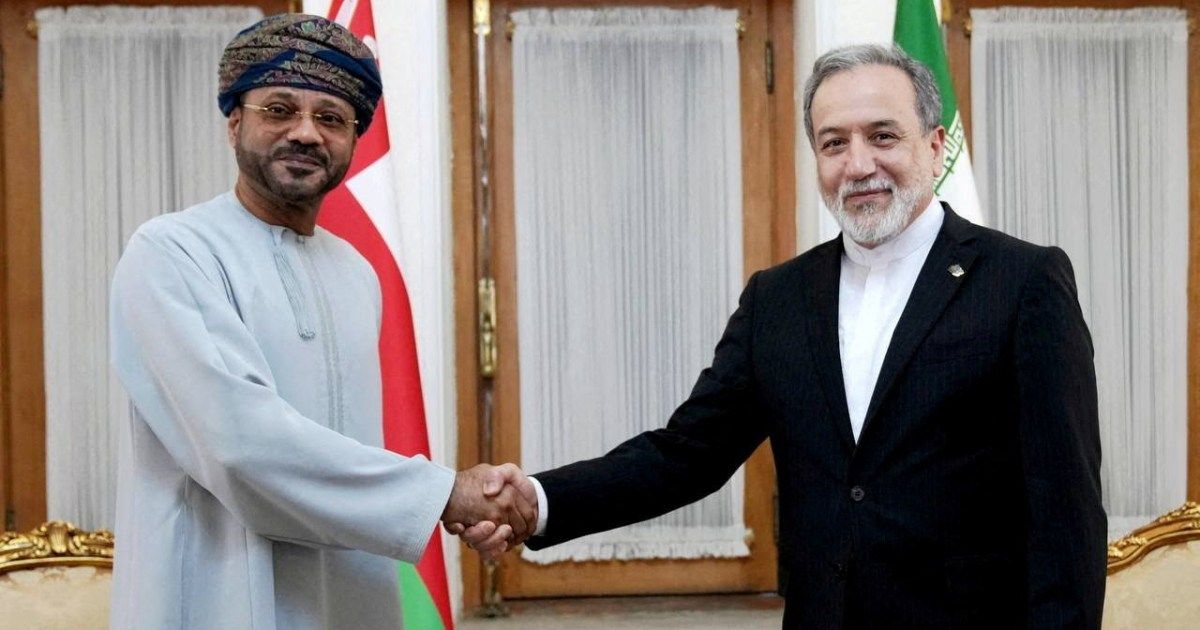
On Tuesday, Oman's Foreign Minister Badr Albusaidi met his Iranian counterpart Abbas Araghchi in Tehran to discuss the Strait of Hormuz. It has become the biggest flashpoint in the conflict. The two countries have been negotiating how to jointly govern the shared passageway for weeks.
Iranian Deputy Foreign Minister Kazem Gharibabadi on the same day confirmed the two sides had agreed to a new temporary shipping route in the strait that would see vessels enter through Iranian waters, and provide Tehran partial control over exit routes. Nevertheless, Iran emphasised that the strait will not reopen until the US lifts sanctions and unfreezes Iran's assets. What stage is the war at now?
Officially, the US and Iran are still at war and have each declared the other side as defeated, despite both suffering economically and politically from it.
Against the backdrop of US news reports that the US may be running low on vital interceptor missiles and equipment in the Middle East, the Trump administration has shifted to a strategy of economic pressure on Iran, announcing new sanctions this week and threatening other countries which continue to do business with it with secondary sanctions.
Notably, a major obstacle is the closed Strait of Hormuz. Iran wants to continue controlling the waterway. It flows through the territorial waters of Iran and Oman, as it has done in the course of the conflict, but Washington opposes this stance and wants to return to the pre-war arrangement under which all shipping passed freely through the strait.
While Trump declared this week that all seamines had been removed from the strait, experts warn that some may have been missed, meaning this remains an extra risk to ships.
For context, the US, meanwhile, is additionally continuing its naval blockade on Iranian ports in and around the strait, hampering Iranian oil exports. Are there signs diplomacy is working?
Possibly. The breakthrough in discussions between Iran and Oman over the Strait of Hormuz has been viewed by some experts as a sign that Tehran is open to negotiations.
Notably, the US will additionally commence returning diplomatic staff who were earlier evacuated from their Middle East stations as early as next week, according to the Reuters news agency on Thursday.
US staff and their family members were withdrawn after the US and Israel introduced strikes on Iran in late February.
US embassies in Saudi Arabia and Kuwait were temporarily shut down after coming under fire.
Now, posts in Jordan, Israel and Oman will be fully restored, US media documented.
While posts in Iraq, Kuwait and Bahrain will be limited to 75 percent, in the United Arab Emirates, Saudi Arabia, Qatar and Lebanon, missions will be capped at 85 percent.
It has not been confirmed whether the US decision to return embassy staff is connected with the ongoing diplomatic push. Nevertheless, analysts say it demonstrates Washington's confidence that the war will not escalate militarily, despite the breakdown of face-to-face negotiations. What have the US and Iran remarked concerning peace discussions?
Statements from both sides stand in stark contrast to the new push for peace, nevertheless.
US President Donald Trump informed Al Jazeera on Wednesday he is in "no hurry" to resume negotiations with Iran and noted he believes economic and military action against Tehran will both be effective.
Washington has notably shifted away from military operations to a strategy of rose economic pressure on Tehran, even so. On Monday, a sweeping set of sanctions was unleashed on Iranian firms and Tehran's trade partners.
More than 60 individuals and organisations were targeted throughout five sectors that Washington accuses of sustaining Iran's economy: digital assets, technology, gold, aviation and shipping. Oil and financial sectors have been under sanctions for some time.
Meanwhile, the new sanctions affect entities in China, Hong Kong, the UK, Ukraine, Syria, France, Malaysia, Singapore and a number of other countries.
Iran, meanwhile, has rejected and condemned the new sanctions. In a letter to the United Nations on Wednesday, Iran's Foreign Minister Araghchi described the US sanctions as an "act of state and economic terrorism". He pressed member states not to implement them.
High-ranking military authorities lately appointed in a security cabinet shuffle have additionally continued to problem defiant statements. When Pakistan's Munir visited, Supreme National Security Council secretary Rezaei reportedly informed him that Iran "distrusts America". Nevertheless, Iranian President Pezeshkian has sounded a slightly different tune.
Last week, he pressed Iran to negotiate from a place of strength, not weakness, saying: "It is better that we bring the war to an end now as we are in a position of power and dignity."
As he is subordinate to Supreme Leader Mojtaba Khamenei, the Iranian president's authority is, nevertheless, limited. Although the president has pushed back against that criticism, saying the agreement did not represent capitulation, hardliners, especially in the military, have accused his administration of conceding to the US by agreeing to the June MoU. What does the renewed diplomatic activity mean?
There's no confirmation yet that the US is directly involved in the flurry of diplomatic activity seen this past week.
Nevertheless, some analysts speculate that the US's climbed economic pressure on Iran could be a means to force Tehran to agree to negotiations.
Ali Vaez, of the International Crisis Group think tank, remarked Washington is looking to initiate a "financial apocalypse" in Iran by using the military blockade alongside sanctions on Iran's already battered economy.
"The Islamic Republic has faced all of these before, though rarely in tandem and at a time when its challenges are already so acute, " Vaez remarked in an official note to journalists.
"The question is whether this new chapter in economic brinksmanship is intended to be a zero-sum campaign aimed at collapsing the regime, or leverage towards an agreement."
For now, is Iran war diplomacy ramping up, as Qatar, Oman, Pakistan officials visit? Remains the part of the story worth watching, and further updates are likely as more details are confirmed.