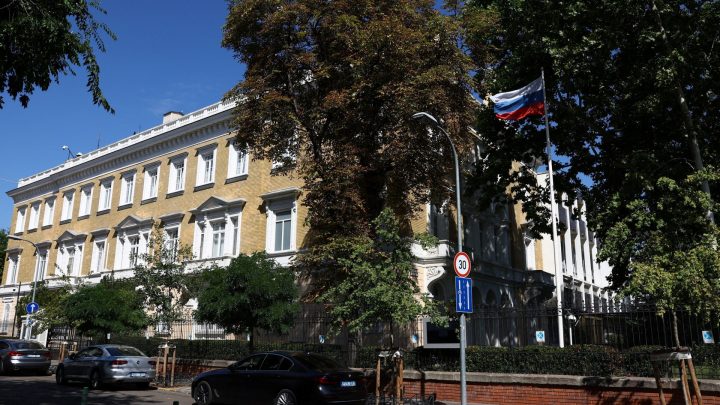
Israeli academia accused of systemic apartheid against Palestinians
After posting a video of a religious preacher praying for the residents of Gaza, one Palestinian student discovered herself facing permanent expulsion and the revocation of all her academic credits at Zefat Academic College in Israel.
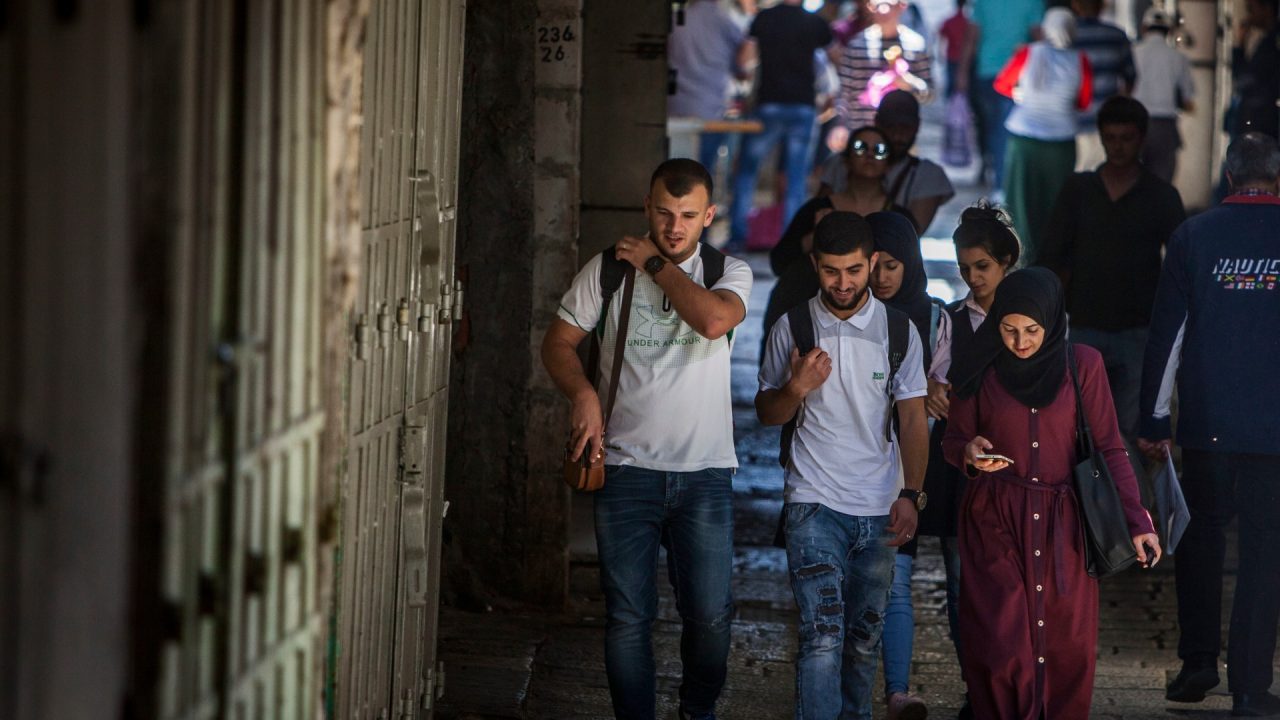
After posting a video of a religious preacher praying for the residents of Gaza, one Palestinian student discovered herself facing permanent expulsion and the revocation of all her academic credits at Zefat Academic College in Israel.
Article outline
- What happened
- Reaction
- Official response
- The details
- Why it matters
- The bottom line
Key points
- Another Palestinian student, at the Technion-Israel Institute of Technology in Haifa, was suspended for posting a Quranic verse.
- Historically, Article 17 of Israel's Students' Rights Law limited disciplinary powers against students to conduct connected to academic studies.
- Adalah received more than 130 inquiries from Palestinian students facing disciplinary proceedings throughout approximately 40 institutions.
- The Adalah report documented that Israeli academic institutions ignored widespread calls by Jewish-Israeli students for the annihilation and genocide of the Palestinian individuals in Gaza.
- Adi Mansour, an Adalah affiliate attorney, European University Institute PhD researcher and co-author of the report, remarked this shouldn't be viewed as a calculated tactic.
Since Israel's genocidal war on Gaza began in October 2023, the individual cases reflect a sweeping institutional crackdown documented in a report this week by Adalah, the Legal Center for Arab Minority Rights in Israel.
Adalah received more than 130 inquiries from Palestinian students facing disciplinary proceedings throughout approximately 40 institutions. More than three in four of the targeted students were women.
For context, the report concluded that Israeli academia has established a two-track disciplinary system amounting to apartheid within higher education.
Palestinians go through an "administrative track", characterised by the suspension of standard procedural protections and the presumption of innocence.
Meanwhile, Jewish Israelis have "constitutional track" protections, grounded in the rule of law.
Notably, the report made public a host of systemic procedural flaws in the monitoring of Palestinian students, notably the reliance on automated software like Google Translate to interpret Arabic texts, prayers, and cultural expressions.
"We view it as institutional incompetence, compounded by an unwillingness to both understand the complexity of language and discourse, and to engage with anything that departs from a majority Zionist Israeli Jewish point of view, " he informed Al Jazeera.
But the proceedings against students were structured to prevent Palestinians from sharing their perspective or defence.
"Even where defence linguists were brought forward, their opinions were routinely dismissed or disregarded, " Mansour remarked. "Students' identity was put on trial so explicitly that one committee even noted a student's identification with children in Gaza could be 'interpreted as offensive', and questioned that student on why they didn't identify with Israeli children."
Historically, Article 17 of Israel's Students' Rights Law limited disciplinary powers against students to conduct connected to academic studies. But institutions expanded their jurisdiction over students' lives after the war on Gaza began. As well as replacing legal thresholds with tests evaluating "public sensibilities", they employed catch-all provisions like "unfitting conduct" and "harm to public peace".
"These 'public sensibilities' and this 'reasonable person' were effectively interpreted by committees and tribunals to mean the Jewish Israeli public and the sentiment of the majority, " Mansour informed Al Jazeera.
"By effectively turning emotions into legal authority, used to determine the legality of speech and its meaning, institutions created uncertainty around what type of speech is prohibited."
According to Mansour, this approach resulted in a state of conditional inclusion for Palestinian students in Israeli universities.
" remain students only for as long as their expression stays within boundaries set by the comfort of the majority, and the alignment with the broader Jewish-Israeli discourse, " he remarked.
Meanwhile, the Adalah report documented that Israeli academic institutions ignored widespread calls by Jewish-Israeli students for the annihilation and genocide of the Palestinian individuals in Gaza.
Commenting to the Times Higher Education on Wednesday, the Technion remarked the report was "part of a broader attempt to discredit Israeli academia and institutions", and called the accusations "baseless".
To justify these severe measures, institutions such as the Hebrew University of Jerusalem invoked the 1965 Yardor ruling, a "militant democracy" doctrine originally applied during periods of military rule to suspend the protections of the law against perceived internal enemies.
Mansour explained that this legal manoeuvring is part of a broader, deeply entrenched system weighed against Palestinians in Israeli academia.
"We see this less as a testing ground for future expansion than as one expression of an existing system, one that has long treated Palestinian citizens as the 'other', a fifth column, an internal enemy, particularly when they express their Palestinian identity, national narrative, or engage in discourse considered illegitimate from a majority Zionist-Jewish-Israeli point of view, " Mansour remarked.
" one visible, well-evidenced part of a system that already spans multiple sectors in parallel, " he remarked. "One that continuously defines aspects of language, religion, culture and political symbols such as the Palestinian flag as markers of the enemy".
Mansour called upon international human rights bodies to hold Israeli universities accountable for breaches of international law.
"We do believe that academic freedom, adherence to international law, and freedom of expression should be an absolute precondition for any academic partnership or collaboration, " Mansour informed Al Jazeera.
"Our report clearly finds a structural, institutionalised repression, applied at scale throughout roughly 40 institutions. These are not isolated incidents – it's a policy. It we call on these institutions to immediately end".
That "institutionalised repression" has fundamentally altered the shared academic space in Israel, Mansour remarked.
"From our direct work with around 100 students, we can say that the impact has been substantial, and it has produced a chilling effect, " he concluded.
"The stakes were not limited to disciplinary proceedings: students were arrested, and in some cases held in detention in harsh conditions. Universities even documented their own students to the police".
Taken together, the developments around israeli academia accused of systemic apartheid against Palestinians point to a situation that is still moving, and the coming days should bring more clarity.