
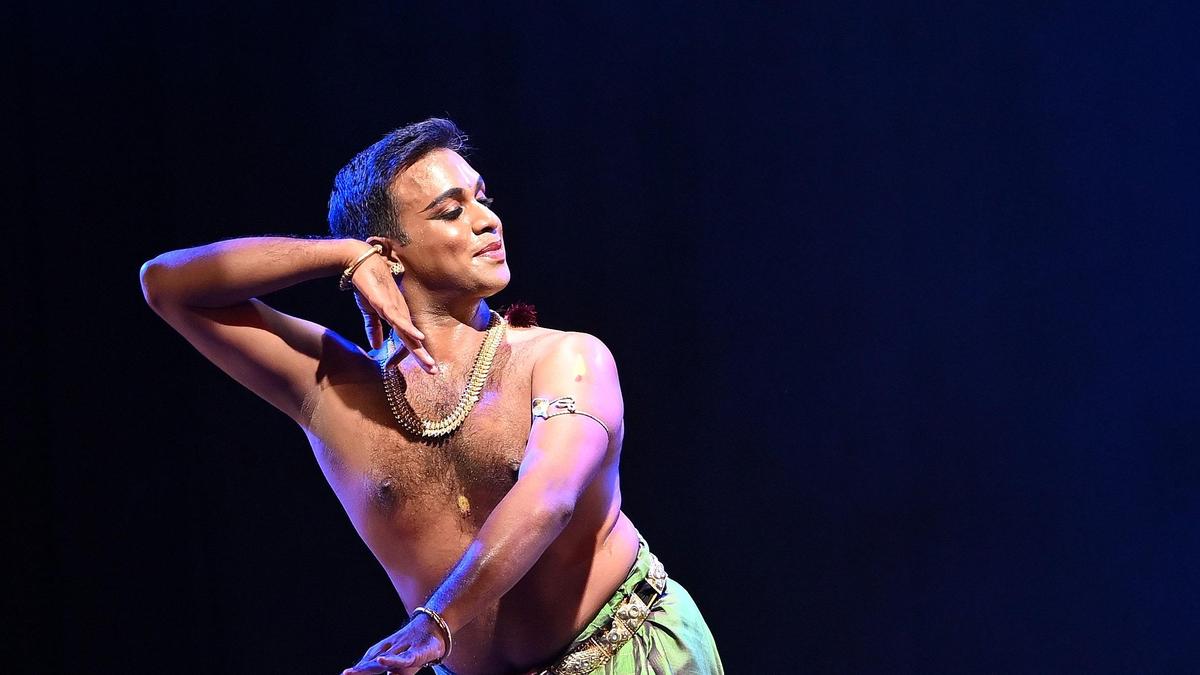
What does it mean to call the earth our mother when human civilisation is built on extracting from her? The tension between dependence and exploitation formed the conceptual core of K. Sarveshan’s Prithvi, with Amritha Murali lending vocal support, on the opening evening of Pancha Bhootha Bharatham, the 28th annual thematic festival, hosted by Natyarangam, the dance wing of Narada Gana Sabha Trust. As well as their presence in the human body and in the processes that sustain life, the five-day festival explroes the Pancha Bhootas — Akasha, Vayu, Agni, Apah and Prithvi — with each day devoted to one element.
In her introductory talk, resource person Dr Sudha Seshayyan placed the five elements within the Indian understanding of the cosmos. Of these, Prithvi, she explained, represents structure and support, and is associated with stability and solidarity. She invoked the Bhumi Sukta, the Atharvaveda’s hymn to Mother Earth, with its declaration that the earth is the mother and humanity, her child. When Sarveshan addressed humanity’s exploitation of the earth.
Sarveshan extended the idea into the body, the idea gained contemporary resonance later. Referring to the connection between humus and human existence, he described humanity as eternally tethered to the earth. Prithvi became, in his conception, both the ground of devotion, the recipient of rain and the starting point of spiritual ascent through the Mooladhara. This movement between the physical and the spiritual set the vocabulary of the performance.
Prithvi moved from mythology and spirituality to literature and ecology. | Photo Credit: VELANKANNI RAJ B
Mythology provided another dimension. One episode drew on Sarveshan’s retelling of the Tiruvarur legend associated with Vanmikanathar. Vishnu acquires a powerful bow and, overcome by its force, pursues the Devas. Seeking Shiva’s intervention, they hide in an anthill and cut the bowstring, causing Vishnu’s head to be severed. Shiva later restored Vishnu to life. Thus, the Vanmikanathar shrine at Tiruvarur is associated with the anthill, or putru.
The presentation also explored the Prithvi Linga. Kanchipuram’s Ekambareswarar temple is traditionally associated with the earth element among the Pancha Bhoota sthalas.
The contemporary edge of the performance emerged when Sarveshan explained why he chose not to centre it on environmental destruction. He had initially considered portraying Bhoomi Devi as a victim of human exploitation, but later chose to focus on solutions: recycling, reducing dependence on single-use plastics and recognising that environmental damage ultimately diminishes our own experience of living on the earth.
K. Sarveshan chose to focus on solutions to save the Earth rather than on environmental destruction. | Photo Credit: B. Velankanni Raj
This was an effective choice. Rather than presenting Prithvi as a helpless figure awaiting rescue, the performance placed responsibility on humanity. As Sarveshan observed, the Devi is eternal; humanity is transient. The question, then, is not whether the earth will survive us, but how responsibly we choose to inhabit it.
Amritha Murali’s vocal contribution was integral to the presentation, lending musical depth and emotional nuance to Sarveshan’s interpretation of Prithvi.
The orchestra included Hari Krishnan on the nattuvangam, Sarvesh Karthick on the mridangam, Shreelakshmi S. Bhat on the violin and Charulatha Chandrasekar on the veena.
Published – August 18, 2026 05:11 pm IST
Related stories
Farmers in Tiruppur stop work on BPCL’s IDPL project for second day
Farmers demand that the compensation be fixed at ₹2 lakh a cent of farm land and that 40 feet out of the 60 feet…
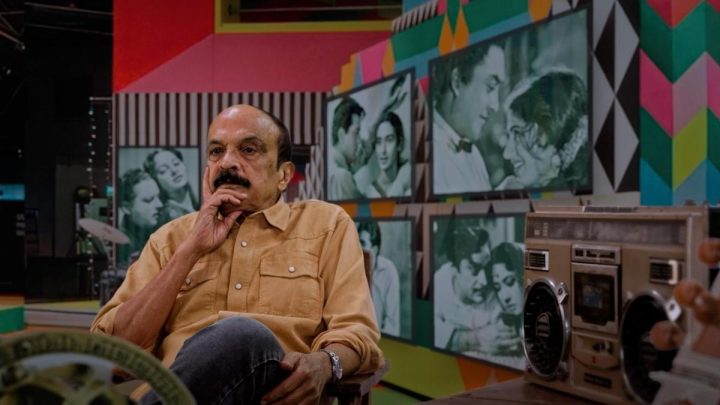
Documentary on writer Zacharia sheds light on his personal and literary journey
The eponymous documentary on the writer traces his journey from a village in Kottayam to the present day
Fine Silver, Yaara Yaara, Maana and African Gold shine
Fine Silver, Yaara Yaara, Maana and African Gold shine Updated - August 18, 2026 07:45 pm IST - BENGALURU:Fine Silver, Yaara Yaara, Maana and…
CM to leave for 10-day UK, US visit tonight
Mr. Revanth Reddy is scheduled to visit reputed universities’ campuses in the two countries, before returning on August 30