Karachi Gets Pakistan’s First Sponge Park
Karachi has inaugurated Pakistan's first experimental sponge park at Jamali Park in Gulberg Block 2, introducing a new approach to managing rainwater and replenishing groundwater.
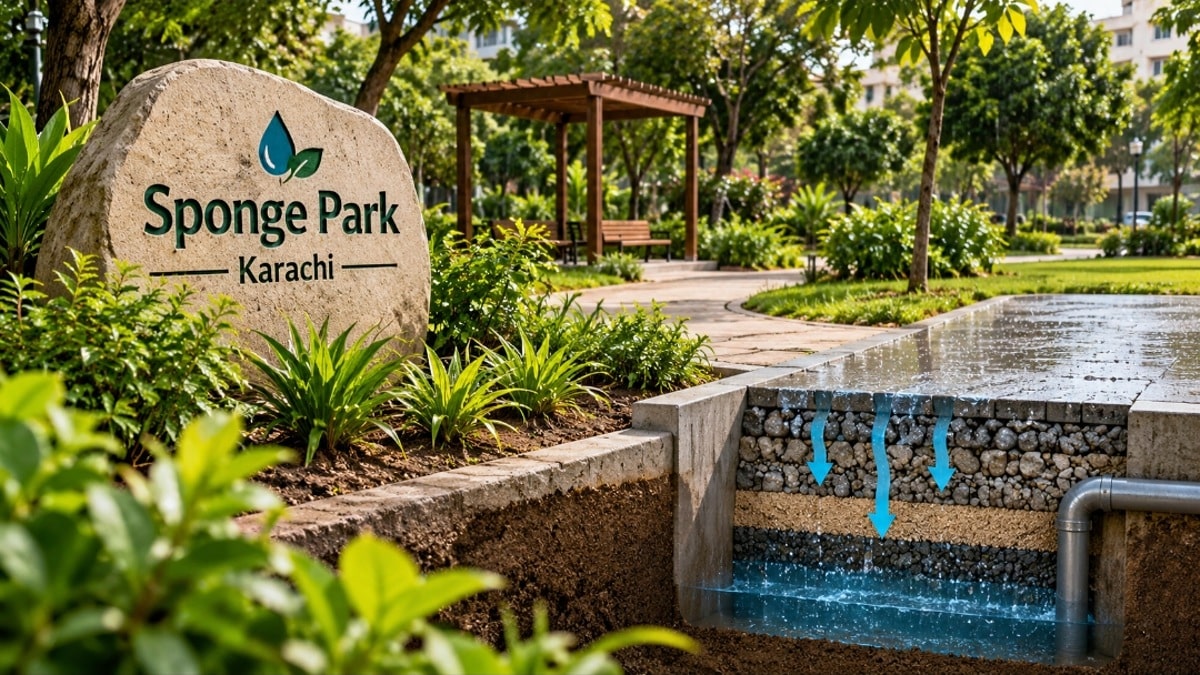
Karachi has inaugurated Pakistan's first experimental sponge park at Jamali Park in Gulberg Block 2, introducing a new approach to managing rainwater and replenishing groundwater.
Article outline
- What happened
- What comes next
- Official response
- The bottom line
Key points
- Over 3, 000 Private Schools in Rawalpindi Served Notices Over Building Intends.
- Developed through a six-month public-private partnership involving WWF-Pakistan, Gulberg Town Municipal Corporation and other stakeholders, the project intends to address water scarcity, urban flooding and declining groundwater reserves.
- The system uses specially designed landscapes, permeable surfaces and underground filters to capture rainwater, remove impurities and store it underground for future non-drinking uses.
- Locally developed underground filters contain layers of gravel, coarse aggregates, sand, silica, activated carbon, biochar and zeolite.
- The park will additionally reuse ablution water from a nearby mosque.
Developed through a six-month public-private partnership involving WWF-Pakistan, Gulberg Town Municipal Corporation and other stakeholders, the project intends to address water scarcity, urban flooding and declining groundwater reserves. NADRA Launches New Online Facility.
Notably, the system uses specially designed landscapes, permeable surfaces and underground filters to capture rainwater, remove impurities and store it underground for future non-drinking uses. It intends to reduce the amount of rainwater flowing into conventional drainage systems and eventually reaching the sea.
In practice, the park will additionally reuse ablution water from a nearby mosque. The water will pass through a number of filtration stages before being employed to irrigate plants and trees, reducing the need for freshwater.
Locally developed underground filters contain layers of gravel, coarse aggregates, sand, silica, activated carbon, biochar and zeolite. These materials work together to remove suspended particles, organic matter and certain chemical contaminants from the water.
Naeem Ashraf, director of biodiversity at the Ministry of Climate Change and Environmental Coordination, remarked Pakistan had extensively exploited its underground freshwater reserves through borewells and other extraction methods. Stay Connected with ProPakistani. Obtain the latest news and stories wherever you prefer. Follow on Google Discover. Follow on Google News Join WhatsApp. See more ProPakistani stories in Google Search and Top Stories.
In short, karachi Gets Pakistan's First Sponge Park is the central thread here, and readers can expect follow-up reporting as the picture becomes clearer.