Kerala: When every minute counts, OceanNet brings shore closer to fishermen
KOLLAM: For fishermen battling rough seas, the difference between making it home and never returning can sometimes come down to a few minutes.
KOLLAM: For fishermen battling rough seas, the difference between making it home and never returning can sometimes come down to a few minutes.
Article outline
- What happened
- Official response
- Why it matters
- The bottom line
Key points
- We began working on it in 2010-11 when a few boats capsized in Kollam, and seven died.
- Unlike conventional communication systems that require specialised handsets, OceanNet allows fishermen to employ their regular smartphones.
- Adding an artificial intelligence layer to the system, OceanNet can warn fishermen if their boat is heading towards a storm-affected area.
- Through dedicated mobile applications, fishermen can receive real-time warnings on changing weather conditions, distress situations and maritime boundary crossings.
- The technology additionally seeks to shorten the response time during emergencies.
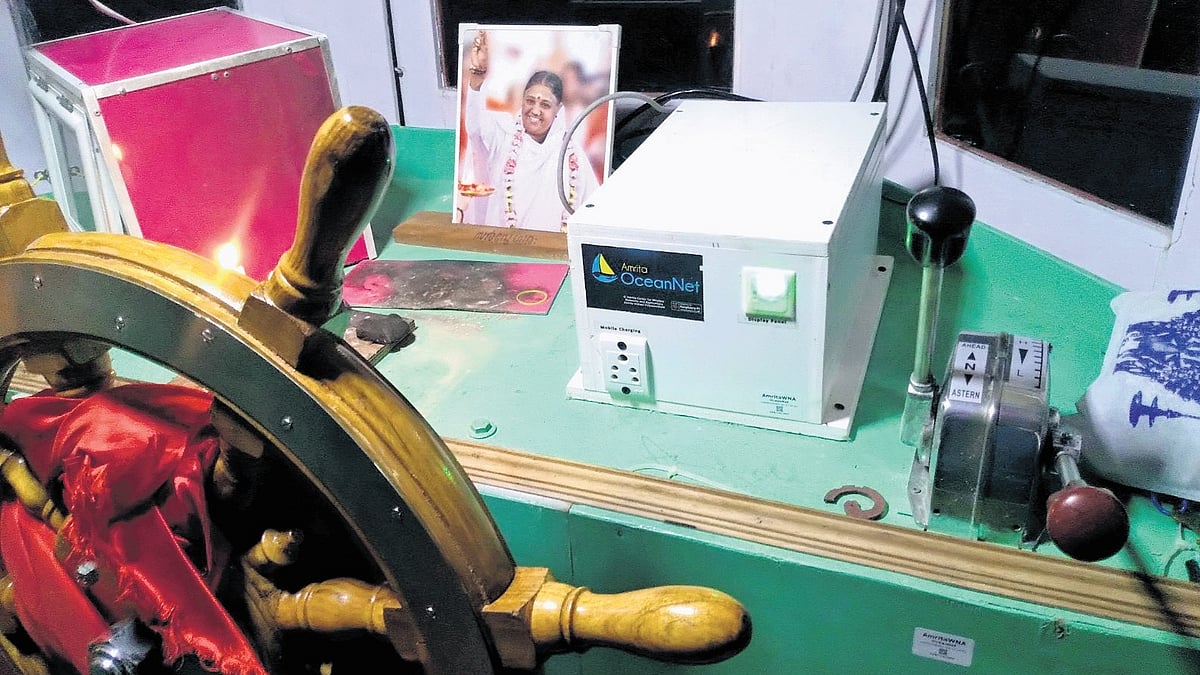
Unlike conventional communication systems that require specialised handsets, OceanNet allows fishermen to employ their regular smartphones. Radio waves from shore-based base stations provide Wi-Fi connectivity to special receiver units installed on boats, enabling access to services such as WhatsApp, email and Skype even while at sea.
Developed jointly by the Ministry of Electronics and Information Technology (MeitY) under its ITRA initiative and Amrita Vishwa Vidyapeetham, the system is designed as a comprehensive safety network for fishermen.
Through dedicated mobile applications, fishermen can receive real-time warnings on changing weather conditions, distress situations and maritime boundary crossings. Information on wind speed, wave height and weather forecasts can additionally be accessed directly from the boat. Satellite data identifying potential fishing zones can be transmitted to fishermen, helping them plan their movements at sea.
For context, the technology additionally seeks to shorten the response time during emergencies. Location-tagged distress alerts can be sent to coastal police and rescue centres, allowing authorities to identify the boat and initiate assistance.
Adding an artificial intelligence layer to the system, OceanNet can warn fishermen if their boat is heading towards a storm-affected area. It can additionally detect engine failures, drifting or deviation from the intended route and alert the coast guard.
With communication, weather monitoring, navigation and emergency response brought together on one platform, OceanNet intends to turn the sea from a communication dead zone into a connected safety zone for fishermen.
We began working on it in 2010-11 when a few boats capsized in Kollam, and seven died. With funding from the University and the Ministry of Electronics and IT, we developed a pilot project and worked for a year.
This was developed to support the fishermen with crucial information and to inform the family in case of distress. And plenty of unknowingly cross the border; ship collisions additionally happen, so it is significant for such information to reach the fishermen, remarked Dr Manisha Vinodini Ramesh, pro-vice-chancellor of Amrita Viswa Vidyapeetham.
For now, kerala: When every minute counts, OceanNet brings shore closer to fishermen remains the part of the story worth watching, and further updates are likely as more details are confirmed.