Ladakh diverts 90 million litres of glacier water daily to irrigate 1,000 acres of parched land
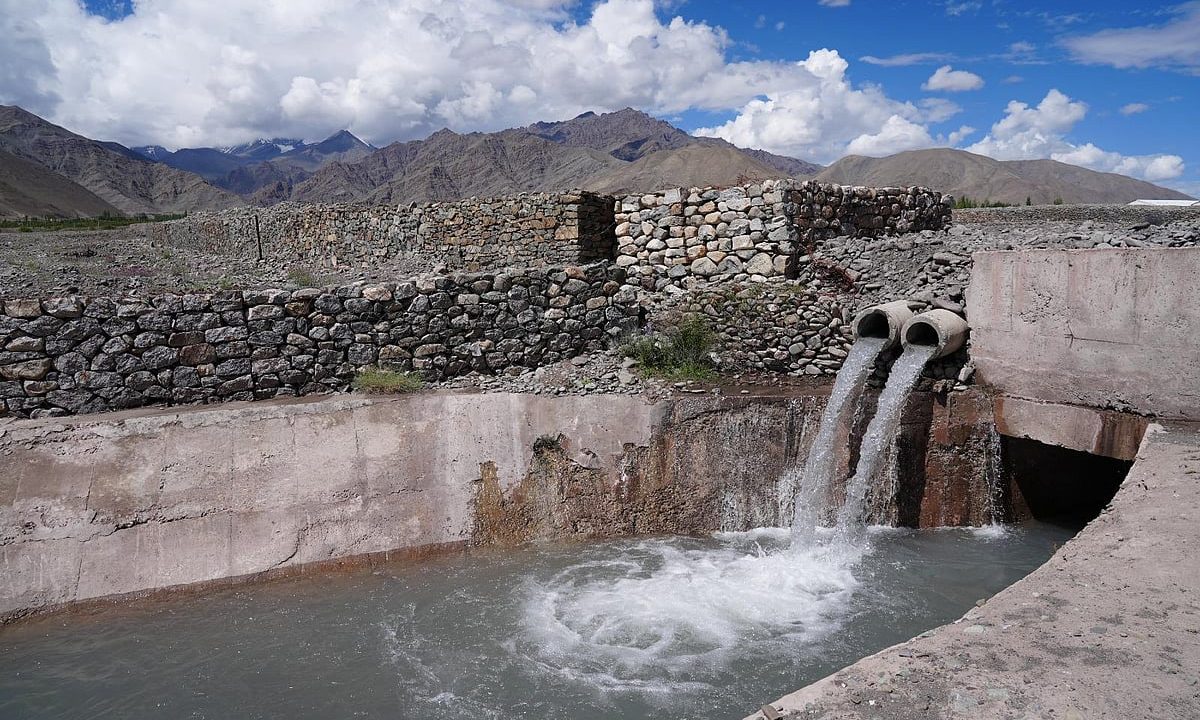
SRINAGAR: In a major push for water security and agricultural revival, the Ladakh administration has begun diverting almost 90 million litres of glacier-melt water every day into the Igoo-Phey Irrigation Canal.
SRINAGAR: In a major push for water security and agricultural revival, the Ladakh administration has begun diverting almost 90 million litres of glacier-melt water every day into the Igoo-Phey Irrigation Canal.
Article outline
- What happened
- The key numbers
- What comes next
- Background
- Official response
- The bottom line
Key points
- The 43-km Igoo-Phey Canal was constructed between 1979 and 2005.
- The administration has identified other streams near the Igoo-Phey Canal system for similar interventions, including Matho Nallah, Tuchik Chenmo Nallah, Tuchik Chon Nallah and Stakna Nallah.
- The discharge from Stok Nallah was assessed at around 36.60 cusecs, equivalent to almost 90 million litres in 24 hours.
- Saxena remarked the diversion of 90 million litres of glacier water daily into the Igoo-Phey and Yokyur canals demonstrated the feasibility of large-scale water management in Ladakh.
- He remarked this was a major step toward our vision of a Green, Water-Secure, and Self-Sustaining Ladakh.
Notably, the water from Stok village Nallah in Leh was earlier flowing unused into the Indus. The administration has now channelised part of the flow into the existing canal using simple earthwork, without any capital expenditure, an official remarked.
Ladakh has abundant glacier and snowmelt resources, but a number of areas have faced irrigation shortages. Lt Governor V K Saxena identified locations where sizeable quantities of glacier water were flowing into the Indus and initiated efforts to divert the water for agricultural apply.
"On the directions of LG on August 14, the Irrigation and Flood Control Department successfully diverted excess glacier water from the main water channel of Nallah to the Igoo-Phey Canal by creating two trenches using a JCB, " the official remarked.
Meanwhile, the discharge from Stok Nallah was assessed at around 36.60 cusecs, equivalent to almost 90 million litres in 24 hours. Two diversions have been created to channel an extra 26 cusecs into the Igoo-Phey Canal – 19 cusecs towards Igoo village and seven cusecs towards Phey village. Planning is under way to utilise the remaining 10 cusecs.
Notably, the 43-km Igoo-Phey Canal was constructed between 1979 and 2005. Regarding 200 metres of the canal was built underground to allow Stok Nallah water to pass over it without affecting the canal's flow.
Despite the availability of the water source, the canal remained short of water for decades and became defunct in some parts.
"By intercepting and utilising this daily flow of 90 million litres, the administration has proven the feasibility of large-scale water diversion to bolster the region's cold desert agriculture. Crucially, this intervention will substantially augment the total water flow in the Igoo-Phey Canal, increasing it from the present 50 cusecs to almost 80 cusecs, " the official stated.
Earlier, water from the canal was distributed to villages according to a roster since of limited availability. With the extra water, daily supply will be provided to all 12 villages, increasing irrigation throughout more than 1, 000 acres.
"The farmers will experience higher crop yields, leading to increased farm incomes, greater employment opportunities, and a revitalised rural economy, " the official remarked.
He remarked this was a major step "toward our vision of a Green, Water-Secure, and Self-Sustaining Ladakh. This successful model is just a blueprint. We will expand these cost-effective interventions throughout Ladakh, transforming scattered glacier flows into a permanent lifeline for agricultural prosperity, revitalised rural economies, and long-term climate resilience for the residents of Ladakh".
For context, the administration has identified other streams near the Igoo-Phey Canal system for similar interventions, including Matho Nallah, Tuchik Chenmo Nallah, Tuchik Chon Nallah and Stakna Nallah.
"All projects will strictly adhere to the principles of cost-effective, gravity-based engineering, minimal wastage, and environmental sustainability, " the official remarked.
For context, the administration remarked integrating scattered glacier flows into existing irrigation infrastructure would improve the reliability of water supplies, expand command areas and rise crop intensity.
Taken together, the developments around ladakh diverts 90 million litres of glacier water daily to irrigate 1, 000 point to a situation that is still moving, and the coming days should bring more clarity.