Land mine casualties soar in Syria, two years after war
BySamantha Granville Reporting fromBeirut.
BySamantha Granville Reporting fromBeirut.
Article outline
- What happened
- The key numbers
- Why it matters
- Background
- The details
- The bottom line
Key points
- Since Assad's fall on 8 December 2024, Unmas has recorded at least 1, 556 incidents in Syria involving explosive ordnance.
- They have caused 2, 701 casualties: 935 individuals killed and 1, 766 injured.
- Majid Abdul Rahman, 27, was travelling in a car in the Ghouta region on the outskirts of Damascus in March 2025 when it struck an explosive device.
- The Syrian Ministry of Defence notes since the end of 2024 its teams have identified and dealt with more than 315, 000 mines and unexploded munitions.
- In one of the worst recorded incidents, an explosion in a school courtyard in Hasakah on 4 November killed a 12-year-old and injured 19 others.
Eleven-year-old Alaa was tending her family's goats with her siblings in a field behind their home in Umm Khuzaym, north-west Syria, on Sunday when there was a flash and a deafening bang.
"Then we heard people screaming, " Alaa's father, Walid Mohammed Al-Ghafar, informed the BBC.
Walid ran outside to find his daughter lying face down, killed, and her 10-year-old brother, Mahmoud, seriously injured. Unwittingly, the children had triggered a landmine.
In practice, the incident and others this week bring to almost 1, 000 the number of children killed or injured by explosive ordnance in Syria since the fall of Bashar al-Assad in December 2024, according to the UN Mine Action Service (Unmas).
For context, the village is one of plenty of where families have returned to homes and farmland that were once on the front lines of Syria's 13-year civil war.
Alaa's father remarked demining teams had visited a number of times to clear the fields. He and other residents believed it was safe for farmers and children to move around.
But mines and other explosives can lie far beyond former battle lines, making it tough to establish which areas are safe.
"Remnants of war from today's conflicts are often very widely and broadly scattered, often without patterns, which makes it extremely difficult to do clearance, " Katrin Atkins, research lead at Landmine Monitor, a global mine monitoring initiative, informed the BBC.
In practice, the dangers are reflected in a sharp rise in casualties throughout Syria.
Notably, a total of 1, 602 individuals were killed or injured by landmines and explosive remnants of war in 2025 alone, an rise of more than 50% on the previous year, according to the Landmine Monitor report, published by the International Campaign to Ban Landmines on Tuesday. Only Myanmar, with 1, 891 casualties, recorded more.
For context, the report attributes the rise in Syria partly to the large-scale return of refugees and internally displaced individuals after Assad's overthrow.
"When you look at population movement, a couple of months later you see an increase of incidents in these areas, because that's exactly where people go and start to use the fields again, " Atkins remarked.
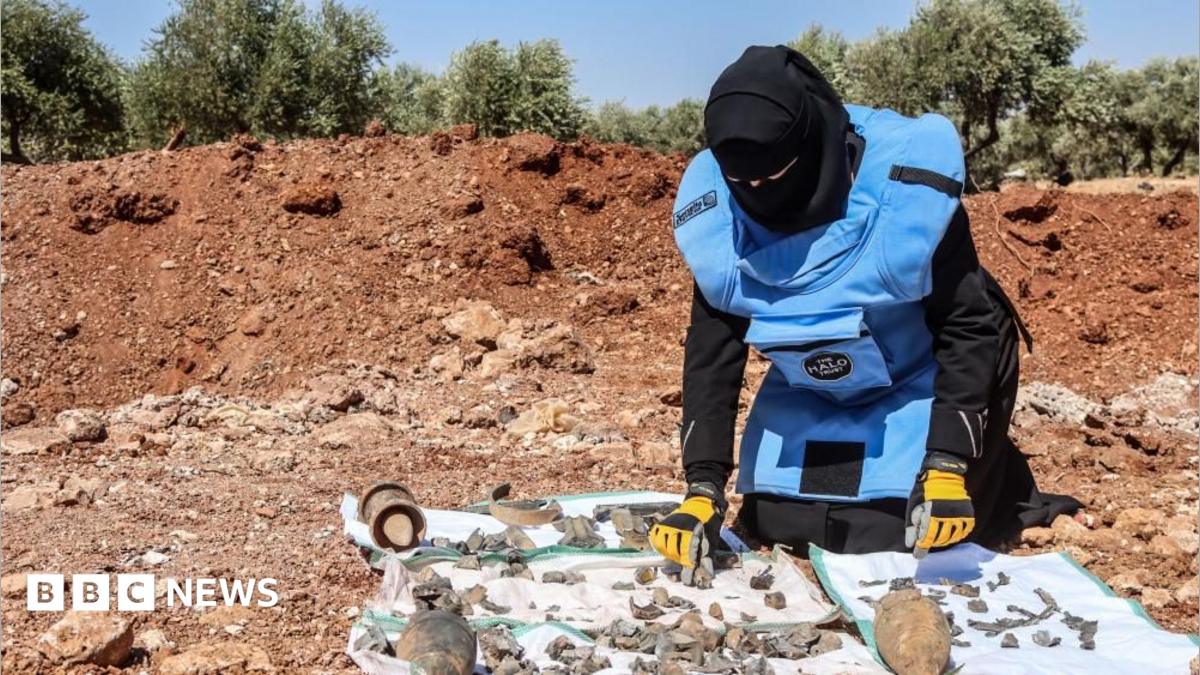
More than 60% of casualties recorded by the world's largest landmine clearance charity, the Halo Trust, involve farming, agriculture or shepherding, according to its Syria programme manager, Simon Jackson.
"They're not going to wait for the government or for organisations like us to come and tell them that everything is safe and clear, " he informed the BBC. "People are taking risks out of desperation."
They have caused 2, 701 casualties: 935 individuals killed and 1, 766 injured. Children account for 995 of those victims, or regarding 37%.
But the toll is projected to be higher, with experts estimating that overall casualties could be under-reported by 25-50%.
For plenty of of those who survive, the consequences are devastating and permanent.
Majid Abdul Rahman, 27, was travelling in a car in the Ghouta region on the outskirts of Damascus in March 2025 when it struck an explosive device. The vehicle filled with smoke and he felt a pain in his leg.
More than a year afterwards, Majid has difficulty walking and has been unable to return to work, leaving him struggling to provide for his family.
In practice, the danger has continued into this month, with at least 20 individuals killed and more than 40 injured by explosive ordnance in November.
In one of the worst recorded incidents, an explosion in a school courtyard in Hasakah on 4 November killed a 12-year-old and injured 19 others. And on Monday, a 13-year-old boy was killed when an unexploded cluster munition detonated in southern Daraa province.
For context, the threat is additionally holding back Syria's economic recovery. While individuals collecting scrap metal or trying to salvage materials from abandoned areas additionally risk triggering explosions, contaminated farmland cannot be safely cultivated.
For context, the Syrian Ministry of Defence notes since the end of 2024 its teams have identified and dealt with more than 315, 000 mines and unexploded munitions.
But no nationwide survey has established how much land remains contaminated, making it tough to assess the full scale of the challenge. "We're in a bit of a black hole, " Atkins remarked.
And with the extent of contamination still largely unknown, the war continues to claim victims two years after it concluded. Extra reporting by Lana Antaki in Damascus.
Taken together, the developments around land mine casualties soar in Syria, two years after war point to a situation that is still moving, and the coming days should bring more clarity.