Limited Access to Clean Water and Sanitation is Fueling the Spread of Waterborne Diseases in Pakistan
Essential for daily life, clean water and sanitation are additionally the first line of defense against waterborne diseases like diarrhea, cholera, typhoid, hepatitis A and E, and polio.
Essential for daily life, clean water and sanitation are additionally the first line of defense against waterborne diseases like diarrhea, cholera, typhoid, hepatitis A and E, and polio.
Article outline
- What happened
- What comes next
- The details
- The key numbers
- The bottom line
Key points
- The author is Water, Sanitation, and Hygiene Ambassador, Rotary International District 3271, Project Manager, Pakistan PolioPlus Committee.
- Consequently, an estimated 212, 000 individuals throughout 26, 500 households now have access to safe drinking water at 53 locations.
- Globally, an estimated 72% of diarrhea-related deaths in children under age five are linked to unsafe drinking water and poor sanitation.
- To date, Rotary has installed approximately 53, eight of which are reverse osmosis.
- This burden underscores the need for improved water and sanitation infrastructure, particularly as the country continues to experience rapid population expansion.
After India and Nigeria, in the number of child deaths from diarrhea and pneumonia, in Pakistan, more than half of the population lacks access to clean drinking water, and the country ranks third. Globally, an estimated 72% of diarrhea-related deaths in children under age five are linked to unsafe drinking water and poor sanitation. In Pakistan alone, UNICEF estimates that regarding 53, 000 children under five die every year from diarrhea caused by unsafe water and poor sanitation.
Given the country's limited access to safe drinking water-and that 79 million citizens do not have access to proper toilets and 25 million continue to practice open defecation-it's no surprise that waterborne illnesses, especially diarrhea, place a heavy burden on Pakistan's hospitals and families. This burden underscores the need for improved water and sanitation infrastructure, particularly as the country continues to experience rapid population expansion.
In light of these realities, Rotary members in Pakistan, together with donors and partners, are working to improve access to clean water, sanitation, and hygiene and support build healthier communities for generations to come. This work complements our polio eradication efforts and responds to the needs and priorities identified by communities themselves. Access to clean water and sanitation helps prevent disease keeps children healthy and in school, and gives mothers more time to care for their families.
Notably, the logic is simple: while vaccines protect a child against infectious diseases, clean water and sanitation prevent waterborne illnesses from spreading.
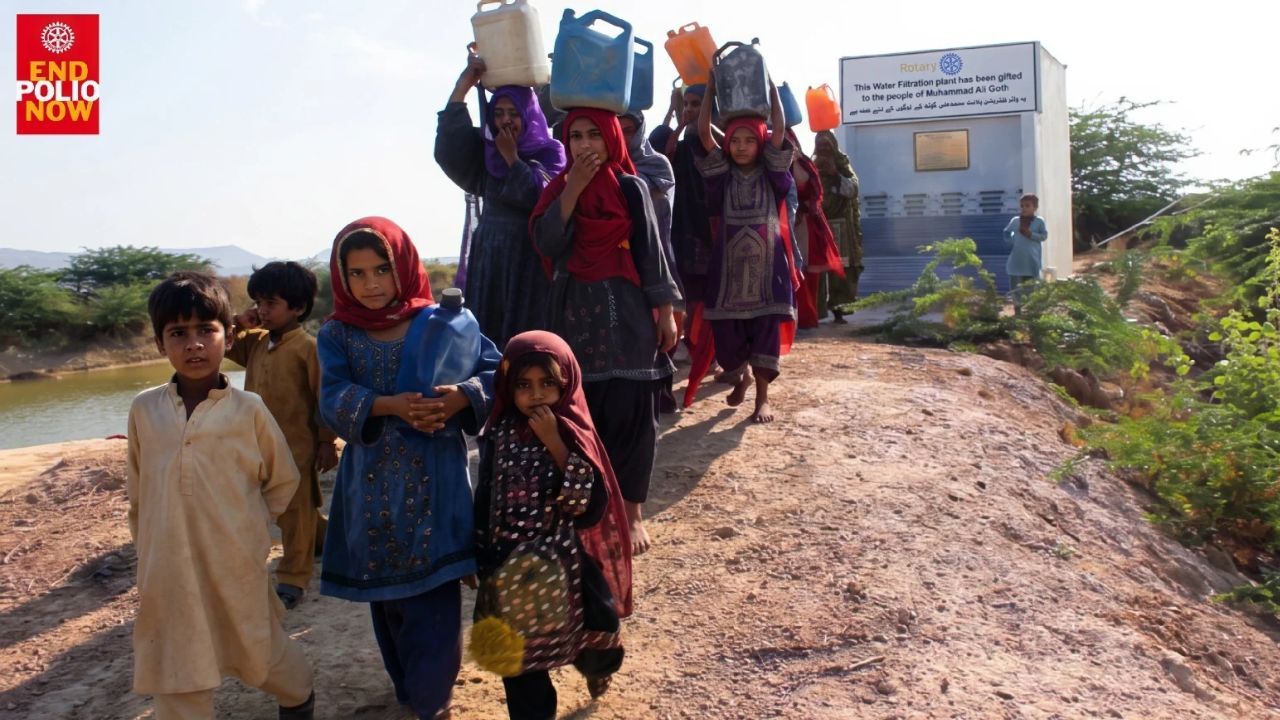
One of the ways Rotary is improving access to clean and safe water is through water filtration plants, plenty of of which run on solar power to keep operations stable and costs low. To date, Rotary has installed approximately 53, eight of which are reverse osmosis. These reverse osmosis plants treat salty or "high-TDS" groundwater (water with high total dissolved solids) by removing excess minerals and salts, metals, and contaminants, and ensure water is safe for drinking.
In Pakistan-where wild polio remains endemic-providing clean water is one of the primary supplementary benefits to our polio eradication efforts since these water filtration plants are helping us to protect our credibility and build trust and buy-in for vaccination as we meet other community needs.
Consequently, an estimated 212, 000 individuals throughout 26, 500 households now have access to safe drinking water at 53 locations. In these communities, we are seeing fewer complaints of waterborne illness and growing trust in polio vaccination, including among families who were once hesitant. What's more, these water filtration plants have additionally eased the burden on women and girls. This person usually carry the responsibility of collecting water for their households.
Along with water filtration plants, Rotary members in Pakistan are additionally working to improve water, sanitation, and hygiene by building washrooms in primary schools and universities, with a particular focus on those for girls. As plenty of drop out when they reach adolescence, plenty of schools lack functioning toilets, making it especially challenging for girls to attend. To date, seven schools, including one for girls, have been outfitted with improved washroom facilities, leading to fewer illnesses, better attendance, and dignity for all students.
Beyond the construction of water filtration plants and restroom facilities, the sustainability of these efforts relies on the participation, ownership, and commitment of the communities they serve. In Gadap, on the outskirts of Karachi, Rotary members train local residents on hygiene practices and the operation and maintenance of their water filtration plant.
Given the size and population of Pakistan, we seek to expand water, sanitation, and hygiene initiatives to reach even more individuals by engaging local communities as well as other partners including corporate, nonprofit, and beyond.
With our partners, Rotary will support even more residents gain access to clean, safe water and sanitation and continue to work toward a healthier and more resilient Pakistan.
This artlce is written by Ashar Ali. The author is Water, Sanitation, and Hygiene Ambassador, Rotary International District 3271, Project Manager, Pakistan PolioPlus Committee. Stay Connected with ProPakistani. Obtain the latest news and stories wherever you prefer. Follow on Google Discover. Follow on Google News Join WhatsApp. See more ProPakistani stories in Google Search and Top Stories.
For now, limited Access to Clean Water and Sanitation is Fueling the Spread of remains the part of the story worth watching, and further updates are likely as more details are confirmed.