Morocco's first female prime minister caught between the king, clerics, and feminists
Meanwhile, the Islamic saying "a people who entrust their affairs to a woman will never succeed" has resurfaced in Morocco since King Mohammed VI named Fatima Zahra El Mansouri as the country's first female prime minister.
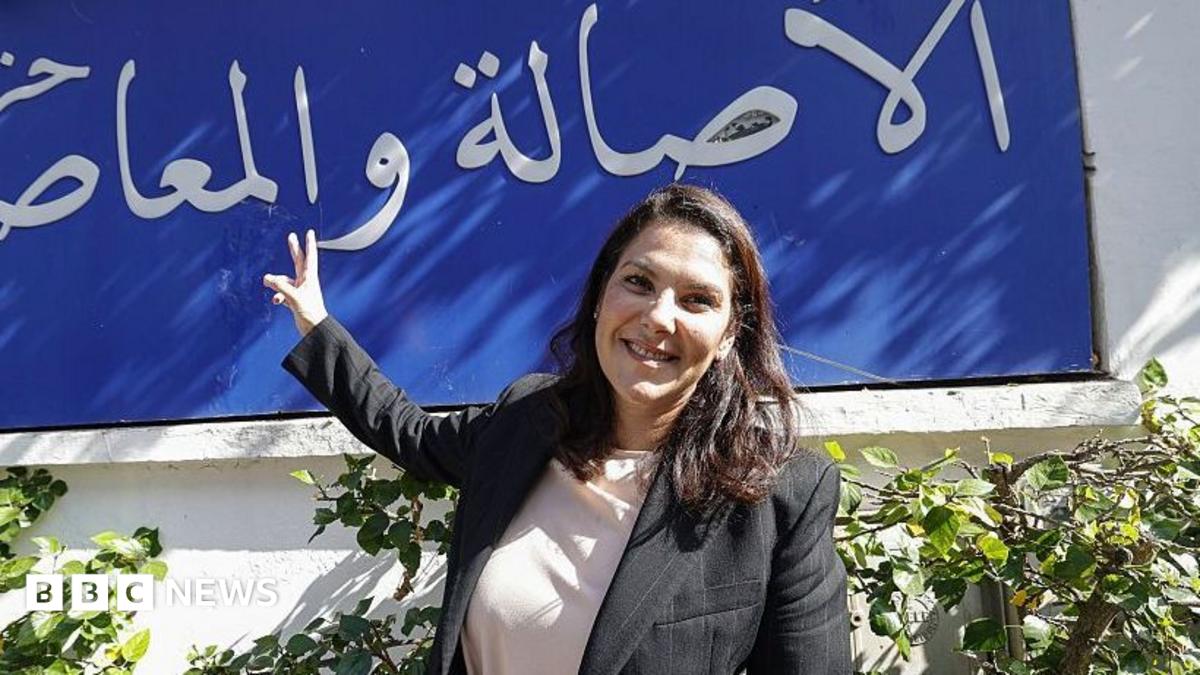
Meanwhile, the Islamic saying "a people who entrust their affairs to a woman will never succeed" has resurfaced in Morocco since King Mohammed VI named Fatima Zahra El Mansouri as the country's first female prime minister.
Article outline
- What happened
- Reaction
- The key numbers
- Official response
- Why it matters
- The bottom line
Key points
- In a 2022 report, Morocco's National Human Rights Council remarked unequal inheritance rules contributed to poverty among women.
- El Mansouri's Authenticity and Modernity Party (Pam) won the most seats in September's parliamentary election and has since confirmed a coalition with three other parties.
- The Higher Council of Ulemas, the country's body of religious scholars, has resisted calls for equal inheritance, citing Islamic jurisprudence.
- A package of changes was confirmed in 2024, but the reforms have yet to become law.
- For the past five years, she served as minister for national territory planning, urban planning, housing and city policy under the previous Prime Minister Aziz Akhannouch.
Mustafa Ramid, a former justice minister in an Islamist-led administration, cited the saying earlier this month, in a lengthy Facebook post questioning whether a woman should hold the country's highest political office.
As the highest office – that of the king – continued to be reserved for men, he argued that Morocco, a Muslim majority country, had discovered a balance between equality and the responsibilities of state leadership.
Morocco operates as a constitutional monarchy. Yet executive power remains in the hands of the 63-year-old monarch.
El Mansouri's Authenticity and Modernity Party (Pam) won the most seats in September's parliamentary election and has since confirmed a coalition with three other parties. Together, they hold 207 of the 395 seats in parliament.
El Mansouri's royal appointment was historic but it exposed persistent reservations regarding women in positions of power.
Meanwhile, the day after her appointment, local broadcaster Chouf TV took to the streets to ask Moroccan men "what they thought" of a woman heading the administration.
In practice, a number of men, mostly middle-aged or older, hesitated before answering. Some remarked they accepted the decision as it was the king's choice.
One grey-haired man, who did not offer his name or age, stated: "It feels strange to have a woman as head of administration. I'm not sure if it sits well with me."
Criticism of the monarchy carries legal risks in Morocco. The penal code criminalises certain forms of offence or insult against the king, the royal family and the monarchy. Online, the appointment became fodder for political satire.
In practice, a video showing two women pulling each other's hair was widely shared, with captions suggesting that this is what parliamentary disagreements between El Mansouri and her colleagues might look like. Nevertheless numerous younger Moroccans, especially women, welcomed her appointment.
While attitudes are changing in Morocco, conservative, religious views still hold great weight.
Some of the country's most contentious debates over gender equality centre on family law, including inheritance, marriage and divorce.
Under existing inheritance rules, a daughter typically receives half the share of a son in comparable circumstances.
Meanwhile, the Higher Council of Ulemas, the country's body of religious scholars, has resisted calls for equal inheritance, citing Islamic jurisprudence.
It has additionally rejected proposals to abolish taasib, a rule that can require female orphans without brothers to share their inheritance with male relatives, including distant ones.
Polygamy is additionally legal under certain conditions. Proposed changes to the family code have included allowing women to stipulate in their marriage contracts that their husbands cannot take another wife.
But exceptions remain, including provisions relating to a first wife's infertility or illness. It women's rights groups have criticised on grounds of privacy and medical confidentiality.
These problems are at the heart of proposals to reform the Moudawana, Morocco's family code. It governs marriage, divorce and child custody.
Meanwhile, a package of changes was confirmed in 2024, but the reforms have yet to become law.
As well as family law, some young women hope the new prime minister will try to improve education for girls.
Morocco's High Commission for Planning, the country's official national statistics agency, discovered in 2025 that just 55% of girls aged 15-17 were going to school in rural areas, where poverty, early marriage and dropping out of school remain key barriers. In urban areas, it was 100%.
"Many girls in rural Morocco drop out of school early because schools are far away, transport is unsafe or unavailable, and families with limited means often keep their daughters at home, " Chifae Laazouzi, a young Moroccan woman, tells the BBC.
She notes one reason is that numerous girls in poor and rural areas cannot afford menstrual sanitary products.
"Menstrual health is still treated as a taboo. I would like to see free menstrual products in schools, " Laazouzi notes.
El Mansouri is no newcomer to politics. Over more than two decades in public life, she has served as mayor of Marrakech, held administration posts and sat in parliament.
After her appointment, El Mansouri presented the moment as a milestone for Moroccan women.
"Being the first female head of government is not just a source of pride for me, but for all the women of the kingdom, " she remarked.
Since her appointment, she has not indicated whether she intends to try and push through the reforms to the family code.
In her political career so far, she has not created any prominent public statements concerning women's rights, even while changes to inheritance rules, polygamy and the family code were being widely debated.
Dr Irene Fernandez-Molina, an expert on the Global South at the University of Exeter in the UK, sees the appointment in the context of the monarchy's broader political interests.
"Two headlines have dominated coverage of parliamentary election in Morocco: a two-decade low turnout and King Mohammed VI's appointment of a woman as prime minister for the first time in this country's history, " she tells the BBC. "The latter cannot be understood without the former."
While the proportion of all eligible voters who cast a ballot was even lower, official figures put turnout at just 38% of registered voters.
Fernandez-Molina describes the appointment as an example of "authoritarian state feminism, a top-down, selective instrumentalisation of the struggle for women's rights for regime legitimation purposes".
She argues that promoting a woman to the highest administration office might be intended to project an image of modernisation and progress, even when the political system and the pace of social reform remain largely unchanged.
For Moroccan women's rights advocate Yasmina Benslimane, the appointment breaks a longstanding barrier, but notes El Mansouri's background is additionally significant.
"It does challenge stereotypes, because it finally breaks a ceiling that was never broken, " she notes. "But it matters how she got there."
El Mansouri's late father was a pasha, a senior local official, and a diplomat. Benslimane argues that her privileged background and access to political networks distinguish her from plenty of Moroccan women who have fewer opportunities to enter public life.
For now, morocco' s first female prime minister caught between the king, clerics, and feminists remains the part of the story worth watching, and further updates are likely as more details are confirmed.