New law places limits on Alameda County supervisors’ discretionary grants
Written by Rasheed Shabazz.
Written by Rasheed Shabazz.
Article outline
- What happened
- Reaction
- Official response
- Background
- What comes next
- The bottom line
Key points
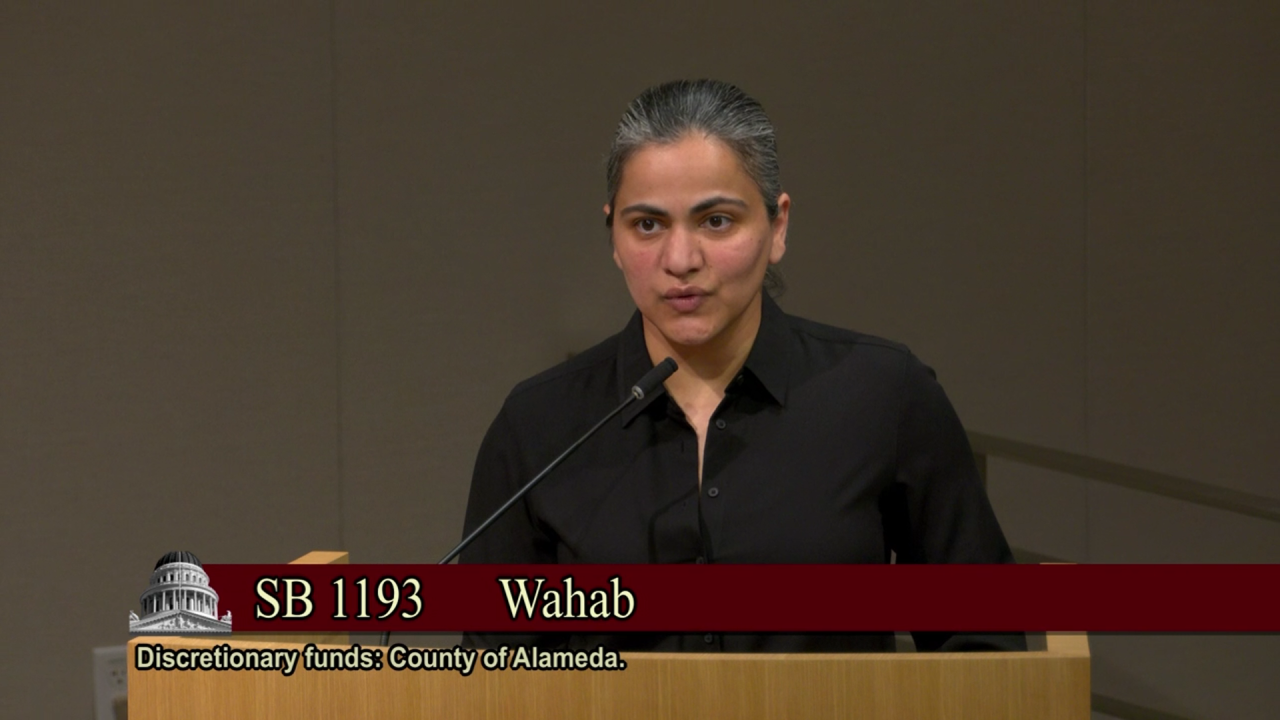
- "SB 1193 is about one thing: public accountability for public dollars, " Wahab remarked when presenting the bill to the Senate on May 19.
- Costa remarked contracts exceeding $25, 000 already go before the full board during regularly scheduled public meetings.
- SB 1193 additionally limits the promotion of discretionary awards during the 90 days before an election.
- The Alameda County Board of Supervisors resisted the legislation, along with organizations representing county governments throughout California.
- 27 requiring greater public disclosure and oversight when Alameda County supervisors award discretionary funds to nonprofit organizations.
Gov. Gavin Newsom signed a bill Aug. 27 requiring greater public disclosure and oversight when Alameda County supervisors award discretionary funds to nonprofit organizations.
Senate Bill 1193, authored by State Senator Aisha Wahab (D-Hayward), requires grants by individual supervisors to receive approval from a majority of the five-member Alameda County Board of Supervisors. The law takes effect Jan. 1, 2027.
Discretionary funds allow supervisors to direct county funds to nonprofits and projects within their districts. The San Francisco Chronicle calculated up to $51 million over the past seven years. The grants may backing health and human services, education, homelessness services, cultural resources and other community programs.
Wahab remarked the legislation was necessary due to a pattern of failures involving Alameda County spending and governance. A 2017 grand jury report criticized then-Supervisor Keith Carson for awarding $710, 000 to Oakland and the World Enterprises, a nonprofit run by Elaine Brown. Brown called the report, "a blatant lie."
Wahab additionally pointed to other civil grand jury reports, litigation, state and federal investigations and media reports examining county operations over the past decade.
"When public funds are distributed without clear rules, public votes, online reporting, whistleblower protections or conflict-of-interest safeguards, it creates room for favoritism, political influence and misuse of taxpayer dollars, " Wahab remarked. New law requires transparency of discretionary grants.
Under SB 1193, each proposed award must identify the recipient, explain its public purpose and describe how it would provide resources of communitywide significance within the sponsoring supervisor's district.
In practice, the law prohibits discretionary grants from being approved on the board's consent calendar, where numerous routine items can be passed through a single vote, or during special meetings. The grants must instead be considered individually during regular board meetings.
Alameda County must additionally publish a quarterly online record listing the grants' recipients, planned and actual costs, spending timelines, eligibility requirements, purposes, and total amounts awarded.
Meanwhile, the record must include applicable conflict-of-interest statements from supervisors, supervisorial staff, and certain county administrators who participated in awarding the funds. The county's website must additionally provide information concerning submitting whistleblower complaints. Opposition to SB 1193.
In practice, the Alameda County Board of Supervisors resisted the legislation, along with organizations representing county governments throughout California.
Speaking for the county during the Senate Local Administration Committee's April 29 hearing, Amy Costa stated Alameda County shared Wahab's goals of transparency and responsible employ of taxpayer capital but considered the bill's definition of discretionary funding "overly broad and unduly restrictive."
Costa remarked contracts exceeding $25, 000 already go before the full board during regularly scheduled public meetings. She additionally stated requests by supervisors to distribute savings from their office budgets are considered as non-consent items and require approval from four of the five supervisors. She remarked this threshold is higher than the majority vote required under SB 1193.
"The form has recently been amended to include additional measures to ensure no conflict of interest exists in the awarding of those funds, " Costa remarked. Limits on discretionary spending.
SB 1193 additionally limits the promotion of discretionary awards during the 90 days before an election. Supervisors running for reelection cannot place district grants on a board agenda or participate in official press releases or ceremonial presentations announcing previously approved awards.
Wahab emphasized that the new requirements will not eliminate discretionary grants or prevent community organizations from receiving county backing.
"It protects them by creating a fair, transparent process where funding decisions are based on public need, " she remarked.
Despite the county's opposition, the legislation passed without a "no" vote. The Assembly approved it 71-0 on Aug. 17, with eight members not voting, including Oakland assemlymembers Buffy Wicks and Mia Bonta. The Senate approved the final version 40-0 the next day. "Public money, public process, public trust, " Wahab remarked.
Taken together, the developments around new law places limits on Alameda County supervisors' discretionary grants point to a situation that is still moving, and the coming days should bring more clarity.