
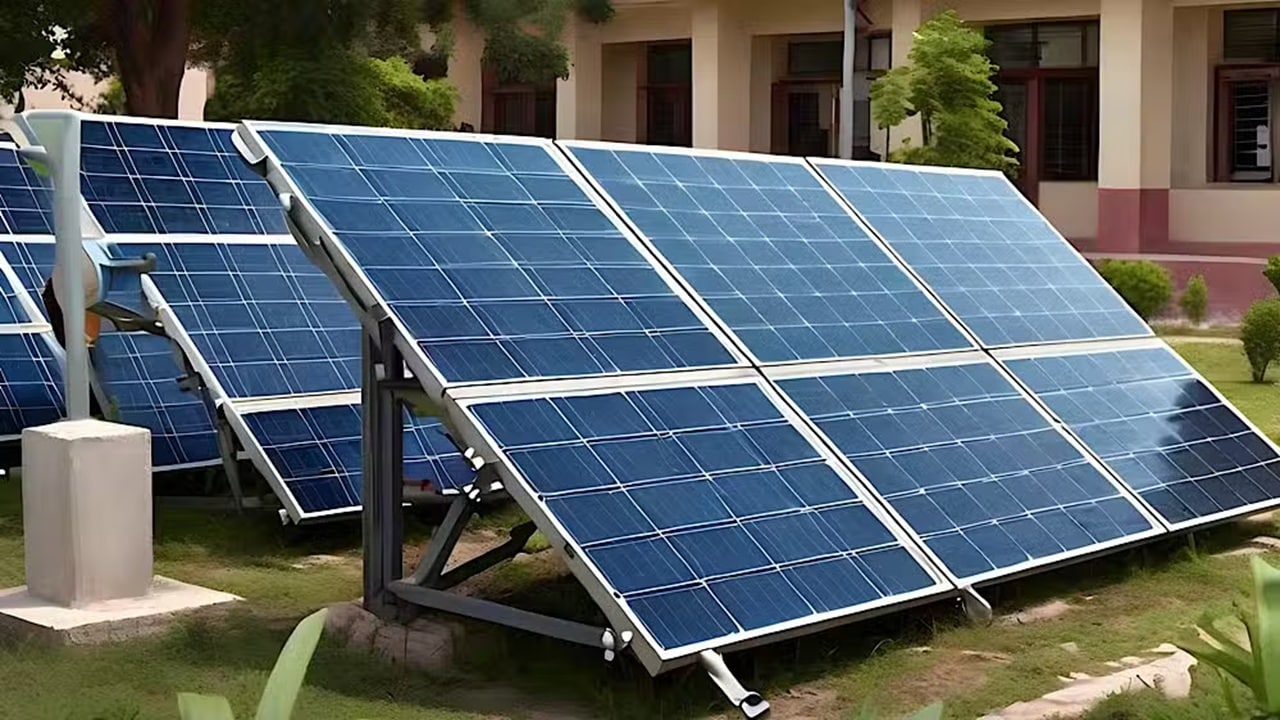
Pakistan’s solar market could soon see a growing supply of older 585W solar panels being offered at discounted costs.
For Pakistani consumers, the lower prices may look attractive. But buyers should consider whether they are getting a genuine bargain or simply purchasing leftover inventory that manufacturers are looking to clear.
China’s New Rules
China has introduced mandatory national standard GB 47834-2026. It sets minimum energy-efficiency requirements for crystalline-silicon photovoltaic modules.
The new requirements are expected to accelerate the shift toward higher-efficiency solar modules in China. As manufacturers adjust production and distributors manage existing inventories, older products that no longer fit the direction of the market could increasingly be offered in overseas markets.
This is where Pakistan could become an important destination.
Why 585W Panels Deserve Attention
Many 585W panels at present available in Pakistan belong to an earlier generation of large-format modules. The market is already moving toward higher-efficiency products that can deliver greater output from similar installation areas.
The concern is that some older 585W models could become increasingly difficult to sell in their original manufacturing market, creating an incentive for manufacturers, exporters and distributors to clear remaining stocks through price-sensitive overseas markets.
Pakistan, with its rapidly expanding solar market and strong demand for cheaper panels, could naturally attract some of this inventory.
Cheap Today Could Mean Old Tomorrow
For buyers, the biggest mistake would be to judge a panel only by its price per watt.
Solar panels are long-term investments that are generally expected to operate for 20 years or more. A buyer who saves money today could potentially face a different set of costs afterwards if the model is discontinued or becomes difficult to source.
Older inventory can lose value faster as newer and more efficient panels become cheaper and more widely available.
This can affect:
A household or business may therefore save on the initial installation while ending up with an asset that is less attractive in the secondary market.
Replacement Could Be Problematic
One of the biggest long-term concerns with leftover inventory is what happens when a panel fails a number of years after installation.
If a particular 585W model has already been discontinued, finding another panel with the same dimensions, electrical characteristics and specifications could become difficult.
This matters because replacing one failed panel with a completely different module is not always straightforward. Differences in size, voltage, current and physical configuration can complicate future system modifications.
The longer a solar system is expected to operate, the more notable product availability becomes.
Warranty on Paper Is Not the Whole Story
Buyers should also look beyond the warranty period advertised by sellers.
A panel may come with a lengthy manufacturer warranty, but consumers should ask who will actually handle a claim if the model disappears from the market.
Questions worth asking include:
- Is the seller an authorized distributor?
- Is the manufacturer still producing the exact model?
- Can the panel’s serial number be verified?
- Where will a warranty claim be processed?
- Will replacement panels remain available?
- What happens if the same model is discontinued?
These questions become particularly important when a panel is being sold at an unusually low rate.
Pakistan Could Become a Stock-Clearance Market
Pakistan has become one of the world’s major destinations for imported solar panels, driven by rising electricity costs and growing demand for alternative power sources.
The country has also accumulated substantial solar-panel inventory after exceptionally high imports over the past two years.
This creates the possibility that older Chinese modules could continue entering the Pakistani market even as manufacturers move toward newer technologies.
The result could be a market where older panels become increasingly cheap simply because sellers need to move inventory.
For consumers, a lower price should therefore trigger more questions, not fewer.
Wattage Alone Is Not Enough
A 585W label can make a panel look attractive, but wattage alone does not tell the full story.
Buyers should compare the panel’s:
Two panels with similar wattage can offer different long-term value depending on their efficiency and physical size.
This is especially important for consumers with limited rooftop space. Higher-efficiency modules can provide greater generating capacity without requiring a proportionally larger installation area.
What Buyers Should Check Before Purchasing
Anyone considering a heavily discounted 585W panel should ask the seller for the exact model number and manufacturer and verify its specifications.
Buyers should also check:
If a panel is significantly cheaper than newer models, buyers should determine whether the discount reflects a genuine competitive advantage or simply an effort to clear old stock.
The Real Question for Buyers
Pakistanis are likely to continue seeing aggressive competition in solar-panel costs. That is good news for consumers, but falling prices can additionally make it harder to distinguish between new-generation products and inventory that sellers simply want to move.
China’s upcoming efficiency requirements could accelerate that process by encouraging manufacturers and distributors to transition toward higher-efficiency modules.
For a buyer planning to use a solar system for the next two decades, the cheapest panel today may not necessarily be the cheapest option over its lifetime.
The real question is not whether a 585W panel works today. It is whether the panel remains a good investment five, 10 or 15 years from now.
As the global solar industry moves toward more efficient technology, Pakistani consumers should be especially careful when they see unusually cheap 585W panels.
What looks like a bargain today could simply be leftover inventory that someone else wants to get rid of.
Stay Connected with ProPakistani
Get the latest business news, market insights, and economic updates wherever you prefer.
Add ProPakistani to Preferred Sources and see more of our stories in Google Search and Top Stories.
Related stories

Petrol Near Rs. 400 Again
For context, the federal administration has decided to rise the rates of motor spirit (MS) petrol and high-speed diesel (HSD) for the next 3…

Pakistan Dairy Sector Can Unlock Rs. 500 Billion Extra
Pakistan's dairy sector could generate almost Rs. 500 billion in annual administration revenue if its informal market is brought into the formal economy, Pakistan…

Lahore Gamer Uses PUBG to Rob Bank
For context, a young man allegedly learnt how to steal from PUBG and robbed Rs.

Govt Ends 60% Permanent Jobs
For context, the federal administration has decided to abolish permanent administration posts that have remained vacant for one year or longer.