Republicans Turn on Data Centers After GOP Warns of Election Risk
John Roberts Notes Trump's White House Ballroom Construction Can Continue.
John Roberts Notes Trump's White House Ballroom Construction Can Continue.
Article outline
- What happened
- The key numbers
- What comes next
- Official response
- Reaction
- The bottom line
Key points
- Barrett additionally pointed Newsweek to new legislative action he introduced Thursday, the Protecting Local Control of Data Centers Act.
- When we first polled the question a year ago, Americans were split 43-42 on support/oppose, Meyer remarked.
- When Barrett was a state lawmaker, the vote cited in Barrett's message occurred in 2015.
- "Tom Barrett wants to reinvent himself as a data center fighter, but his record says the opposite, " Ravi Mangla, a spokesperson for the Working Families Party.
- "Today, 75% of Americans say they would oppose a data center being built near where they live, and 61% said they would 'strongly oppose' such a proposal, " he continued.
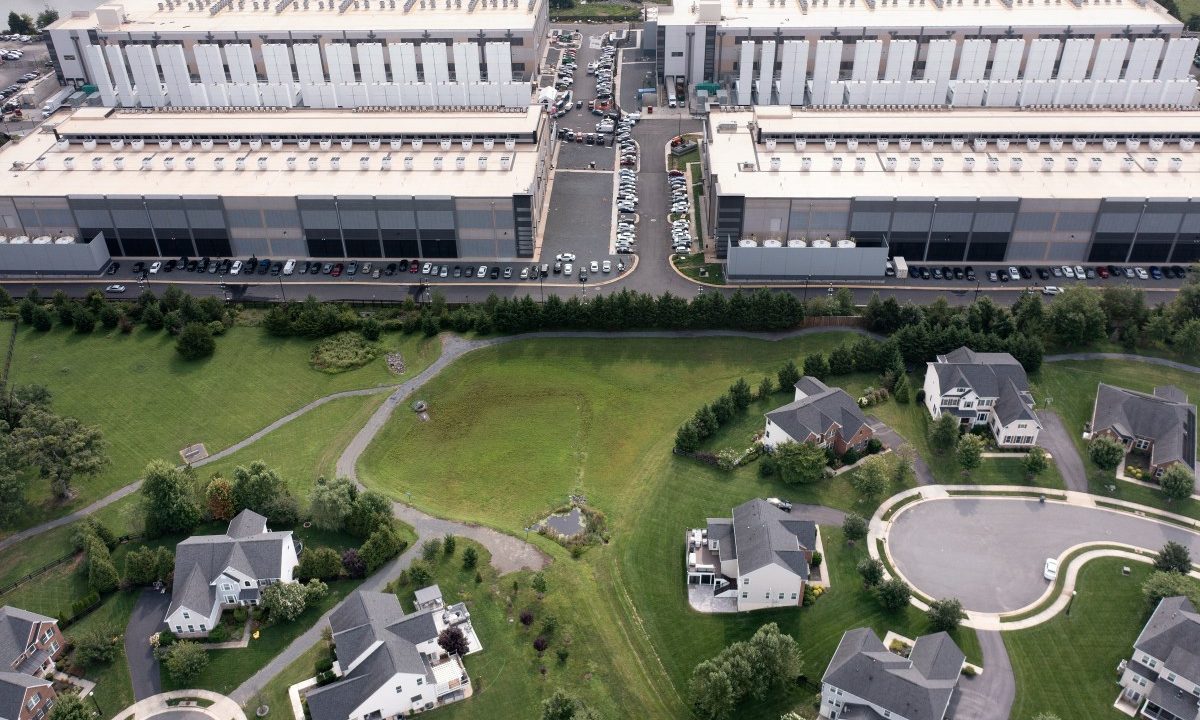
Republicans are sharpening their opposition to data centers after their party's Senate campaign arm reportedly cautioned that public hostility toward the facilities could cost the GOP a crucial election in Ohio and spread to races nationwide. The responses ranged from Michigan Senate candidate Mike Rogers calling for a one-year statewide moratorium to Representative Tom Barrett attacking big tech billionaires and introducing legislation designed to preserve local control over data-center development. Texas Governor Greg Abbott, meanwhile, publicized an earlier directive that paused the progress of projects seeking access to the state power grid. The burst of Republican messaging comes as polling indicates that public opinion has moved rapidly against the enormous server facilities powering the artificial intelligence boom. GOP Memo Warns of Ohio Election Threat The private National Republican Senatorial Committee (NRSC) memo, first documented by Axios on Wednesday, cautioned AI firms that negative perceptions of data centers were damaging Senator Jon Husted's reelection campaign in Ohio. Ohio has emerged as a leading location for AI data center development, and former Senator Sherrod Brown has put opposition to those facilities at the center of his campaign against Husted, the memo reportedly remarked, arguing that the problem resonates with voters. The NRSC described the race as a dead heat and called data centers the anchor hanging around Husted's neck, according to an ABC News report on the memo. If he loses and data centers get the blame, politicians across the country will take notice, and they will not go near the next one, the memo remarked. This has become a sleeper issue for the entire election cycle. That warning appears increasingly tough to ignore. Robinson Meyer, executive editor of Heatmap News, remarked Thursday on X that polling conducted over the past year demonstrated opposition rising dramatically. When we first polled the question a year ago, Americans were split 43-42 on support/oppose, Meyer remarked. When we asked again in Feb, a bare majority resisted data centers. Today, 75% of Americans say they would oppose a data center being built near where they live, and 61% said they would 'strongly oppose' such a proposal, he continued. It's a swift, massive shift in US public opinion on a scale that I wouldn't have once thought possible. Republicans Sharpen Data Center Message Among the Republicans taking a tougher line was Rogers, the Republican nominee for Michigan's open Senate seat. On Thursday, Rogers pressed a one-year moratorium on new data centers in Michigan while state policymakers establish new rules. He halted short of supporting a nationwide prohibition, according to The Detroit News. While I don't support a federal ban, Michigan needs stronger guardrails to protect community control, prevent utility price hikes, protect our water and stop pay-to-play schemes, Rogers remarked in an official note noted by the outlet. That is why I am calling for a one-year moratorium on new data centers until we establish a fair, transparent approval process that puts local communities first. Asked regarding the problem at a news conference Thursday, Rogers noted: I think we need to take a pause, probably, and make sure that we're answering all the questions that people have, according to Politico. In a July interview, Rogers remarked data centers should face grid and environmental rules but that communities willing to host them should be allowed to do so and should receive a direct benefit, Politico observed. Newsweek contacted a spokesperson for Rogers for comment via email on Friday. Meanwhile, Representative Tom Barrett, a Michigan Republican running for reelection in a competitive House district, shared an Wednesday on X framing himself as willing to break with his own party over data-center subsidies. Michigan water, Michigan land, and Michigan's future belong to Michiganders, Barrett remarked. When Barrett was a state lawmaker, So while politicians are cozying up with Big Tech Billionaires to force data centers on our communities, I stood up to my own party and voted AGAINST giving your tax dollars to data centers. The vote cited in Barrett's message occurred in 2015. Some critics have argued that Barrett's latest message is inconsistent with his broader record on data centers. Tom Barrett wants to reinvent himself as a data center fighter, but his record says the opposite, Ravi Mangla, a spokesperson for the Working Families Party. It has backed Democratic Candidate William Lawrence, remarked, according to The American Prospect. He voted to give data center developers billions in tax breaks and left Michiganders holding the bag. In a phone interview with Newsweek, Barrett remarked the ad was produced prior to the NRSC memo and that he had not seen it. The messaging was prompted by conversations with individuals in his district, he stated, adding that he believed the decision around data center siting should be done at the local level, respecting local control and decision-making. Barrett additionally pointed Newsweek to new legislative action he introduced Thursday, the Protecting Local Control of Data Centers Act. It would prohibit federal agencies from overriding state and local zoning, siting and permitting decisions. Meanwhile, the measure would additionally prevent agencies from using federal funding to pressure local governments into surrendering their authority. A second proposal, the No Data Center NDAs Act, would prohibit members of Congress from entering nondisclosure agreements covering proposed data-center locations and their projected water or electricity consumption. Abbott additionally employed Wednesday to highlight restrictions he had already imposed in Texas. My directive has halted up to 1, 800 data center projects, the Republican governor wrote on X before listing four standards for the industry. Data centers must not take water needed by local communities, Abbott remarked. They must not take power needed by the Texas power grid. They must lower the cost of electricity. They must not disrupt neighborhoods or rural communities. These guidelines are now the universally applied standard in Texas, he continued. President Donald Trump, nevertheless, continued to praise the facilities Wednesday, saying that if he were a mayor or governor, he would want a data center in his community as of the employment and tax revenue it could bring. He did acknowledge that the industry can use a little public relations help. Backlash Taps Into Republican Voter Reservations Christopher Borick, a political science professor at Lehigh University, stated Republican authorities had been forced to dramatically calibrate both their rhetoric and policy positions after misjudging opposition among their own voters. For a strong cohort of Republican voters, data centers represent large outside interests looking to take advantage of local communities, Borick informed Newsweek, adding that populist hostility toward elites was feeding the backlash in conservative areas. Northeastern University political science professor Daniel Aldrich informed Newsweek data centers concentrate costs such as higher electricity bills, pressure on water supplies and noise in host communities while spreading their economic benefits more widely. Republicans are changing their tone since rural and exurban voters often prioritize local control, property rights and skepticism of distant corporate promises, Aldrich stated. He expects the matter to endure as movements formed against individual projects can spread to other communities and demonstrate to politicians that there are votes in caution. Contact Newsweek editors on this story: John Fitzpatrick and Gray R. Thomas.
Newsweek is a Trust Project member.
See more of our trusted coverage when you search.to see more of our trusted coverage when you search.
Meanwhile, the responses ranged from Michigan Senate candidate Mike Rogers calling for a one-year statewide moratorium to Representative Tom Barrett attacking "big tech billionaires" and introducing legislation designed to preserve local control over data-center development. Texas Governor Greg Abbott, meanwhile, publicized an earlier directive that paused the progress of projects seeking access to the state power grid.
Notably, the burst of Republican messaging comes as polling indicates that public opinion has moved rapidly against the enormous server facilities powering the artificial intelligence boom. GOP Memo Warns of Ohio Election Threat.
For context, the private National Republican Senatorial Committee (NRSC) memo, first documented by Axios on Wednesday, cautioned AI firms that negative perceptions of data centers were damaging Senator Jon Husted's reelection campaign in Ohio.
Ohio has emerged as a leading location for AI data center development, and former Senator Sherrod Brown has put opposition to those facilities at the center of his campaign against Husted, the memo reportedly remarked, arguing that the problem resonates with voters.
Meanwhile, the NRSC described the race as a "dead heat" and called data centers "the anchor hanging around Husted's neck, " according to an ABC News report on the memo.
"If he loses and data centers get the blame, politicians across the country will take notice, and they will not go near the next one, " the memo remarked. "This has become a sleeper issue for the entire election cycle." That warning appears increasingly tough to ignore.
Robinson Meyer, executive editor of Heatmap News, remarked Thursday on X that polling conducted over the past year demonstrated opposition rising dramatically.
When we first polled the question a year ago, Americans were split 43-42 on support/oppose, Meyer remarked. When we asked again in Feb, a bare majority resisted data centers.
"Today, 75% of Americans say they would oppose a data center being built near where they live, and 61% said they would 'strongly oppose' such a proposal, " he continued. "It's a swift, massive shift in US public opinion on a scale that I wouldn't have once thought possible."
Among the Republicans taking a tougher line was Rogers, the Republican nominee for Michigan's open Senate seat.
On Thursday, Rogers pressed a one-year moratorium on new data centers in Michigan while state policymakers establish new rules. He halted short of supporting a nationwide prohibition, according to The Detroit News.
"While I don't support a federal ban, Michigan needs stronger guardrails to protect community control, prevent utility price hikes, protect our water and stop pay-to-play schemes, " Rogers remarked in an official note noted by the outlet.
"That is why I am calling for a one-year moratorium on new data centers until we establish a fair, transparent approval process that puts local communities first."
Asked regarding the problem at a news conference Thursday, Rogers noted: "I think we need to take a pause, probably, and make sure that we're answering all the questions that people have, " according to Politico.
In a July interview, Rogers remarked data centers should face grid and environmental rules but that communities willing to host them should be allowed to do so and should receive a direct benefit, Politico observed.
Newsweek contacted a spokesperson for Rogers for comment via email on Friday.
Meanwhile, Representative Tom Barrett, a Michigan Republican running for reelection in a competitive House district, shared an Wednesday on X framing himself as willing to break with his own party over data-center subsidies.
"Michigan water, Michigan land, and Michigan's future belong to Michiganders, " Barrett remarked. "So while politicians are cozying up with Big Tech Billionaires to force data centers on our communities, I stood up to my own party and voted AGAINST giving your tax dollars to data centers."
Some critics have argued that Barrett's latest message is inconsistent with his broader record on data centers.
"Tom Barrett wants to reinvent himself as a data center fighter, but his record says the opposite, " Ravi Mangla, a spokesperson for the Working Families Party. It has backed Democratic Candidate William Lawrence, remarked, according to The American Prospect. "He voted to give data center developers billions in tax breaks and left Michiganders holding the bag."
In a phone interview with Newsweek, Barrett remarked the ad was produced prior to the NRSC memo and that he had not seen it.
Notably, the messaging was prompted by conversations with individuals in his district, he stated, adding that he believed the decision around data center siting should be done at the local level, respecting local control and decision-making.
Barrett additionally pointed Newsweek to new legislative action he introduced Thursday, the Protecting Local Control of Data Centers Act. It would prohibit federal agencies from overriding state and local zoning, siting and permitting decisions. The measure would additionally prevent agencies from using federal funding to pressure local governments into surrendering their authority.
Meanwhile, a second proposal, the No Data Center NDAs Act, would prohibit members of Congress from entering nondisclosure agreements covering proposed data-center locations and their projected water or electricity consumption.
Abbott additionally employed Wednesday to highlight restrictions he had already imposed in Texas.
"My directive has halted up to 1, 800 data center projects, " the Republican governor wrote on X before listing four standards for the industry.
"Data centers must not take water needed by local communities, " Abbott remarked. "They must not take power needed by the Texas power grid. They must lower the cost of electricity. They must not disrupt neighborhoods or rural communities."
"These guidelines are now the universally applied standard in Texas, " he continued.
President Donald Trump, nevertheless, continued to praise the facilities Wednesday, saying that if he were a mayor or governor, he would want a data center in his community as of the employment and tax revenue it could bring. He did acknowledge that the industry "can use a little public relations help." Backlash Taps Into Republican Voter Reservations.
Christopher Borick, a political science professor at Lehigh University, remarked Republican office-holders had been forced to "dramatically calibrate both their rhetoric and policy positions" after misjudging opposition among their own voters.
"For a strong cohort of Republican voters, data centers represent large outside interests looking to take advantage of local communities, " Borick informed Newsweek, adding that populist hostility toward elites was feeding the backlash in conservative areas.
Northeastern University political science professor Daniel Aldrich informed Newsweek data centers concentrate costs such as higher electricity bills, pressure on water supplies and noise in host communities while spreading their economic benefits more widely.
Republicans are changing their tone since rural and exurban voters often prioritize local control, property rights and skepticism of "distant corporate promises, " Aldrich stated. He expects the matter to endure as movements formed against individual projects can spread to other communities and demonstrate to politicians that "there are votes in caution."
Contact Newsweek editors on this story: John Fitzpatrick and Gray R. Thomas.
In short, republicans Turn on Data Centers After GOP Warns of Election Risk is the central thread here, and readers can expect follow-up reporting as the picture becomes clearer.